The plan for calculating employee attendance revolves around understanding employee engagement through specific metrics like the attendance rate, absenteeism rate, punctuality rate, overtime hours, and leave utilization rate. Each of these provides insights into workplace dynamics and employee satisfaction. For example, a high attendance rate coupled with low absenteeism indicates a positive work environment.
Improvement suggestions tied to each metric, such as facilitating flexible working hours or enhancing company culture, emphasize the importance of adapting to employees' needs. Metrics like the punctuality rate and overtime hours also highlight operational areas that might benefit from better time management and workload distribution.
Top 5 metrics for Employee Attendance Tracking
1. Attendance Rate
Proportion of scheduled work days an employee or group of employees attend
What good looks like for this metric: 95% attendance rate is typical
How to improve this metric:- Implement flexible working hours
- Provide attendance incentives
- Address workplace stress and burnout
- Offer remote work options
- Improve transportation facilities
2. Absenteeism Rate
Proportion of scheduled work days missed by an employee or group of employees
What good looks like for this metric: 5% absenteeism rate is typical
How to improve this metric:- Enhance employee engagement
- Monitor health and wellness
- Encourage regular feedback
- Provide career development opportunities
- Improve company culture
3. Punctuality Rate
Proportion of days an employee or group of employees arrive on time
What good looks like for this metric: 90% punctuality rate is typical
How to improve this metric:- Set clear arrival expectations
- Implement a reward system
- Provide time management training
- Communicate the importance of punctuality
- Address transportation challenges
4. Overtime Hours
Total number of hours worked beyond regular scheduled hours by employees
What good looks like for this metric: Balanced workload should minimize overtime
How to improve this metric:- Review work distribution
- Hire additional staff during busy periods
- Limit overtime to essential cases
- Implement job rotation strategies
- Improve task prioritisation
5. Leave Utilisation Rate
Percentage of leave days taken by employees relative to the total entitled leave
What good looks like for this metric: 80% leave utilisation is typical
How to improve this metric:- Encourage regular leave usage
- Monitor for signs of overwork
- Promote the importance of work-life balance
- Adjust leave policies if underutilised
- Ensure fair workload distribution
How to track Employee Attendance Tracking metrics
It's one thing to have a plan, it's another to stick to it. We hope that the examples above will help you get started with your own strategy, but we also know that it's easy to get lost in the day-to-day effort.
That's why we built Tability: to help you track your progress, keep your team aligned, and make sure you're always moving in the right direction.
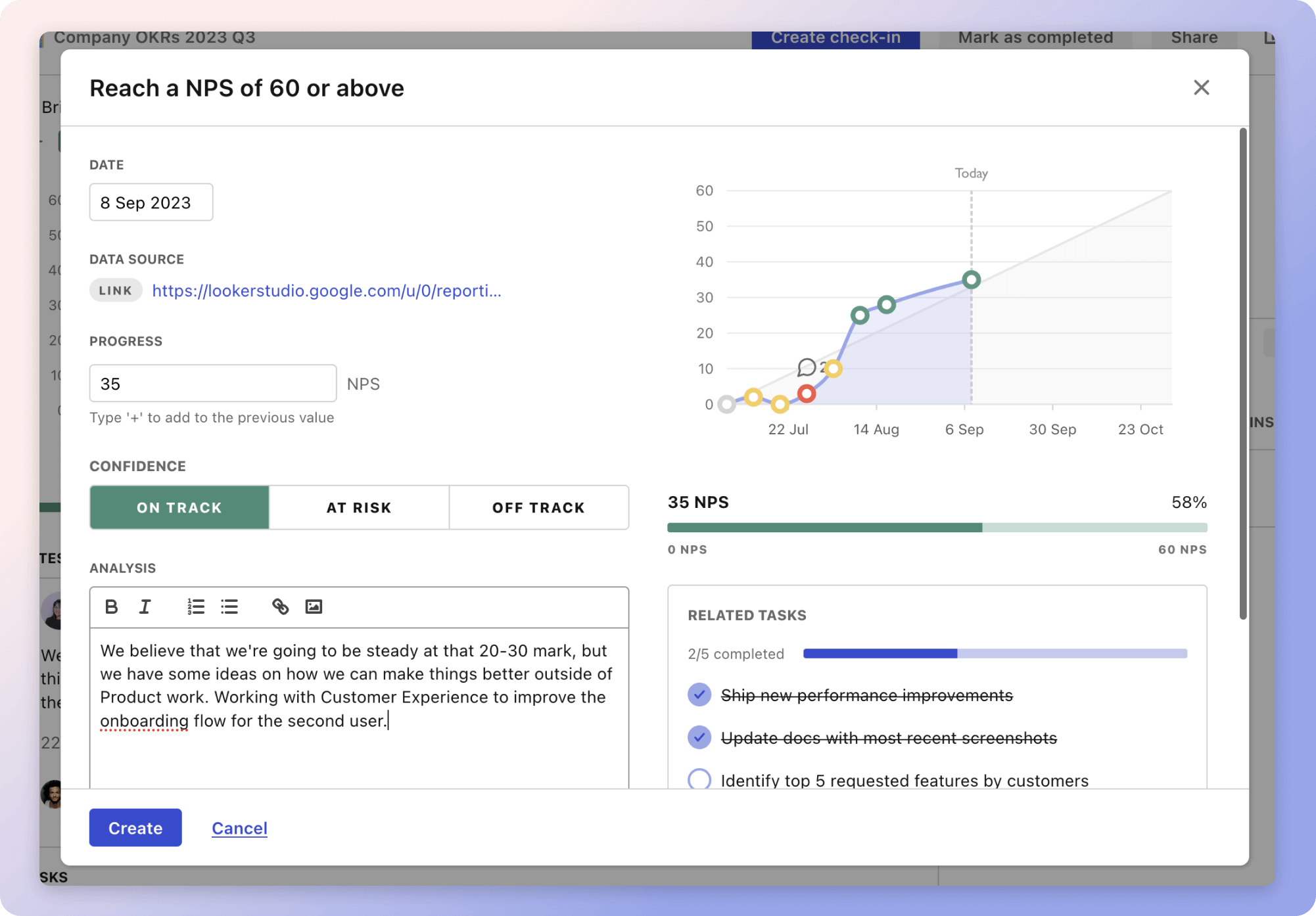
Give it a try and see how it can help you bring accountability to your metrics.
