The plan for "Employee Turnover Analysis" is designed to understand and improve employee retention by calculating various turnover metrics. These metrics are crucial because they provide insights into areas needing attention, helping to drive strategic HR initiatives. For instance, knowing the "Turnover Rate Percentage" aids in identifying trends or sudden changes, indicating where intervention might be needed. Similarly, analyzing "Voluntary vs Involuntary Turnover" helps in assessing employee satisfaction levels, which can inform management regarding necessary changes to the work environment.
Another significant metric, "Average Employee Tenure," reflects the company's ability to retain employees for long periods, highlighting the effectiveness of career progression strategies. Moreover, the "Cost of Employee Turnover" offers a financial perspective on the impact of turnover, emphasizing the importance of investing in retention strategies. Lastly, monitoring the "New Hire Turnover Rate" ensures new employees have a positive and sustainable start, reducing premature departures.
Top 5 metrics for Employee Turnover Analysis
1. Turnover Rate Percentage
This is calculated by dividing the number of employees who left during a period by the average number of employees during that period, then multiplying by 100
What good looks like for this metric: 10-15%
How to improve this metric:- Enhance employee engagement programmes
- Improve career development opportunities
- Conduct regular employee feedback sessions
- Competitive salary and benefits packages
- Strengthen company culture and values
2. Voluntary vs Involuntary Turnover
Compares employees who voluntarily resigned versus those who were terminated
What good looks like for this metric: Higher voluntary turnover indicates employee dissatisfaction
How to improve this metric:- Analyse exit interviews for patterns
- Identify root causes for turnover
- Address workplace grievances promptly
- Implement employee retention strategies
- Regularly assess job satisfaction levels
3. Average Employee Tenure
Measures the average length of time employees stay with the company
What good looks like for this metric: 3-5 years
How to improve this metric:- Provide ongoing training and development
- Offer clear career progression paths
- Recognize and reward long-term employees
- Encourage internal mobility
- Build strong leadership and management
4. Cost of Employee Turnover
Calculates the cost associated with losing and replacing employees, including recruiting, training, and loss of productivity
What good looks like for this metric: Typically 33% of an employee's annual salary
How to improve this metric:- Invest in effective hiring processes
- Use retention strategies to reduce turnover
- Improve onboarding processes
- Foster a positive work environment
- Regularly review compensation strategies
5. New Hire Turnover Rate
Monitors the percentage of new employees who leave within a specific period, usually within the first year
What good looks like for this metric: 15-20%
How to improve this metric:- Strengthen the onboarding experience
- Ensure realistic job previews during recruitment
- Provide mentors for new hires
- Set clear expectations and job roles
- Communicate effectively with new employees
How to track Employee Turnover Analysis metrics
It's one thing to have a plan, it's another to stick to it. We hope that the examples above will help you get started with your own strategy, but we also know that it's easy to get lost in the day-to-day effort.
That's why we built Tability: to help you track your progress, keep your team aligned, and make sure you're always moving in the right direction.
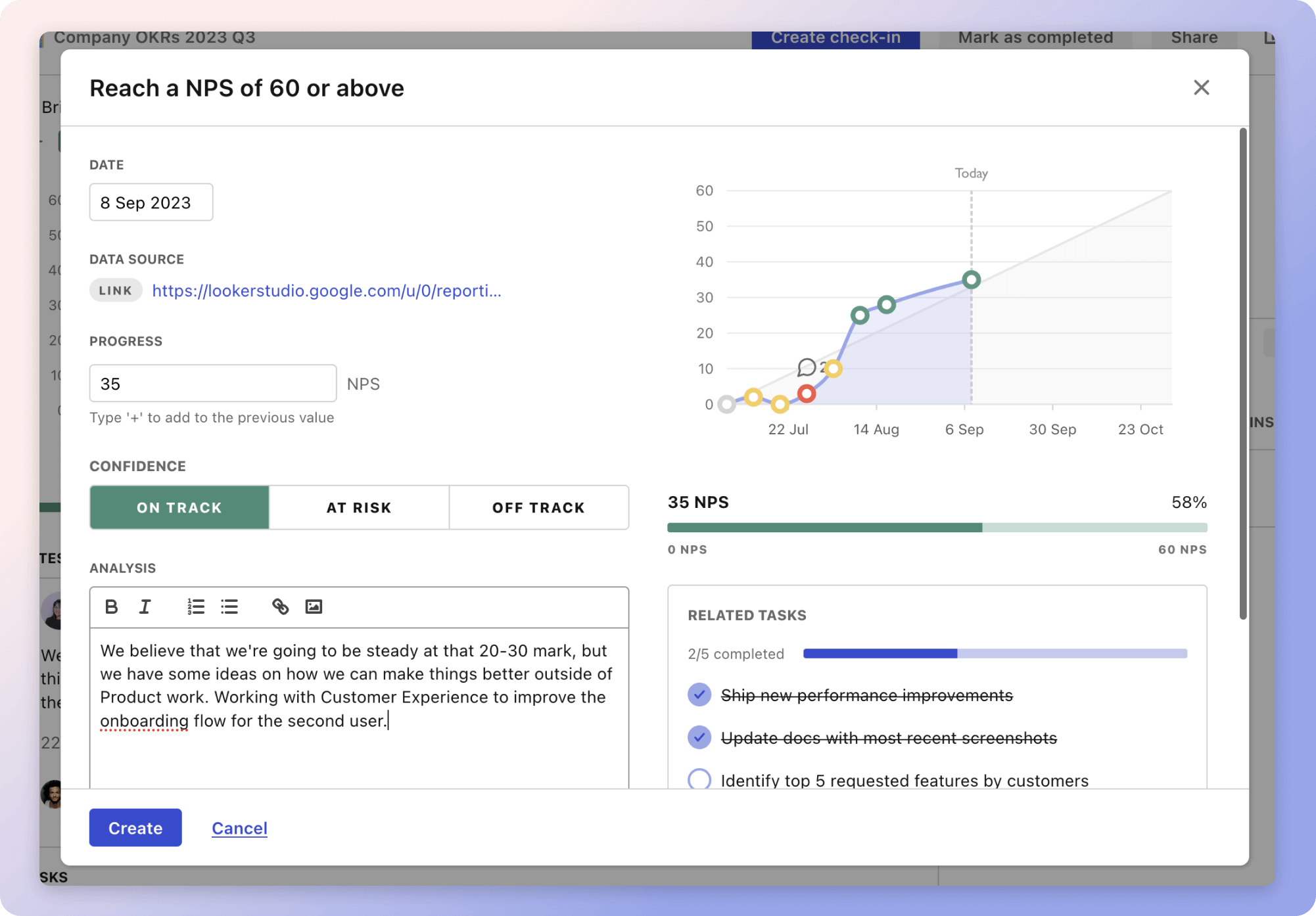
Give it a try and see how it can help you bring accountability to your metrics.
