What are Systems Administrator metrics? Crafting the perfect Systems Administrator metrics can feel overwhelming, particularly when you're juggling daily responsibilities. That's why we've put together a collection of examples to spark your inspiration.
Copy these examples into your preferred app, or you can also use Tability to keep yourself accountable.
Find Systems Administrator metrics with AI While we have some examples available, it's likely that you'll have specific scenarios that aren't covered here. You can use our free AI metrics generator below to generate your own strategies.
Examples of Systems Administrator metrics and KPIs 1. Time to Detect Issues The duration it takes to identify technical issues from the moment they arise
What good looks like for this metric: Less than 1 minute
Ideas to improve this metric Implement real-time monitoring tools Set up automated alerts Regularly update system documentation Conduct routine system audits Train staff on quick issue identification 2. System Availability Coverage The extent to which systems are monitored for availability and functionality
What good looks like for this metric: Coverage for all critical systems
Ideas to improve this metric Expand monitoring tools to cover more systems Integrate with third-party monitoring solutions Define critical systems and prioritise them Ensure redundancy for critical systems Regularly review and update system coverage 3. Data Refresh Rate The frequency at which system data is updated to reflect the latest information
What good looks like for this metric: Refresh every 10 seconds or less
Ideas to improve this metric Optimise data processing algorithms Utilise caching strategies effectively Upgrade hardware for better performance Ensure efficient data querying Regularly test data refresh processes 4. Incident Resolution Time The time taken to resolve issues once they are detected
What good looks like for this metric: Within 1 hour
Ideas to improve this metric Streamline incident response processes Improve inter-department communication Conduct regular incident response training Have a clear escalation path Invest in advanced diagnostic tools 5. User Satisfaction Score A feedback metric showing user satisfaction with system performance and uptime
What good looks like for this metric: Above 85%
Ideas to improve this metric Conduct regular user feedback surveys Improve user interface and experience Regularly update users on system status Address user complaints swiftly Provide clear user support channels
← →
1. System Availability The percentage of time a system is up and running compared to the total scheduled operational time
What good looks like for this metric: 99.9%
Ideas to improve this metric Implement regular system maintenance Upgrade infrastructure regularly Monitor systems continuously Utilise redundant systems for backup Train staff on quick troubleshooting 2. Response Time The time it takes for support to respond to a reported issue
What good looks like for this metric: Within 1 hour
Ideas to improve this metric Set up automated alert systems Ensure adequate staffing during peak times Establish clear response protocols Provide ongoing training for support staff Prioritise critical issues 3. Resolution Time The average time taken to resolve system issues from the moment they are reported
What good looks like for this metric: Within 4 hours
Ideas to improve this metric Streamline problem diagnosis processes Maintain an effective escalation process Document common issues with solutions Conduct root cause analysis Ensure effective communication with users 4. User Satisfaction The degree to which users are satisfied with the system support delivered
What good looks like for this metric: 80% satisfaction rate
Ideas to improve this metric Conduct regular user feedback surveys Implement feedback into improvement plans Provide personalised support Enhance user training programmes Improve communication with users 5. Percentage of System Coverage The proportion of departmental systems that are under active support
What good looks like for this metric: 95% coverage
Ideas to improve this metric Regularly update inventory of systems Ensure all critical systems are covered Conduct regular system audits Increase cross-departmental coordination Establish clear support policies
← →
Tracking your Systems Administrator metrics Having a plan is one thing, sticking to it is another.
Don't fall into the set-and-forget trap. It is important to adopt a weekly check-in process to keep your strategy agile – otherwise this is nothing more than a reporting exercise.
A tool like Tability can also help you by combining AI and goal-setting to keep you on track.
More metrics recently published We have more examples to help you below.
Planning resources OKRs are a great way to translate strategies into measurable goals. Here are a list of resources to help you adopt the OKR framework:
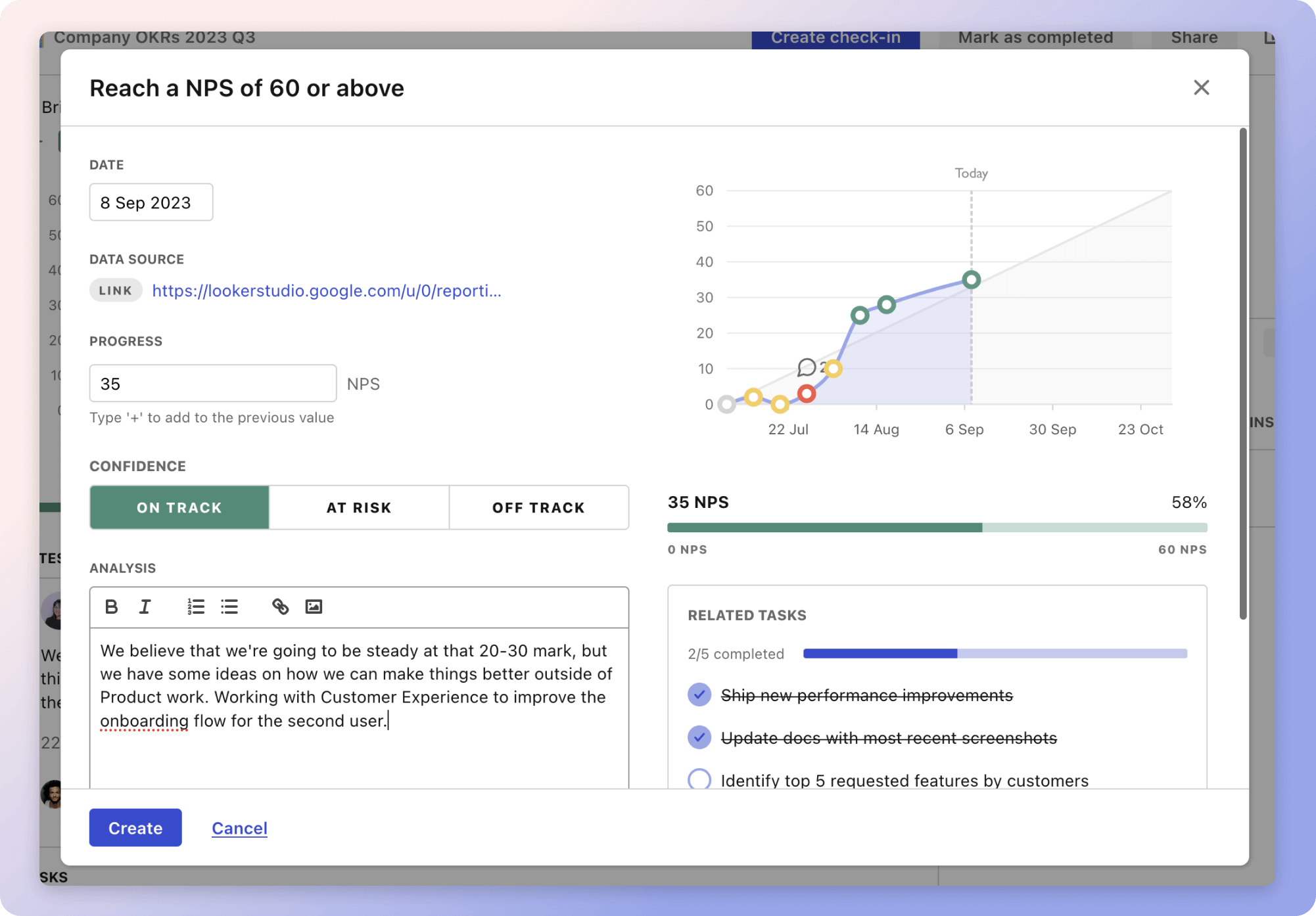 Tability's check-ins will save you hours and increase transparency
 The best metrics for Increase Calls Through Google My Business