Monitoring system performance is crucial for maintaining operational efficiency and ensuring a smooth user experience. The plan involves assessing key metrics, such as the "Time to Detect Issues," to quickly identify and address technical problems. For example, by implementing real-time monitoring tools, issues can be detected in under a minute, a critical benchmark for maintaining seamless functionality.
Another vital metric is "System Availability Coverage," which ensures that all critical systems are consistently functional and monitored. For instance, integrating with third-party monitoring solutions can enhance coverage, reducing downtime risks. Metrics like "Data Refresh Rate" are also essential, as they ensure system data is current, reflecting the latest updates promptly.
Overall, these metrics emphasize reducing incident and resolution times while maintaining high user satisfaction, ensuring systems remain efficient and user-friendly.
Top 5 metrics for Monitoring System Performance
1. Time to Detect Issues
The duration it takes to identify technical issues from the moment they arise
What good looks like for this metric: Less than 1 minute
How to improve this metric:- Implement real-time monitoring tools
- Set up automated alerts
- Regularly update system documentation
- Conduct routine system audits
- Train staff on quick issue identification
2. System Availability Coverage
The extent to which systems are monitored for availability and functionality
What good looks like for this metric: Coverage for all critical systems
How to improve this metric:- Expand monitoring tools to cover more systems
- Integrate with third-party monitoring solutions
- Define critical systems and prioritise them
- Ensure redundancy for critical systems
- Regularly review and update system coverage
3. Data Refresh Rate
The frequency at which system data is updated to reflect the latest information
What good looks like for this metric: Refresh every 10 seconds or less
How to improve this metric:- Optimise data processing algorithms
- Utilise caching strategies effectively
- Upgrade hardware for better performance
- Ensure efficient data querying
- Regularly test data refresh processes
4. Incident Resolution Time
The time taken to resolve issues once they are detected
What good looks like for this metric: Within 1 hour
How to improve this metric:- Streamline incident response processes
- Improve inter-department communication
- Conduct regular incident response training
- Have a clear escalation path
- Invest in advanced diagnostic tools
5. User Satisfaction Score
A feedback metric showing user satisfaction with system performance and uptime
What good looks like for this metric: Above 85%
How to improve this metric:- Conduct regular user feedback surveys
- Improve user interface and experience
- Regularly update users on system status
- Address user complaints swiftly
- Provide clear user support channels
How to track Monitoring System Performance metrics
It's one thing to have a plan, it's another to stick to it. We hope that the examples above will help you get started with your own strategy, but we also know that it's easy to get lost in the day-to-day effort.
That's why we built Tability: to help you track your progress, keep your team aligned, and make sure you're always moving in the right direction.
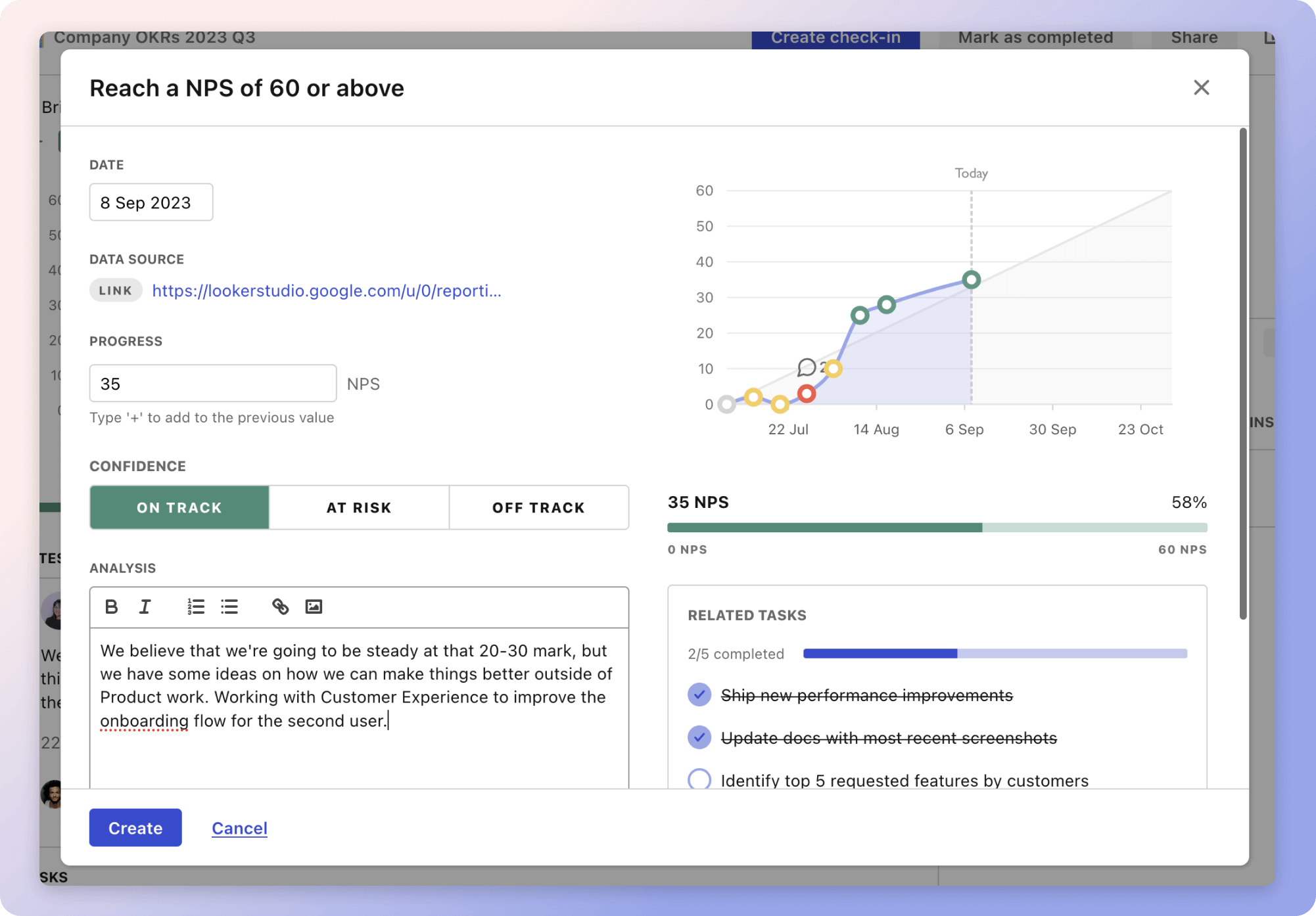
Give it a try and see how it can help you bring accountability to your metrics.
