What are Academic Development Team metrics? Crafting the perfect Academic Development Team metrics can feel overwhelming, particularly when you're juggling daily responsibilities. That's why we've put together a collection of examples to spark your inspiration.
Transfer these examples to your app of choice, or opt for Tability to help keep you on track.
Find Academic Development Team metrics with AI While we have some examples available, it's likely that you'll have specific scenarios that aren't covered here. You can use our free AI metrics generator below to generate your own strategies.
Examples of Academic Development Team metrics and KPIs 1. GPA The grade point average (GPA) measures academic performance by averaging the grades received in all courses
What good looks like for this metric: A typical benchmark would be a GPA of 3.0 or above on a 4.0 scale
Ideas to improve this metric Create a study schedule Join study groups Seek feedback from professors Utilise campus resources like tutoring Stay organised with assignments 2. Course Completion Rate The percentage of courses successfully completed out of those enrolled
What good looks like for this metric: Aim to complete at least 90% of enrolled courses
Ideas to improve this metric Plan your course load effectively Drop courses only if necessary Use a planner to keep track of deadlines Seek help early for difficult courses Regularly review your academic plan 3. Attendance Rate The percentage of classes attended compared to the total number required
What good looks like for this metric: Maintain an attendance rate of 90% or higher
Ideas to improve this metric Set alarms to avoid missing classes Prioritise class attendance Schedule classes at convenient times Inform instructors of unavoidable absences Participate in class to stay engaged 4. Skill Development The acquisition of key skills related to the BBA curriculum, including communication, teamwork, and analytical skills
What good looks like for this metric: Significant improvement in communication and analytical skills over the course of study
Ideas to improve this metric Attend workshops and seminars Engage in extracurricular activities Take on internship opportunities Request feedback on skills Practise skills in real-world scenarios 5. Extracurricular Involvement Participation in clubs, organisations, and activities outside of academic coursework
What good looks like for this metric: Participate in at least two significant extracurricular activities
Ideas to improve this metric Join clubs related to business Volunteer for leadership roles Attend networking events Balance activities with academics Seek diverse involvement opportunities
← →
1. Cumulative GPA Measures the average of all accumulated grade points that a student has earned across semesters
What good looks like for this metric: 3.0 to 3.5 for psychology majors
Ideas to improve this metric Attend all classes regularly Utilise effective study techniques Participate in study groups Seek help from professors or tutors Manage time effectively 2. Internship or Volunteering Experience The number of internships or volunteering experiences in relevant fields completed by the student
What good looks like for this metric: 1 to 2 related experiences before graduation
Ideas to improve this metric Apply for internships in various settings Join psychology clubs or societies Network with professionals in the field Utilise university career services Seek mentorship opportunities 3. Professional Network Size The number of connections with professionals and peers in the psychology and social work fields
What good looks like for this metric: 50 to 100 relevant contacts
Ideas to improve this metric Attend conferences and seminars Join professional associations Engage on social media platforms like LinkedIn Participate in networking events Connect with alumni in the field 4. Job Application Success Rate The ratio of job offers to applications submitted for case manager positions after graduation
What good looks like for this metric: 10% to 20%
Ideas to improve this metric Tailor resume and cover letters for each application Highlight relevant skills and experiences Prepare thoroughly for interviews Seek feedback on applications Apply to positions early and strategically 5. Acceptance Rate to Master of Social Work (MSW) Programs The percentage of MSW program applications that result in acceptances
What good looks like for this metric: 50% to 70% acceptance
Ideas to improve this metric Maintain a strong academic record Gain relevant field experience Obtain strong recommendation letters Craft a compelling personal statement Apply to a range of programs
← →
1. Referral Submission Rate Percentage of referred students for special education services compared to total student population
What good looks like for this metric: Typically 5-10% of student population
Ideas to improve this metric Educate staff on referral process Streamline referral documentation Enhance communication with parents Regularly analyse referral data Offer professional development 2. Evaluation Timeliness Percentage of evaluations completed within the 60-day timeframe
What good looks like for this metric: 90% completion within 60 days
Ideas to improve this metric Implement a strict timeline for evaluations Coordinate efficiently with multidisciplinary team Conduct regular evaluations of compliance rates Communicate deadlines with all stakeholders Automate reminder systems for deadlines 3. Eligibility Determination Rate Percentage of evaluated students who are determined eligible for special education services
What good looks like for this metric: Approximately 80-85% eligibility post-evaluation
Ideas to improve this metric Ensure comprehensive evaluations Provide clear eligibility criteria Regular training for assessment team Review non-eligible cases for gaps Strengthen collaboration with parents and educators 4. IEP Implementation Rate Percentage of IEP plans that are fully implemented as planned
What good looks like for this metric: 95% full implementation
Ideas to improve this metric Ensure clear communication among IEP team members Regularly monitor IEP implementation progress Provide adequate resources and training Conduct frequent IEP team meetings Implement a feedback system for identification of barriers 5. Adequate Progress Rate Percentage of students demonstrating adequate progress towards IEP goals
What good looks like for this metric: 70% of students meeting or exceeding IEP goals
Ideas to improve this metric Use data-driven decision making Enhance instructional strategies Regularly update IEP goals Provide targeted interventions Perform frequent progress reviews
← →
Tracking your Academic Development Team metrics Having a plan is one thing, sticking to it is another.
Setting good strategies is only the first challenge. The hard part is to avoid distractions and make sure that you commit to the plan. A simple weekly ritual will greatly increase the chances of success.
A tool like Tability can also help you by combining AI and goal-setting to keep you on track.
More metrics recently published We have more examples to help you below.
Planning resources OKRs are a great way to translate strategies into measurable goals. Here are a list of resources to help you adopt the OKR framework:
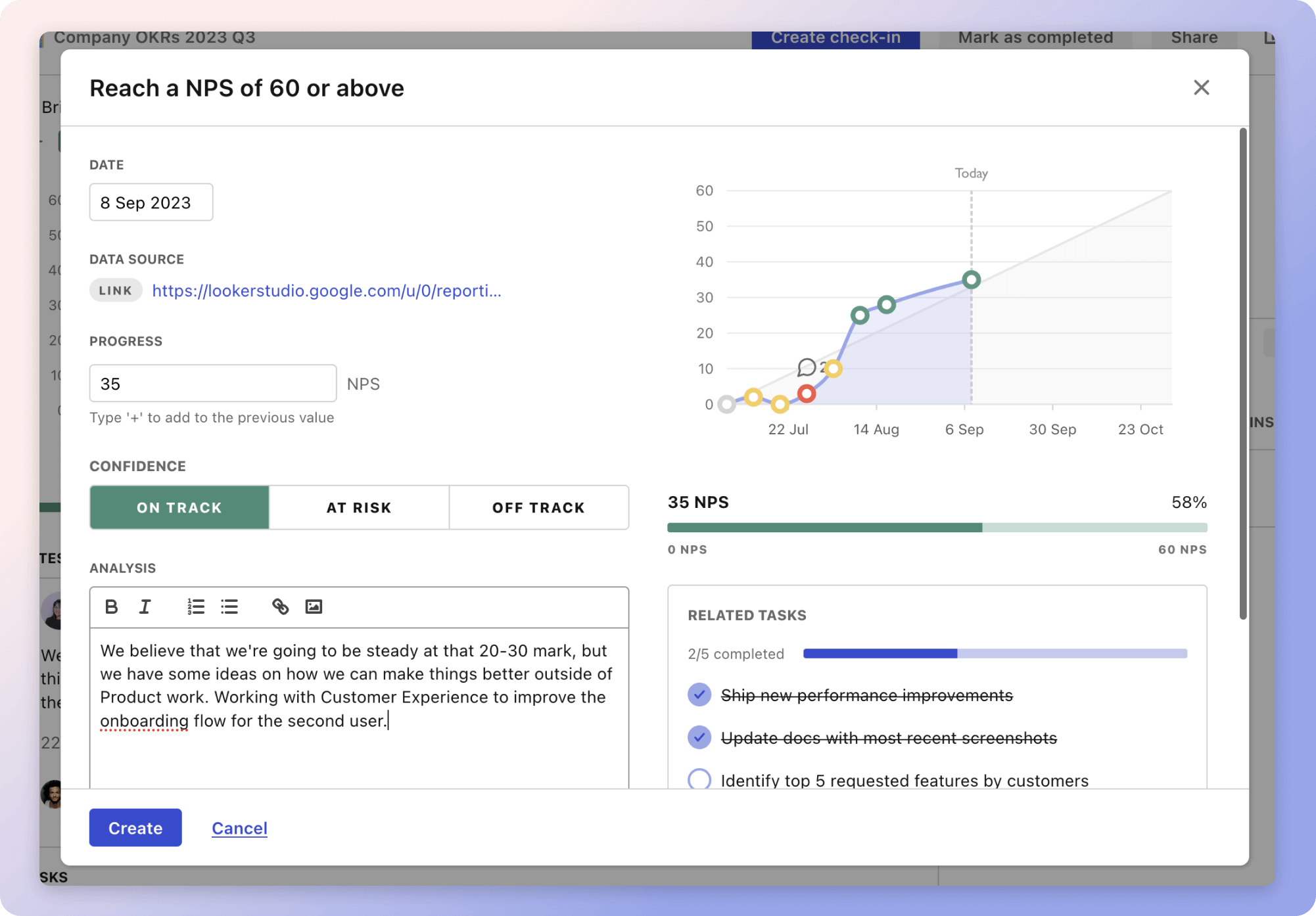 Tability's check-ins will save you hours and increase transparency
 The best metrics for Ensuring sticker quality