Get Tability: OKRs that don't suck |Β Learn more β†’

8 OKR examples for Quality Assurance And Control

Turn your spreadsheets into OKR dashboards with Tability

Tability is a cheatcode for goal-driven teams. Set perfect OKRs with AI, stay focused on the work that matters.

What are Quality Assurance And Control OKRs?

The Objective and Key Results (OKR) framework is a simple goal-setting methodology that was introduced at Intel by Andy Grove in the 70s. It became popular after John Doerr introduced it to Google in the 90s, and it's now used by teams of all sizes to set and track ambitious goals at scale.

How you write your OKRs can make a huge difference on the impact that your team will have at the end of the quarter. But, it's not always easy to write a quarterly plan that focuses on outcomes instead of projects.

We have curated a selection of OKR examples specifically for Quality Assurance And Control to assist you. Feel free to explore the templates below for inspiration in setting your own goals.

If you want to learn more about the framework, you can read our OKR guide online.

The best tools for writing perfect Quality Assurance And Control OKRs

Here are 2 tools that can help you draft your OKRs in no time.

Tability AI: to generate OKRs based on a prompt

Tability AI allows you to describe your goals in a prompt, and generate a fully editable OKR template in seconds.

Watch the video below to see it in action πŸ‘‡

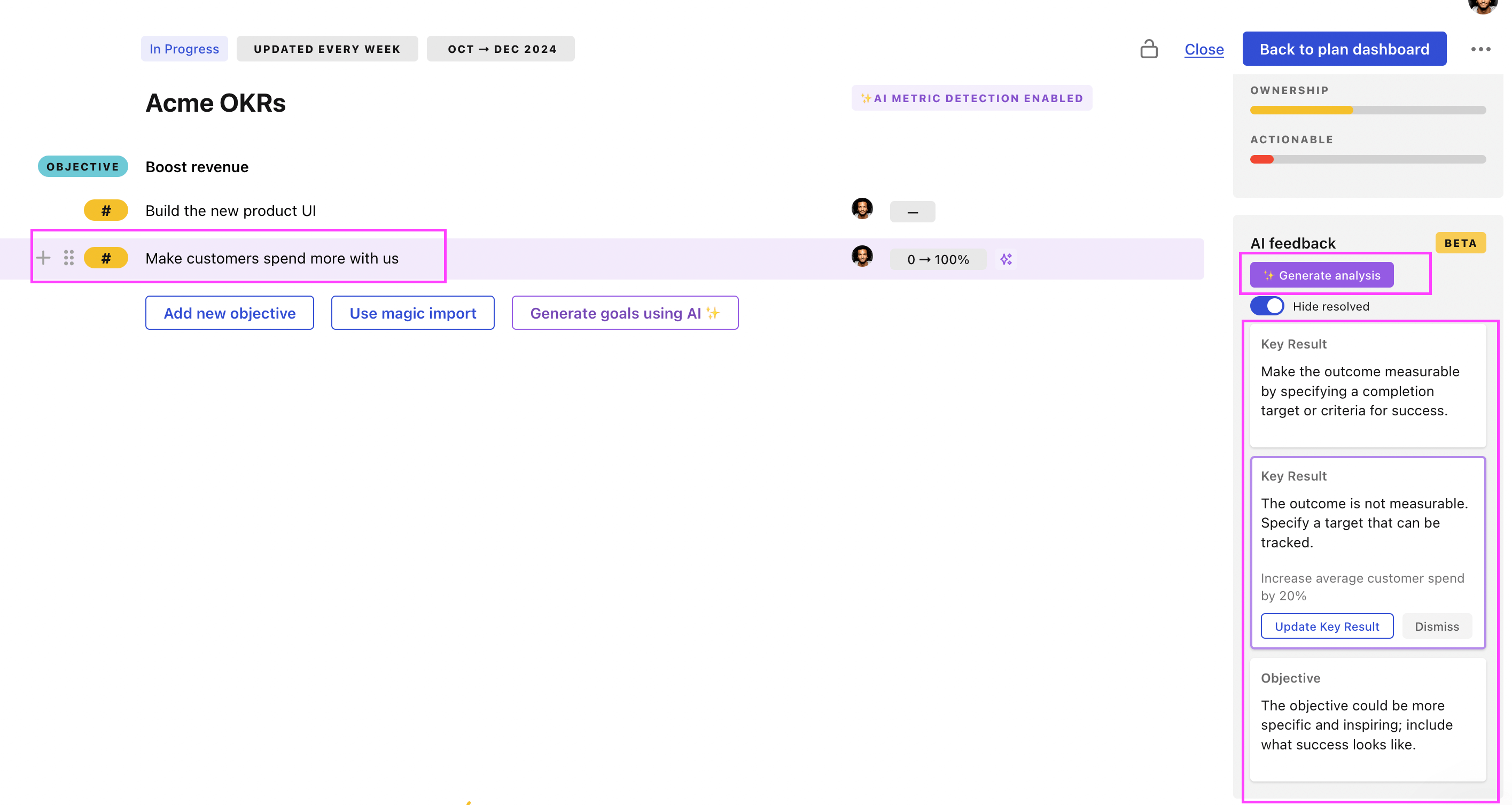
Tability Feedback: to improve existing OKRs

You can use Tability's AI feedback to improve your OKRs if you already have existing goals.

AI feedback for OKRs in Tability

Tability will scan your OKRs and offer different suggestions to improve them. This can range from a small rewrite of a statement to make it clearer to a complete rewrite of the entire OKR.

Quality Assurance And Control OKRs examples

We've added many examples of Quality Assurance And Control Objectives and Key Results, but we did not stop there. Understanding the difference between OKRs and projects is important, so we also added examples of strategic initiatives that relate to the OKRs.

Hope you'll find this helpful!

OKRs to enhance QAQC protocols in construction operations

  • ObjectiveEnhance QAQC protocols in construction operations
  • KRImplement at least two innovative QAQC systems to increase efficiency by 25%
  • TaskIdentify potential innovative QAQC systems for consideration
  • TaskAnalyze and select two systems based on efficiency gains
  • TaskImplement and train staff on chosen QAQC systems
  • KRAchieve a 20% improvement in overall project quality through meticulous QAQC procedures
  • TaskRegularly evaluate and revise QAQC processes
  • TaskImplement more stringent QAQC procedures
  • TaskTrain team members on new procedures
  • KRReduce non-compliance issues by 30% through enhanced QAQC training
  • TaskConduct regular employee QAQC training sessions
  • TaskDevelop a comprehensive QAQC training program
  • TaskMonitor and evaluate training effectiveness regularly

OKRs to enhance product quality and shipment speed

  • ObjectiveEnhance product quality and shipment speed
  • KRIncrease shipping speed by 15% through operational efficiencies
  • TaskAssess and eliminate bottlenecks in the delivery process
  • TaskImplement automated packaging systems to minimize processing time
  • TaskPrioritize streamlined routing in distribution centers
  • KRImplement quality control system to decrease customer returns by 10%
  • TaskDevelop and implement selected quality control system
  • TaskResearch and identify effective quality control systems
  • TaskTrack, analyze, and adjust system based on results
  • KRReduce product defect rates by 20% through improvement initiatives
  • TaskInvest in superior raw materials for product creation
  • TaskTrain production staff on improved manufacturing techniques
  • TaskImplement rigorous quality control checks in the production process

OKRs to to enhance global gap, food safety, and health and safety protocols

  • ObjectiveTo enhance global gap, food safety, and health and safety protocols
  • KRImprove LRA/BCEA compliance by 25% through staff training and policy enforcement
  • TaskImplement comprehensive LRA/BCEA-focused staff training programs
  • TaskEnhance enforcement measures for compliance policies
  • TaskRegularly review and update compliance policies
  • KRReduce food safety incidents by 15% by implementing stringent quality checks
  • TaskImplement strict quality controls at sourcing stage
  • TaskRegularly monitor and record food handling practices
  • TaskTrain staff on food safety standards and procedures
  • KRIncrease health and safety protocol adoption by 20% with regular reminders and audits
  • TaskImplement regular reminders about health and safety protocols
  • TaskSchedule routine safety protocol audits
  • TaskDevelop strategy to increase protocol adoption by 20%

OKRs to enhance efficiency in production and testing processes

  • ObjectiveEnhance efficiency in production and testing processes
  • KRIncrease successful first-time production runs by 10% to reduce rework
  • TaskImplement process checks to identify errors early
  • TaskStrengthen staff training on production procedures
  • TaskUpgrade equipment for better precision and efficiency
  • KRReduce production errors by 15% through implementing strict quality control measures
  • TaskRegularly monitor and correct production errors promptly
  • TaskImplement stringent quality control measures in the production process
  • TaskConduct regular training for staff on quality standards
  • KRDecrease testing time by 20% by optimizing testing procedures
  • TaskReview current testing methods for inefficiencies and redundancies
  • TaskTrain staff in new, optimized testing procedures
  • TaskImplement automation for repetitive testing tasks

OKRs to improve effectiveness and quality of assurance audits

  • ObjectiveImprove effectiveness and quality of assurance audits
  • KRReduce audit errors by 10% through augmented review processes
  • TaskTrain reviewers on common audit errors
  • TaskRegularly update and refine review guidelines
  • TaskImplement stringent quality checks in the review process
  • KRIncrease audit accuracy by 15% by implementing a new quality control system
  • TaskTrain all team members on new system
  • TaskInstall and configure the new system
  • TaskResearch and select an effective quality control system
  • KRConduct comprehensive assurance training for audit staff to bolster their audit skills
  • TaskCoordinate and conduct the training sessions
  • TaskDesign an extensive assurance training program
  • TaskIdentify specific skills gaps within the current audit staff

OKRs to improve product excellence and expedite shipping

  • ObjectiveImprove product excellence and expedite shipping
  • KRShorten average shipping time by 20% across all product lines
  • TaskOptimize warehouse organizational system to improve efficiency
  • TaskImplement expedited processing for all product lines
  • TaskNegotiate faster delivery times with shipping providers
  • KRImplement one new quality control technique and reduce customer complaints by 10%
  • TaskResearch and select a new quality control technique to implement
  • TaskTrain staff in the new quality control method application
  • TaskTrack customer complaints to measure improvements
  • KRAchieve a 15% decrease in product defects identified through quality checks
  • TaskDevelop new quality control procedures
  • TaskImplement research on common defect trends
  • TaskConduct regular training sessions for staff

OKRs to achieve timely and quality delivery of API projects

  • ObjectiveAchieve timely and quality delivery of API projects
  • KRImplement a new status tracking system to reduce delivery delays by 20%
  • TaskPurchase and install chosen system
  • TaskTrain staff on the new tracking system
  • TaskResearch potential status tracking systems and service providers
  • KRIncrease customer satisfaction scores related to project delivery quality by 25%
  • TaskTrain staff in top-tier customer service techniques
  • TaskIntroduce a post-project customer feedback survey
  • TaskImplement rigorous quality control checks on every project
  • KRComplete project documentation with less than 10% errors by end of quarter
  • TaskThoroughly proofread documentation for accuracy
  • TaskSeek peer-review feedback on drafts
  • TaskUse software tools for error detection

OKRs to enhance pre-audit inspection for REV Vistex controls efficiency

  • ObjectiveEnhance pre-audit inspection for REV Vistex controls efficiency
  • KREffectively implement at least 3 improvement suggestions by the end of the quarter
  • TaskExecute strategy and track progress
  • TaskIdentify improvement suggestions from stakeholders
  • TaskDevelop implementation strategy for suggestions
  • KRIdentify 10 potential efficiency improvement areas in the Vistex controls testing process
  • TaskAnalyze current Vistex controls testing process thoroughly
  • TaskIdentify repetitive steps and potential automation opportunities
  • TaskStudy error rates and uncover their causes
  • KRReduce issues discovered during actual audit by 20%
  • TaskIncrease education and training on audit requirements
  • TaskImplement regular self-audits to identify potential issues
  • TaskStrengthen internal controls to improve accuracy

Quality Assurance And Control OKR best practices

Generally speaking, your objectives should be ambitious yet achievable, and your key results should be measurable and time-bound (using the SMART framework can be helpful). It is also recommended to list strategic initiatives under your key results, as it'll help you avoid the common mistake of listing projects in your KRs.

Here are a couple of best practices extracted from our OKR implementation guide πŸ‘‡

Tip #1: Limit the number of key results

Having too many OKRs is the #1 mistake that teams make when adopting the framework. The problem with tracking too many competing goals is that it will be hard for your team to know what really matters.

We recommend having 3-4 objectives, and 3-4 key results per objective. A platform like Tability can run audits on your data to help you identify the plans that have too many goals.

Tip #2: Commit to weekly OKR check-ins

Setting good goals can be challenging, but without regular check-ins, your team will struggle to make progress. We recommend that you track your OKRs weekly to get the full benefits from the framework.

Being able to see trends for your key results will also keep yourself honest.

Tip #3: No more than 2 yellow statuses in a row

Yes, this is another tip for goal-tracking instead of goal-setting (but you'll get plenty of OKR examples above). But, once you have your goals defined, it will be your ability to keep the right sense of urgency that will make the difference.

As a rule of thumb, it's best to avoid having more than 2 yellow/at risk statuses in a row.

Make a call on the 3rd update. You should be either back on track, or off track. This sounds harsh but it's the best way to signal risks early enough to fix things.

Save hours with automated Quality Assurance And Control OKR dashboards

AI feedback for OKRs in Tability

Quarterly OKRs should have weekly updates to get all the benefits from the framework. Reviewing progress periodically has several advantages:

Most teams should start with a spreadsheet if they're using OKRs for the first time. Then, you can move to Tability to save time with automated OKR dashboards, data connectors, and actionable insights.

How to get Tability dashboards:

That's it! Tability will instantly get access to 10+ dashboards to monitor progress, visualise trends, and identify risks early.

More Quality Assurance And Control OKR templates

We have more templates to help you draft your team goals and OKRs.

Table of contents