In short
What is a good team efficiency OKR?
A good team efficiency OKR pairs one clear objective with two to four measurable key results the team can score every week. It describes an outcome rather than a list of activities, sets targets that are ambitious but scoreable, and is reviewed weekly so blockers surface before the quarter gets away from the team.
These Team Efficiency OKR templates are meant to help teams move from ideas and projects to measurable business outcomes. Use them as a starting point, then tailor the metrics and initiatives to the reality of your company.
This page shows the top 7 of 7 templates for team efficiency, with internal links to related categories and guidance for adapting the examples to your team.
Last template update in this category: 2025-06-03What this category is for
- Teams that need a clearer operating rhythm for team efficiency work.
- Managers who want examples they can adapt into outcome-focused quarterly plans.
- Leaders comparing adjacent categories before choosing the best OKR direction.
Best outcomes to track
- Team Efficiency priorities tied to measurable business outcomes.
- Weekly check-ins that surface blockers before they become delivery issues.
- Better alignment between initiatives and the metrics that matter.
Related categories
Use these linked categories to explore adjacent planning areas and strengthen the internal topic cluster around team efficiency.
Team Efficiency OKR examples and templates
Start with these top 7 examples from 7 total templates in this category, then adapt the metrics and initiatives to fit your team's constraints and operating cadence.
OKRs to achieve deep understanding of each team's business and improve team organization
 ObjectiveAchieve deep understanding of each team's business and improve team organization
 KRDevelop and implement a customized organization system for each team, noting a 15% increase in efficiency
 Analyze each team's current organization system
- Create a tailored organization system per team
- Monitor and measure efficiency improvement
- KRAttend 5 meetings per team to gain in-depth knowledge about their business processes
- Review and summarize meeting notes for information
- Schedule to join 5 meetings per team
- Take detailed notes during each meeting
- KRInterview 3 team members from each team to gather detailed insights by Week 6
- Schedule interviews with selected team members by Week 3
- Conduct and document interviews by Week 6
- Prepare detailed interview questions by Week 4
OKRs to enhance team performance through versatile improvements
- ObjectiveEnhance team performance through versatile improvements
- KRImprove team skill set through specialized training for fortifying 7 identified areas
- KRLaunch and implement 5 innovative improvement initiatives to elevate team efficiency
- Identify potential initiatives for efficiency enhancement
- Develop detailed plans for the top 5 initiatives
- Begin implementation of chosen initiatives
- KRIncrease team productivity by 15% through process optimization
- Train team members on the optimized processes
- Implement new process strategies to streamline workflow
- Review current team processes and identify areas for improvement
OKRs to enhance cross-functional cooperation within our teams
- ObjectiveEnhance cross-functional cooperation within our teams
- KRIncrease participation in cross-departmental meetings by 30%
- Offer a platform for online participation for remote workers
- Promote meetings via internal newsletters and emails
- Implement a reward system for frequent meeting attendees
- KRLaunch at least two collaborative projects involving different functional teams
- Assign responsibilities and officially launch the projects
- Communicate and plan with team leaders for project initiation
- Identify potential project ideas involving different functional teams
- KRAchieve a 20% improvement in team efficiency metrics via cross-functional initiatives
- Develop and implement cross-functional collaboration strategies
- Identify inefficiencies in current team workflows and processes
- Regularly review and adjust strategies based on team feedback
OKRs to improve efficiency in client and team management
- ObjectiveImprove efficiency in client and team management
- KRIncrease client satisfaction by 10% as evidenced by quarterly survey responses
- Implement regular client follow-ups to address potential issues
- Evaluate and streamline communication processes for client efficiency
- Provide staff with customer service training to improve interactions
- KREnhance team output by 15% through implementation of structured weekly check-ins
- Train team on effective check-in strategies
- Monitor and measure output increase weekly
- Establish a weekly check-ins system for the team
- KRAchieve a 20% decrease in resolution time for client-reported software issues
- Provide ongoing technical training for the customer service team
- Establish a priority-based resolution system
- Implement more efficient issue-tracking software
OKRs to maximize team efficiency to achieve 80,000 hours of work
- ObjectiveMaximize team efficiency to achieve 80,000 hours of work
- KRImplementation of productivity-enhancing tools to reduce idle time by 15%
- Implement chosen tools across relevant departments
- Research and select potential productivity-enhancing tools
- Continuously review and monitor tool usage and efficiency
- KRIncrease average weekly work hours by 10%
- Encourage staff to take fewer, shorter breaks
- Evaluate and adjust employee scheduling for increased efficiency
- Implement mandatory, productive overtime procedures
- KRTrain team on time management skills to improve work speed by 20%
- Schedule training sessions for all team members
- Identify a comprehensive time management training program
- Monitor productivity to measure impact of training
OKRs to optimize Trello Board for effective team OKR management
- ObjectiveOptimize Trello Board for effective team OKR management
- KRConduct 5 training sessions on Trello usage to increase team efficiency by 20%
- Create a comprehensive Trello training curriculum
- Schedule and conduct five Trello training sessions
- Identify Trello features that boost team efficiency
- KREnsure 100% of team updates their respective OKRs on Trello weekly
- Issue weekly reminder emails to update OKRs on Trello
- Give a short training on updating OKRs on Trello
- Implement OKRs review during team meetings
- KRImprove Trello Board navigation efficiency by 30% through reorganization and streamlining
- Train team on navigation improvements to ensure smoother usage
- Implement an intuitive, uniform labeling system across all boards
- Review all current Trello boards for possible streamlining opportunities
OKRs to improve team effectiveness in running operations
- ObjectiveImprove team effectiveness in running operations
- KREnhance team efficiency by reducing average response time to customer inquiries by 25%
- Streamline internal processes and workflows to minimize response time and avoid unnecessary delays
- Implement automated email templates for quick and standardized responses to customer inquiries
- Provide regular training sessions on effective communication and problem-solving techniques
- Implement a ticketing system to track and prioritize customer inquiries for faster resolution
- KRIncrease team productivity by 15% through improved task management and delegation
- Define clear goals and deadlines for each team member to improve task prioritization
- Conduct regular feedback sessions to address challenges and provide support in task management
- Provide training on effective delegation strategies to enhance productivity within the team
- Implement a centralized task management system for better tracking and collaboration
- KRImprove team collaboration by achieving a 30% increase in cross-functional communication and information sharing
- Provide training sessions on effective communication and active listening skills for team members
- Encourage knowledge sharing and collaboration through a central online platform or shared documents
- Facilitate cross-functional team building activities to strengthen relationships and promote communication
- Implement regular team meetings to discuss projects, share updates, and address challenges
- KRReduce operational errors by 20% through enhanced documentation and quality control
How to use Team Efficiency OKRs well
Strong OKRs keep the team focused on measurable outcomes instead of a long task list. That means picking a clear objective, limiting the number of competing priorities, and reviewing progress every week.
Use Team Efficiency OKRs to define what success looks like this quarter, then track them weekly so the team can quickly spot blockers, learn, and adjust execution.
Choosing software to run Team Efficiency OKRs?
Move from team efficiency examples to execution with sourced comparisons from The OKR Software Benchmark.
- Best OKR software rankingSee the overall verdict and the criteria behind each platform score.
- OKR software pricing comparisonCompare verified prices, minimum commitments, and costs at different team sizes.
- Benchmark methodologyReview the published scoring model, source standards, and conflict-of-interest policy.
Related OKR template categories
If you are building a broader plan, these related categories can help you connect team efficiency work to adjacent company priorities.
- customer service team OKR templates
- operations team OKR templates
- leadership OKR templates
- strategic planning OKR templates
- operations OKR templates
- sales OKR templates
More OKR templates to explore
- OKRs to reduce partial deliveries to clients
- OKRs to streamline warehouse to delivery process for increased efficiency
- OKRs to optimize delivery operations to save costs
- OKRs to enhance the pipeline's quality and quantity to boost revenue
- OKRs to drive change for a better future based on data and evidence
- OKRs to establish indisputable proof of need
Not seeing what you need?
Use Tability AI to generate OKRs based on a prompt
Tability allows you to describe your goals in a prompt, and generate a fully editable OKR template in seconds.
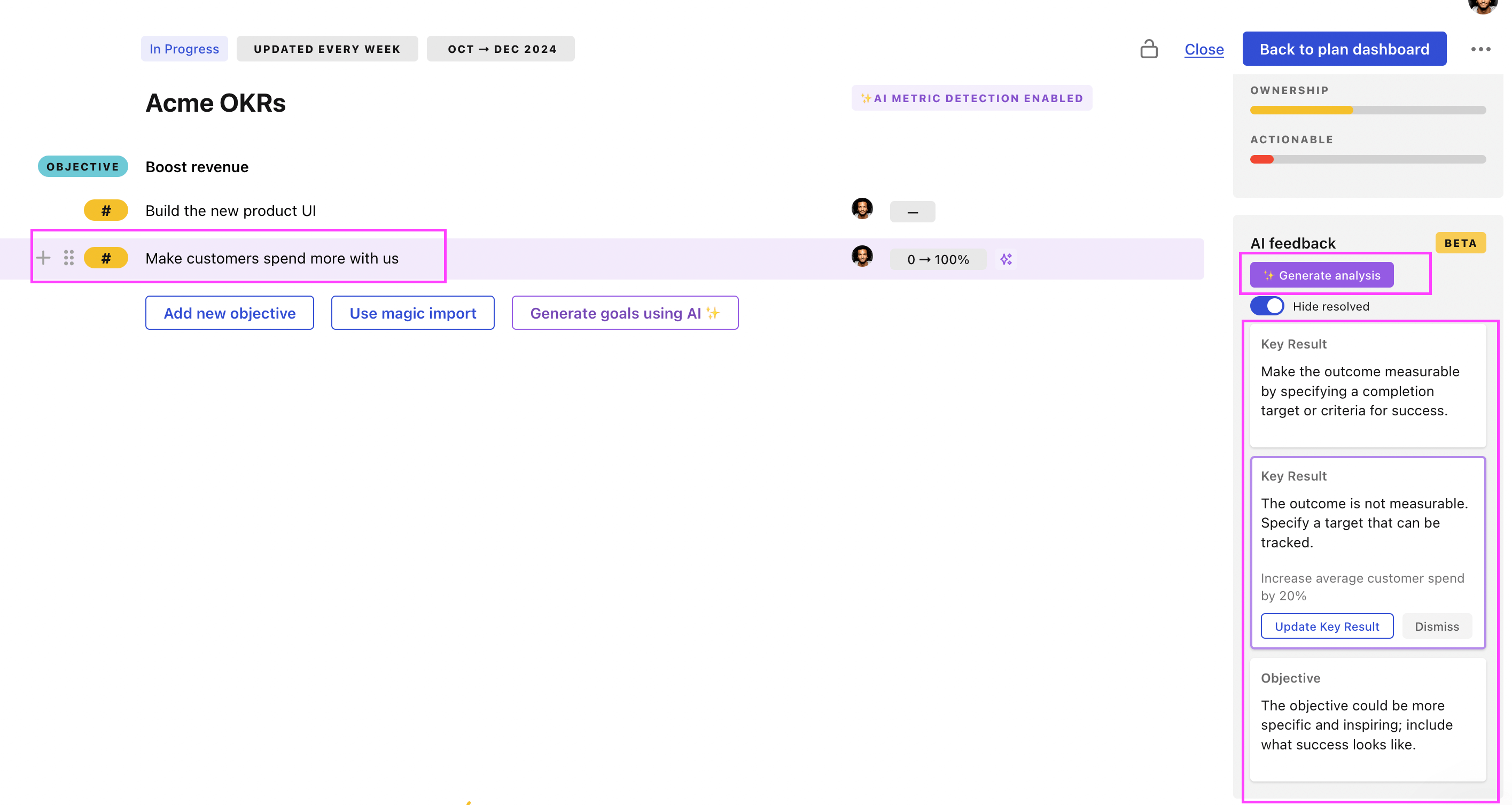
Use Tability feedback to improve existing OKRs
You can also use Tability's AI feedback to improve your OKRs if you already have existing goals. Just import them to the platform and click on the Generate analysis button.
Tability will scan your OKRs and offer different suggestions to improve them. This can range from a small rewrite of a statement to make it clearer to a complete rewrite of the entire OKR.