Tability is a cheatcode for goal-driven teams. Set perfect OKRs with AI, stay focused on the work that matters.
What are Conflict Manager OKRs?
The Objective and Key Results (OKR) framework is a simple goal-setting methodology that was introduced at Intel by Andy Grove in the 70s. It became popular after John Doerr introduced it to Google in the 90s, and it's now used by teams of all sizes to set and track ambitious goals at scale.
Writing good OKRs can be hard, especially if it's your first time doing it. You'll need to center the focus of your plans around outcomes instead of projects.
We have curated a selection of OKR examples specifically for Conflict Manager to assist you. Feel free to explore the templates below for inspiration in setting your own goals.
If you want to learn more about the framework, you can read our OKR guide online.
The best tools for writing perfect Conflict Manager OKRs
Here are 2 tools that can help you draft your OKRs in no time.
Tability AI: to generate OKRs based on a prompt
Tability AI allows you to describe your goals in a prompt, and generate a fully editable OKR template in seconds.
- 1. Create a Tability account
- 2. Click on the Generate goals using AI
- 3. Describe your goals in a prompt
- 4. Get your fully editable OKR template
- 5. Publish to start tracking progress and get automated OKR dashboards
Watch the video below to see it in action 👇
Tability Feedback: to improve existing OKRs
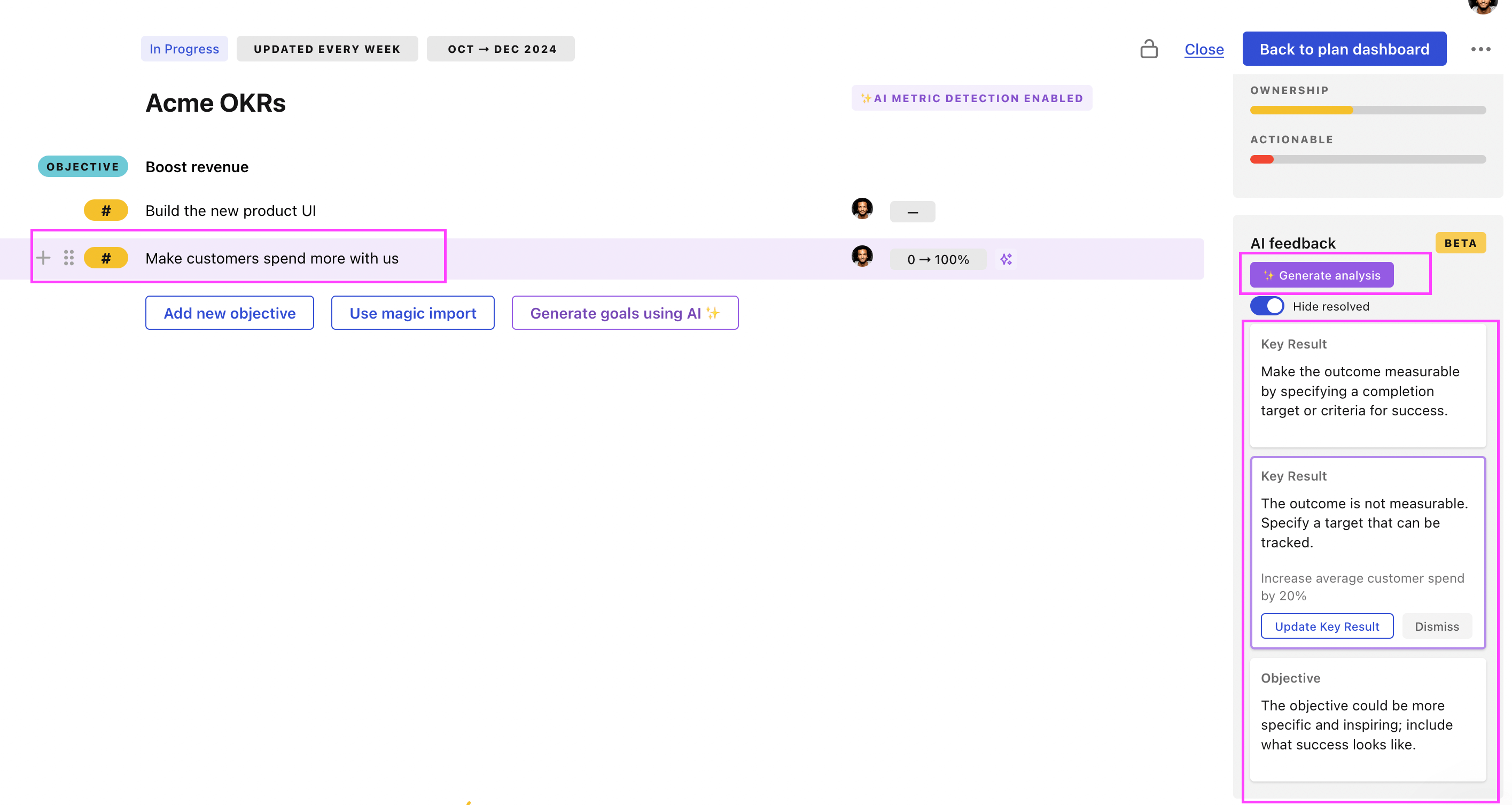
You can use Tability's AI feedback to improve your OKRs if you already have existing goals.
- 1. Create your Tability account
- 2. Add your existing OKRs (you can import them from a spreadsheet)
- 3. Click on Generate analysis
- 4. Review the suggestions and decide to accept or dismiss them
- 5. Publish to start tracking progress and get automated OKR dashboards

Tability will scan your OKRs and offer different suggestions to improve them. This can range from a small rewrite of a statement to make it clearer to a complete rewrite of the entire OKR.
Conflict Manager OKRs examples
You will find in the next section many different Conflict Manager Objectives and Key Results. We've included strategic initiatives in our templates to give you a better idea of the different between the key results (how we measure progress), and the initiatives (what we do to achieve the results).
Hope you'll find this helpful!
OKRs to enhance strategic partnerships through relationship management
ObjectiveEnhance strategic partnerships through relationship management
KRForge 3 beneficial partnerships with new industry leaders
Negotiate terms of partnership agreements
Identify potential industry leaders for partnership opportunities
Initiate outreach to discuss potential collaboration
KRIncrease client satisfaction score by 20% through frequent engagement and feedback
Implement weekly check-ins with clients for feedback
Launch a monthly satisfaction survey for clients
Enhance communication response time with clients
KRReduce client conflicts by 15% by improving conflict management strategies
Assign a dedicated conflict resolution team within client service department
Develop a standardized conflict resolution protocol
Implement regular conflict resolution training for client-facing employees
OKRs to enhance productivity and cooperation within the workplace
ObjectiveEnhance productivity and cooperation within the workplace
KRAchieve a 20% decrease in internal misunderstanding or conflict reports
Provide regular conflict resolution training for staff
Establish a transparent method for handling internal reports
Implement a clear, comprehensive internal communication protocol
KRImplement two efficiency-boosting initiatives per department
Implement second initiative in all departments
Roll out one initiative per department
Identify potential efficiency-boosting initiatives
KRIncrease participation in team-building activities by 75%
Implement attractive rewards for active participation
Schedule regular, optional team-building activities
Promote benefits of team-building via internal communications
OKRs to enhance team collaboration and support sales
ObjectiveEnhance team collaboration and support sales
KRDecrease team conflict incidents by 40% via conflict management training
Monitor and track the conflict incidents post-training
Identify and organize a conflict management training program
Encourage all team members to participate in the training
KRImprove team communication efficiency by 30% through collaboration tool implementation
Identify suitable collaboration tools for team needs
Arrange training sessions on tool usage
Monitor and evaluate tool effectiveness
KRIncrease sales support activities by 25% to boost sales outcomes
Identify key areas in need of increased sales support
Upgrade technology to expedite sales support processes
Train staff to enhance their sales-support capabilities
OKRs to drive productivity and success through team positivity
ObjectiveDrive productivity and success through team positivity
KRIncrease average team productivity by 20% via performance reviews
Motivate improvement through incentives and recognition
Implement feedback and targeted training from reviews
Conduct regular, structured performance reviews for all team members
KREnhance team collaboration efforts by implementing two team building activities
Communicate event details to the entire team
Research relevant team-building activities suitable for all staff
Select and schedule two team-building events
KRReduce interdepartmental conflicts by 30% measured through surveys
Establish a clear, comprehensive dispute resolution process
Implement mandatory conflict resolution training for all departments
Schedule regular interdepartmental meetings for communication
OKRs to foster a stronger bond within the team
ObjectiveFoster a stronger bond within the team
KRAchieve 30% improvement in team communication metrics, as measured by engagement surveys
Utilize project management tools to promote collaboration
Implement weekly team-building exercises to foster better communication
Invest in team communication training workshops
KROrganize at least 2 team-building events with 90% participation rate
Develop engaging, inclusive activities for team-building events
Promote events efficiently for high participant turnout
Identify interests and availability for optimal event planning
KRDecrease team conflict incidents by 50% through implementing conflict resolution training
Monitor and measure the decrease in team conflict incidents
Research and select optimal conflict resolution training program
Schedule mandatory training sessions for all team members
OKRs to strengthen cross-functional team collaboration
ObjectiveStrengthen cross-functional team collaboration
KRReduce resolution time for team conflicts by 30%
Define clear process for handling disputes promptly
Implement conflict resolution training for all team members
Regularly review and adjust the conflict resolution process
KRImplement two new communication tools to aid team interaction and engagement
Identify top two communication tools suitable for team engagement
Purchase and install chosen communication tools
Conduct training sessions on using new tools
KRAchieve a 20% increase in collaborative projects compared to last quarter
Initiate regular brainstorming sessions for project ideas
Develop incentives for collaborative project participation
Formulate strategies to strengthening team cooperation and communication
OKRs to improve team performance through effective teamwork and collaboration
ObjectiveImprove team performance through effective teamwork and collaboration
KRReduce conflicts within the team by 50% by implementing conflict resolution strategies
Encourage active listening and empathy among team members during conflicts
Establish a clear communication protocol to address conflicts promptly
Implement a mentorship program to provide guidance and support during conflict resolution
Conduct a team-wide conflict resolution training session
KRDevelop team members' skills by organizing at least two team-building workshops focused on enhancing collaboration and problem-solving abilities
KRIncrease team productivity by 20% through enhanced communication and coordination
Provide effective communication tools and train team members on how to use them
Implement regular team meetings to discuss progress, challenges, and goals
Encourage collaboration by assigning cross-functional projects and fostering teamwork
Develop a centralized system for task tracking, deadlines, and accountability
KREnhance employee satisfaction and engagement by achieving an average team happiness score of 8 out of 10
Implement employee recognition programs to celebrate achievements and boost team morale
Analyze survey results to identify areas for improvement and develop targeted action plans
Provide regular opportunities for employee feedback and implement suggestions for enhancing happiness
Conduct quarterly employee satisfaction surveys to measure team happiness score
Conflict Manager OKR best practices
Generally speaking, your objectives should be ambitious yet achievable, and your key results should be measurable and time-bound (using the SMART framework can be helpful). It is also recommended to list strategic initiatives under your key results, as it'll help you avoid the common mistake of listing projects in your KRs.
Here are a couple of best practices extracted from our OKR implementation guide 👇
Tip #1: Limit the number of key results
The #1 role of OKRs is to help you and your team focus on what really matters. Business-as-usual activities will still be happening, but you do not need to track your entire roadmap in the OKRs.
We recommend having 3-4 objectives, and 3-4 key results per objective. A platform like Tability can run audits on your data to help you identify the plans that have too many goals.
Tip #2: Commit to weekly OKR check-ins
Don't fall into the set-and-forget trap. It is important to adopt a weekly check-in process to get the full value of your OKRs and make your strategy agile – otherwise this is nothing more than a reporting exercise.
Being able to see trends for your key results will also keep yourself honest.
Tip #3: No more than 2 yellow statuses in a row
Yes, this is another tip for goal-tracking instead of goal-setting (but you'll get plenty of OKR examples above). But, once you have your goals defined, it will be your ability to keep the right sense of urgency that will make the difference.
As a rule of thumb, it's best to avoid having more than 2 yellow/at risk statuses in a row.
Make a call on the 3rd update. You should be either back on track, or off track. This sounds harsh but it's the best way to signal risks early enough to fix things.
Save hours with automated Conflict Manager OKR dashboards

OKRs without regular progress updates are just KPIs. You'll need to update progress on your OKRs every week to get the full benefits from the framework. Reviewing progress periodically has several advantages:
- It brings the goals back to the top of the mind
- It will highlight poorly set OKRs
- It will surface execution risks
- It improves transparency and accountability
Spreadsheets are enough to get started. Then, once you need to scale you can use Tability to save time with automated OKR dashboards, data connectors, and actionable insights.
How to get Tability dashboards:
- 1. Create a Tability account
- 2. Use the importers to add your OKRs (works with any spreadsheet or doc)
- 3. Publish your OKR plan
That's it! Tability will instantly get access to 10+ dashboards to monitor progress, visualise trends, and identify risks early.
More Conflict Manager OKR templates
We have more templates to help you draft your team goals and OKRs.
OKRs to uncover and articulate the 'as-is' process accurately
OKRs to enhance user satisfaction and engagement with our app
OKRs to improve efficacy of maintenance request processing
OKRs to enhance warehouse labor productivity by implementing lean methodologies and automation
OKRs to enhance synergy between startup house and startup ecosystem
OKRs to implement a laboratory procedure mentorship program