In short
What is a good project teams OKR?
A good project teams OKR pairs one clear objective with two to four measurable key results the team can score every week. It describes an outcome rather than a list of activities, sets targets that are ambitious but scoreable, and is reviewed weekly so blockers surface before the quarter gets away from the team.
These Project Teams OKR templates are meant to help teams move from ideas and projects to measurable business outcomes. Use them as a starting point, then tailor the metrics and initiatives to the reality of your company.
This page shows the top 10 of 15 templates for project teams, with internal links to related categories and guidance for adapting the examples to your team.
Last template update in this category: 2025-02-24What this category is for
- Teams that need a clearer operating rhythm for project teams work.
- Managers who want examples they can adapt into outcome-focused quarterly plans.
- Leaders comparing adjacent categories before choosing the best OKR direction.
Best outcomes to track
- Project Teams priorities tied to measurable business outcomes.
- Weekly check-ins that surface blockers before they become delivery issues.
- Better alignment between initiatives and the metrics that matter.
Related categories
Use these linked categories to explore adjacent planning areas and strengthen the internal topic cluster around project teams.
Priority hubs
Project Teams OKR examples and templates
Start with these top 10 examples from 15 total templates in this category, then adapt the metrics and initiatives to fit your team's constraints and operating cadence.
OKRs to drive Agile transformation and widespread adoption in project teams
 ObjectiveDrive Agile transformation and widespread adoption in project teams
 KRTrain 90% of project team members on Agile methodology by the quarter-end
 Schedule and conduct Agile training sessions
- Confirm completion and understanding of training
- Identify project team members needing Agile methodology training
- KRAchieve a 20% improvement in project delivery speed using Agile methods
- Incorporate sprint planning for iterative project approach
- Facilitate regular backlog grooming for efficiency
- Implement daily stand-up meetings to prioritize tasks
- KRImplement Agile practices in 75% of ongoing projects this quarter
- Identify projects suitable for Agile implementation
- Train project teams on Agile methodologies
- Monitor and adjust Agile adoption progress
OKRs to enhance administrative efficiency and effectiveness
- ObjectiveEnhance administrative efficiency and effectiveness
- KRIncrease decision-making accuracy to 95%
- Conduct regular decision-making skill training
- Implement thorough data analysis before making decisions
- Introduce peer-review process for key decisions
- KRComplete 100% of projects within agreed time frames
- Delegate tasks efficiently among team members
- Prioritize projects based on deadline and importance
- Regularly monitor and update project progress
- KRReduce paperwork processing times by 30%
- Train staff on efficient paperwork handling procedures
- Implement digital solutions for real-time paperwork processing
- Regularly review and improve processing workflows
OKRs to enhance transparency and accessibility of my calendar
- ObjectiveEnhance transparency and accessibility of my calendar
- KRImplement a digital shared calendar system for real-time updates by Week 2
- Set up and configure the selected calendar system
- Train all team members in using the shared calendar
- Research and select a suitable digital shared calendar system
- KRAchieve 100% accuracy on meeting information on the shared calendar by Week 4
- Update any changes in meeting details promptly
- Check calendar daily for potential conflicts or errors
- Verify all current meeting details for accuracy daily
- KRSchedule and attend 90% of meetings as reflected in shared calendar
- Prioritize attending over missing scheduled meetings
- Track attendance and aim for 90% compliance
- Review shared calendar daily for upcoming meetings
OKRs to improve team productivity via an enhanced OKR system
- ObjectiveImprove team productivity via an enhanced OKR system
- KRIncrease the number of successful projects by at least 25% compared to previous quarter
- Encourage transparent communication within project teams
- Implement regular training programs for project management skills
- Review and refine project planning and execution strategies
- KRImplement a new digital OKR tracking tool with 100% team adoption
- Organize a mandatory training session on tool usage
- Research and choose a suitable digital OKR tracking tool
- Track and ensure every team member's activity on the tool
- KRAchieve an average of 85% completion rate on all team OKRs
- Set clear, measurable objectives for every team member
- Schedule regular check-ins to discuss progress and obstacles
- Provide resources and support for goal achievement
OKRs to initiate team building activities to foster stronger connections
- ObjectiveInitiate team building activities to foster stronger connections
- KRIncrease the team communication score by 30% compared to the previous quarter
- Encourage regular team meetings for updates
- Introduce a daily communication tool/platform
- Implement weekly team-building exercises
- KRAchieve an average team satisfaction rate of 80% from post-activity surveys
- Develop a comprehensive post-activity satisfaction survey
- Establish a feedback-action system to address issues
- Implement regular team building activities
- KRPlan and conduct at least two team-building activities per month
- Allocate resources and schedule the activities
- Identify suitable team-building activities
- Evaluate activity effectiveness afterwards
OKRs to amplify professional relationships and foster mutual trust among teammates
- ObjectiveAmplify professional relationships and foster mutual trust among teammates
- KRInitiate one-on-one meetings with at least four different coworkers each week
- Schedule separate one-on-one meetings with each colleague
- Identify four coworkers for individual meetings each week
- Prepare discussion points for each meeting
- KROrganize three team building activities aimed at enhancing professional bonds and collaboration
- Schedule and communicate activity dates to the team
- Research popular team-building exercises relevant to professional development
- Plan logistics for the chosen team-building activities
- KRContribute positively to team projects and receive a 90% approval rating from peers
- Actively engage in all team discussions and provide constructive feedback
- Consistently meet deadlines and maintain high-quality work
- Regularly ask for peer feedback and take steps to improve
OKRs to cultivate a culture of growth and empowerment among our teams
- ObjectiveCultivate a culture of growth and empowerment among our teams
- KRLaunch 2 additional team member-led projects
- Schedule project kick-off meetings
- Assign project leads and communicate responsibilities
- Identify resources needed for the projects
- KRIncrease employee participation in decision-making processes by 30%
- Implement a system for weekly brainstorming sessions involving all employees
- Provide training sessions on decision-making strategies
- Routinely encourage open, anonymous suggestions for improvements
- KRRaise employee satisfaction score by 20% through empowerment initiatives
- Establish regular training sessions to improve skills and self-sufficiency
- Implement a system for employees to provide feedback on company processes
- Foster a communal decision-making environment for project planning
OKRs to implement Human Centric Design in our SaaS business
- ObjectiveImplement Human Centric Design in our SaaS business
- KRTrain 80% of design team on Human Centric Design principles by end of quarter
- Monitor and document team members' training progress
- Create a schedule for team members to attend training
- Identify a quality training program on Human Centric Design principles
- KRAchieve a 15% increase in user satisfaction scores post implementation
- Implement changes based on feedback and survey results
- Monitor and track improvements in user satisfaction
- Conduct user surveys to identify areas needing improvement
- KRIntegrate Human Centric Design techniques into at least 3 ongoing projects
- Identify ongoing projects suitable for Human Centric Design implementation
- Coordinate with project teams to discuss Human Centric Design strategies
- Incorporate Human Centric Design principles into the chosen projects
OKRs to increase operational efficiency significantly
- ObjectiveIncrease operational efficiency significantly
- KRReduce processing time for all department workflows by 20%
- Train staff in time management techniques
- Analyze current workflows to identify inefficiencies
- Implement process automation where possible
- KRIncrease on-time project completions by 30%
- Conduct frequent progress checks and adjustments if necessary
- Implement strict project scheduling and timeline management strategies
- Enhance communication between team members for better coordination
- KRDecrease operational errors by 15% through process improvements and training
- Implement and enforce new procedures to ensure compliance and accuracy
- Develop a comprehensive training program for all staff members
- Identify common operational mistakes through rigorous process analysis
OKRs to ensure evident quality work in projects to prevent issues
- ObjectiveEnsure evident quality work in projects to prevent issues
- KRImplement preventive measures in 100% of projects
- Develop comprehensive checklist for preventive measures in projects
- Train project teams on implementing preventive measures
- Monitor and evaluate the effectiveness of preventive measures
- KRAchieve 95% satisfaction rate in client reviews
- Offer comprehensive training for excellent customer service
- Regularly monitor client satisfaction levels
- Develop and implement client feedback loops
- KRReduce project-related incidents by 80%
- Implement rigorous project risk assessment protocols
- Invest in quality project management software
- Train staff in incident prevention and response
How to use Project Teams OKRs well
Strong OKRs keep the team focused on measurable outcomes instead of a long task list. That means picking a clear objective, limiting the number of competing priorities, and reviewing progress every week.
Use Project Teams OKRs to define what success looks like this quarter, then track them weekly so the team can quickly spot blockers, learn, and adjust execution.
Choosing software to run Project Teams OKRs?
Move from project teams examples to execution with sourced comparisons from The OKR Software Benchmark.
- Best OKR software rankingSee the overall verdict and the criteria behind each platform score.
- OKR software pricing comparisonCompare verified prices, minimum commitments, and costs at different team sizes.
- Benchmark methodologyReview the published scoring model, source standards, and conflict-of-interest policy.
Related OKR template categories
If you are building a broader plan, these related categories can help you connect project teams work to adjacent company priorities.
- project manager OKR templates
- customer service team OKR templates
- human resources OKR templates
- leadership OKR templates
- strategic planning OKR templates
- operations OKR templates
More OKR templates to explore
- OKRs to increase company revenue and enhance the organizational environment
- OKRs to communicate product support advancements by us and our partners
- OKRs to understand group's shared experiences comprehensively
- OKRs to understand audience perception and reaction to a certain event
- OKRs to improve the group's understanding and relatability of given information
- OKRs to enhance group communication regarding current conditions
Not seeing what you need?
Use Tability AI to generate OKRs based on a prompt
Tability allows you to describe your goals in a prompt, and generate a fully editable OKR template in seconds.
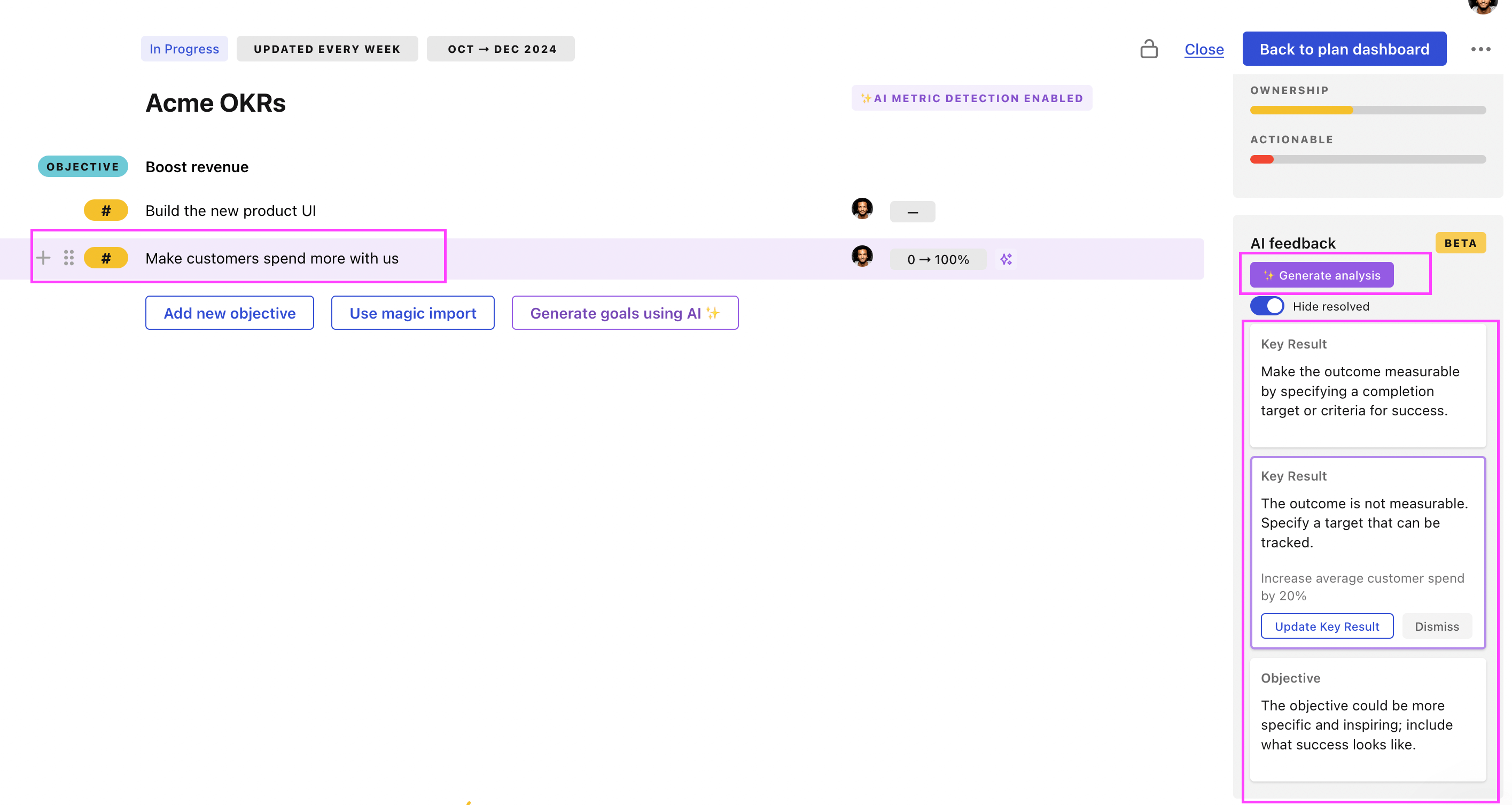
Use Tability feedback to improve existing OKRs
You can also use Tability's AI feedback to improve your OKRs if you already have existing goals. Just import them to the platform and click on the Generate analysis button.
Tability will scan your OKRs and offer different suggestions to improve them. This can range from a small rewrite of a statement to make it clearer to a complete rewrite of the entire OKR.