In short
What is a good operational efficiency OKR?
A good operational efficiency OKR pairs one clear objective with two to four measurable key results the team can score every week. It describes an outcome rather than a list of activities, sets targets that are ambitious but scoreable, and is reviewed weekly so blockers surface before the quarter gets away from the team.
These Operational Efficiency OKR templates are meant to help teams move from ideas and projects to measurable business outcomes. Use them as a starting point, then tailor the metrics and initiatives to the reality of your company.
This page shows the top 10 of 58 templates for operational efficiency, with internal links to related categories and guidance for adapting the examples to your team.
Last template update in this category: 2025-09-24What this category is for
- Teams that need a clearer operating rhythm for operational efficiency work.
- Managers who want examples they can adapt into outcome-focused quarterly plans.
- Leaders comparing adjacent categories before choosing the best OKR direction.
Best outcomes to track
- Operational Efficiency priorities tied to measurable business outcomes.
- Weekly check-ins that surface blockers before they become delivery issues.
- Better alignment between initiatives and the metrics that matter.
Related categories
Use these linked categories to explore adjacent planning areas and strengthen the internal topic cluster around operational efficiency.
Operational Efficiency OKR examples and templates
Start with these top 10 examples from 58 total templates in this category, then adapt the metrics and initiatives to fit your team's constraints and operating cadence.
OKRs to maintain continuous operation of critical facilities and equipment
 ObjectiveMaintain continuous operation of critical facilities and equipment
 KRImplement routine checks to find and rectify faults within 24 hours
 Define faults and their rectification methods
- Train team in fast fault identification
- Develop a daily schedule for routine checks
- KRImprove response time of repair teams to equipment failures by 30%
- Implement an effective communication structure among the team members
- Provide comprehensive training on rapid repair strategies
- Undertake regular equipment maintenance and checkups
- KRAchieve a monthly average of 95% operational efficiency for all critical infrastructure
- Establish key performance indicators to measure efficiency
- Train staff on best operational practices
- Implement routine maintenance procedures for all critical infrastructure
OKRs to boost operational efficiency through AI integration
- ObjectiveBoost operational efficiency through AI integration
- KRReduce manual task completion time by 30% using AI automation
- Monitor efficiency improvements and adjust as required
- Identify tasks best suited for AI automation
- Implement suitable artificial intelligence solutions
- KRAchieve 95% accuracy in AI-driven data analytics and reporting
- Develop and implement an improved AI-driven data analytics model
- Refine algorithms based on test results to improve accuracy
- Test model accuracy against diverse data sets continuously
- KRDecrease operational costs by 20% through AI-optimized processes
- Train staff to use AI for operational tasks
- Utilize AI analytics for informed decision-making
- Implement AI systems to automate repetitive processes
OKRs to increase operational efficiency and output to upscale operations
- ObjectiveIncrease operational efficiency and output to upscale operations
- KRAchieve a 20% reduction in production inefficiencies by streamlining processes
- Develop and implement a new streamlined process
- Evaluate current production process for inefficiencies
- Monitor and optimize the revised process
- KRImplement an employee training program to increase productivity by 15%
- Arrange and conduct training sessions
- Develop a comprehensive training agenda
- Identify necessary skills for productivity enhancement
- KRIntegrate a new inventory management system to reduce waste by 10%
- Monitor and measure waste reduction
- Research potential inventory management systems
- Implement chosen inventory management system
OKRs to increase overall company profitability
- ObjectiveIncrease overall company profitability
- KRGrow revenue by 15% through diversification of products
- Implement marketing strategies to promote diversified products
- Identify potential vertical markets for product diversification
- Develop unique selling propositions for new products
- KRDecrease operational costs by 10% implementing efficiency measures
- Implement energy-saving measures across all facilities
- Streamline supply chain operations for cost efficiency
- Utilize automation for repetitive operations
- KRIncrease customer base by 20% through targeted marketing campaigns
- Define target audience for focused marketing strategy
- Analyze campaign response and adjust accordingly
- Develop engaging, customer-oriented campaigns
OKRs to improve efficiency and support in nursing administrative operations
- ObjectiveImprove efficiency and support in nursing administrative operations
- KRImplement two new support systems for nursing staff
- Research potential systems to address needs
- Identify needs of nursing staff for support systems
- Initiate implementation of selected systems
- KRReduce administrative process bottlenecks by 30%
- Develop and implement efficiency improvement strategies
- Track and monitor process performance regularly
- Identify and analyze current administrative processes
- KRIncrease staff training sessions on efficiency tools from zero to three
- Identify necessary efficiency tools for staff training
- Develop comprehensive training sessions on these tools
- Schedule and conduct three training sessions
OKRs to enhance operational efficiency in Post Fiji
- ObjectiveEnhance operational efficiency in Post Fiji
- KRAchieve a 15% decrease in operational costs via process optimizations
- Develop cost-effective solutions for identified inefficiencies
- Identify inefficiencies in existing operational process
- Implement and monitor new optimized processes
- KRReduce process-related complaints by 30% through implementing improved protocols
- Implement the new protocols companywide
- Identify current complaints related to the process
- Develop improved protocols addressing these issues
- KRIncrease employee productivity by 20% through improved training and workflow systems
- Implement efficient workflow systems to reduce downtime
- Regularly evaluate and update training and workflow procedures
- Develop comprehensive training programs focusing on core job functions
OKRs to to enhance Post Fiji's market and financial performance
- ObjectiveTo enhance Post Fiji's market and financial performance
- KRElevate net profit margin by 10% via cost reduction and operational efficiency
- Implement cost-saving strategies across all departments
- Reduce wastage by optimizing supply chain management
- Streamline operations to enhance productivity and efficiency
- KRImprove revenue by 15% by expanding business to untapped areas
- Develop a comprehensive market entry strategy
- Identify potential untapped markets for expansion
- Implement marketing campaigns in new target areas
- KRIncrease the customer base by 25% through strategic marketing
- Implement tailored promotions for potential customers
- Develop a comprehensive, targeted marketing strategy
- Leverage social media platforms for advertisement
OKRs to achieve EBIDTA positivity with improved circular sanitation impact
- ObjectiveAchieve EBIDTA positivity with improved circular sanitation impact
- KRDecrease operating costs by 15%, improving net profitability
- Streamline processes to enhance operational efficiency
- Renegotiate vendor contracts for more favorable terms
- Evaluate all expenses and identify areas for potential cost reductions
- KRIncrease revenue by 20% through sales of sanitation products/services
- Optimize pricing strategies to attract more customers and increase sales
- Upskill sales team through rigorous training on sanitation products/services
- Develop effective marketing campaigns targeting potential sanitation service buyers
- KRSuccessfully recycle or repurpose 90% of waste produced by the company
- Procure recycling and repurposing facilities/vendors
- Conduct regular waste audits to measure progress
- Implement a company-wide recycling training program
OKRs to enhance operational efficiency in the legal department
- ObjectiveEnhance operational efficiency in the legal department
- KRDecrease legal spending by 15% using strategic sourcing
- Identify and analyze current legal spending patterns
- Implement cost-effective digital legal tools
- Negotiate long-term contracts with legal service providers
- KRIncrease legal case completion rate to 90%
- Track and improve legal process efficiencies constantly
- Develop efficient time management strategies for case handling
- Implement regular legal team training for case completion
- KRReduce legal process time by 20%
- Standardize and simplify documentation and filing processes
- Train staff on time management and prioritization techniques
- Implement more streamlined and efficient legal software systems
OKRs to boost revenue to R$ 100.000,00
- ObjectiveBoost revenue to R$ 100.000,00
- KRIncrease average monthly sales by 20%
- Offer limited-period promotions or discounts
- Implement a targeted marketing campaign to boost product visibility
- Enhance customer relationship management to encourage repeat business
- KRReduce operational expenses by 15%
- Negotiate better deals with suppliers
- Implement energy-efficient solutions in facilities
- Analyze current operational costs for potential areas of reduction
- KRAchieve a 30% return customer rate
- Implement a customer loyalty rewards program
- Enhance customer service quality and responsiveness
- Personalize post-purchase follow up emails
How to use Operational Efficiency OKRs well
Strong OKRs keep the team focused on measurable outcomes instead of a long task list. That means picking a clear objective, limiting the number of competing priorities, and reviewing progress every week.
Use Operational Efficiency OKRs to define what success looks like this quarter, then track them weekly so the team can quickly spot blockers, learn, and adjust execution.
Choosing software to run Operational Efficiency OKRs?
Move from operational efficiency examples to execution with sourced comparisons from The OKR Software Benchmark.
- Best OKR software rankingSee the overall verdict and the criteria behind each platform score.
- OKR software pricing comparisonCompare verified prices, minimum commitments, and costs at different team sizes.
- Benchmark methodologyReview the published scoring model, source standards, and conflict-of-interest policy.
Related OKR template categories
If you are building a broader plan, these related categories can help you connect operational efficiency work to adjacent company priorities.
- operations team OKR templates
- finance team OKR templates
- marketing team OKR templates
- leadership OKR templates
- strategic planning OKR templates
- operations OKR templates
More OKR templates to explore
- OKRs to increase wealth by improving income and managing spending
- OKRs to achieve targeted design goals next quarter
- OKRs to deploy robust reporting platform
- OKRs to design and operationalize robust measurement system
- OKRs to implement a robust performance measurement system
- OKRs to enhance our performance measurement and reporting
Not seeing what you need?
Use Tability AI to generate OKRs based on a prompt
Tability allows you to describe your goals in a prompt, and generate a fully editable OKR template in seconds.
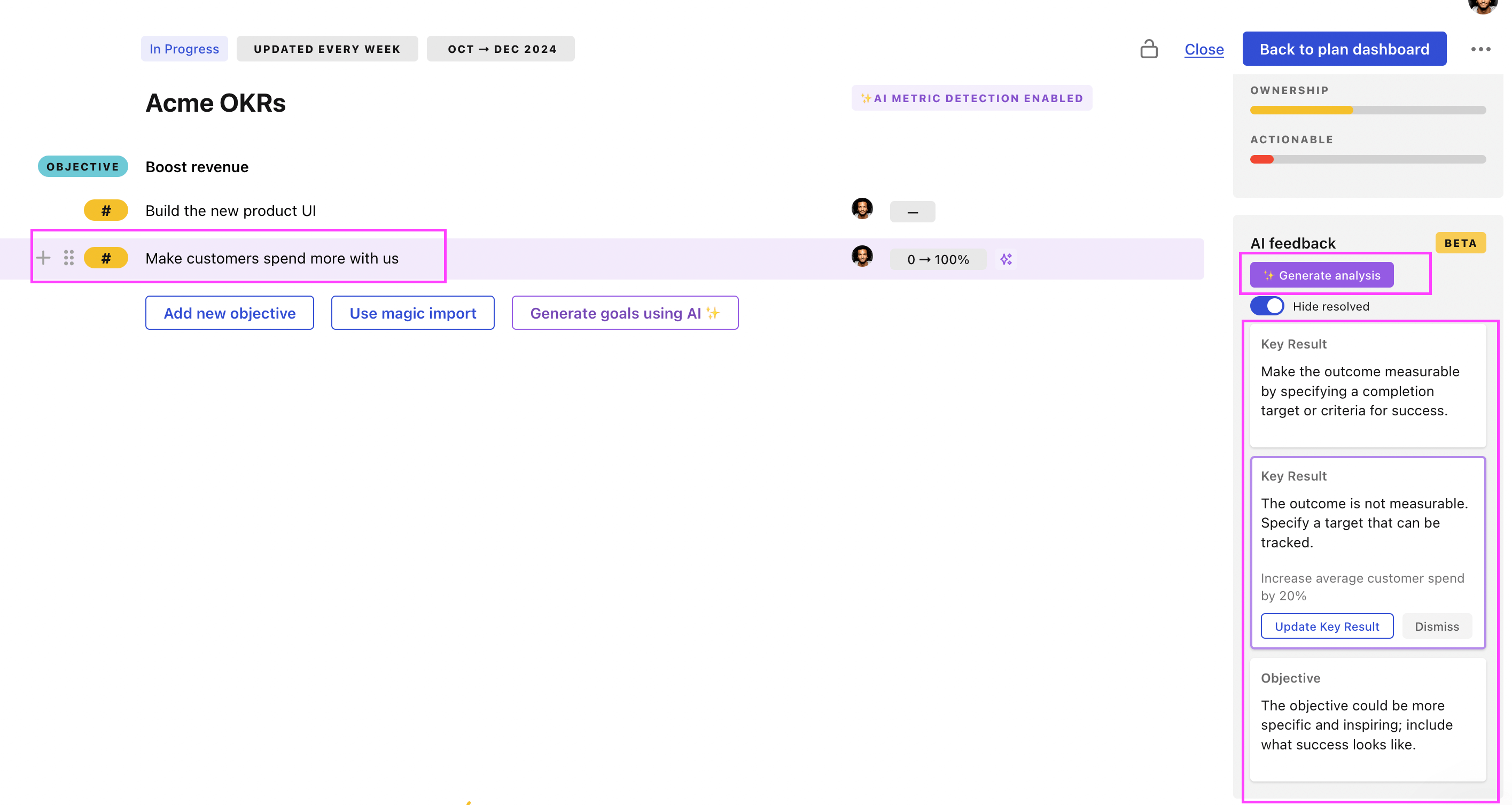
Use Tability feedback to improve existing OKRs
You can also use Tability's AI feedback to improve your OKRs if you already have existing goals. Just import them to the platform and click on the Generate analysis button.
Tability will scan your OKRs and offer different suggestions to improve them. This can range from a small rewrite of a statement to make it clearer to a complete rewrite of the entire OKR.