The plan to enhance Development Efficiency revolves around key metrics that measure critical aspects of the development process. By focusing on Lead Time, teams can streamline the time from commit to production, ensuring faster delivery. For example, implementing continuous integration can drastically reduce this time.
Deployment Frequency plays a crucial role, with benchmarks suggesting daily deployments. Frequent updates ensure that issues are addressed promptly and customers receive new features regularly. Metrics like Change Failure Rate and Mean Time to Recover are vital for maintaining reliability and quick recovery, reducing downtime and ensuring user satisfaction. Lastly, emphasizing Code Quality through regular code reviews helps in maintaining high standards and fewer bugs.
Top 5 metrics for Development Efficiency
1. Lead Time
The amount of time it takes from commit to production release
What good looks like for this metric: 2 to 4 weeks
How to improve this metric:- Implement continuous integration and delivery
- Optimise code review processes
- Automate testing procedures
- Reduce work-in-progress limits
- Regularly review and improve deployment pipelines
2. Deployment Frequency
How often the team deploys new changes to production
What good looks like for this metric: Once per day or more
How to improve this metric:- Adopt trunk-based development
- Automate deployment processes
- Encourage small, frequent updates
- Reduce feature development cycle time
- Establish a standard release schedule
3. Change Failure Rate
The percentage of changes that result in a failure in production
What good looks like for this metric: 0 to 15 percent
How to improve this metric:- Enhance testing procedures
- Conduct thorough post-deployment reviews
- Use feature flags for new releases
- Implement rollback strategies
- Invest in robust monitoring tools
4. Mean Time to Recover
The average time taken to recover from a failure in production
What good looks like for this metric: Less than 1 day
How to improve this metric:- Enhance incident response protocols
- Conduct root cause analysis
- Implement automated recovery scripts
- Provide regular training for incident recovery
- Utilise canary releases to minimize impact
5. Code Quality
The quality of code determined by metrics such as cyclomatic complexity, duplication, and adherence to coding standards
What good looks like for this metric: A high percentage of code meeting set standards
How to improve this metric:- Conduct regular code reviews
- Use static code analysis tools
- Adhere to coding standards
- Refactor code regularly
- Encourage pair programming
How to track Development Efficiency metrics
It's one thing to have a plan, it's another to stick to it. We hope that the examples above will help you get started with your own strategy, but we also know that it's easy to get lost in the day-to-day effort.
That's why we built Tability: to help you track your progress, keep your team aligned, and make sure you're always moving in the right direction.
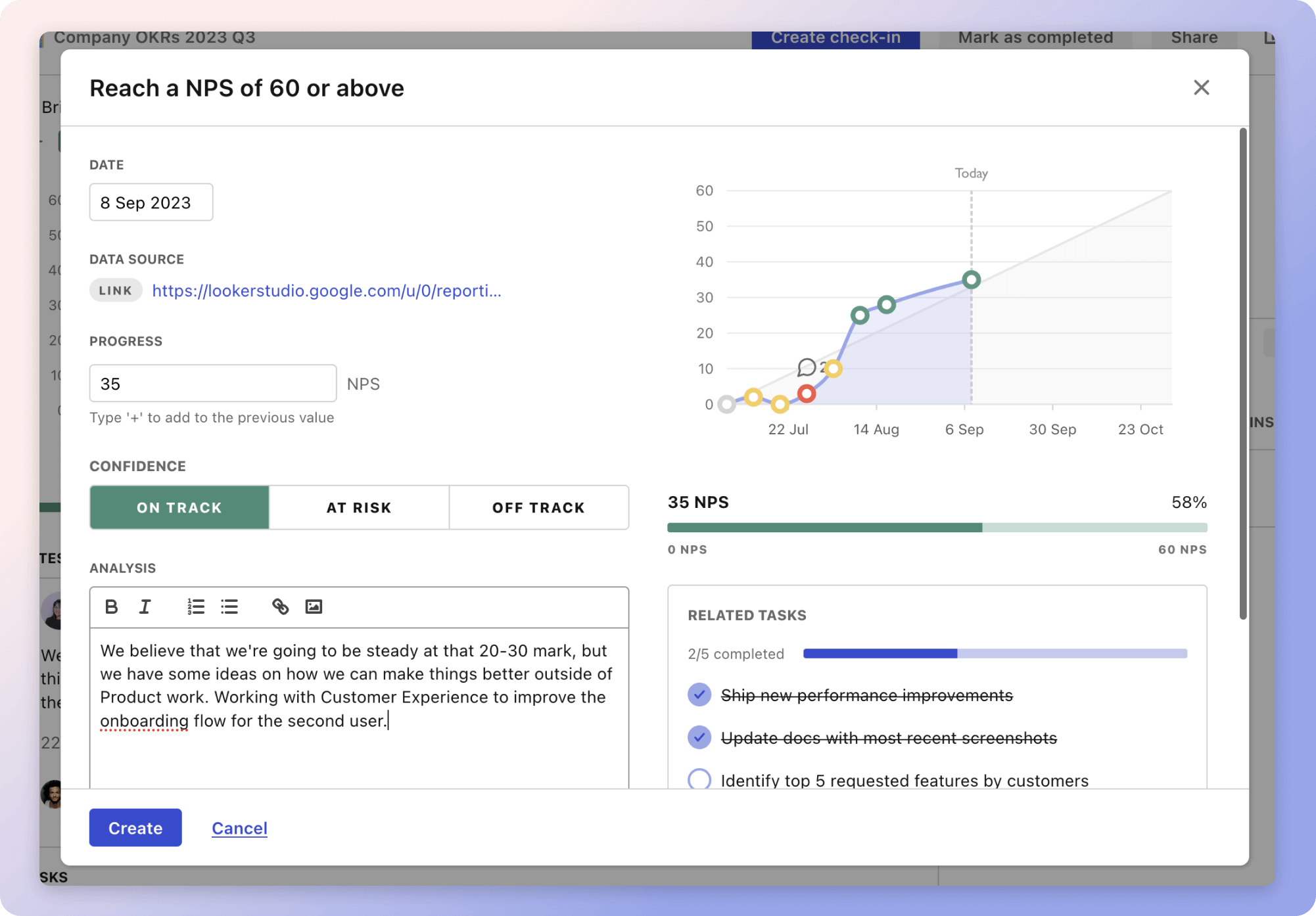
Give it a try and see how it can help you bring accountability to your metrics.
