In short
What is a good market analyst OKR?
A good market analyst OKR pairs one clear objective with two to four measurable key results the team can score every week. It describes an outcome rather than a list of activities, sets targets that are ambitious but scoreable, and is reviewed weekly so blockers surface before the quarter gets away from the team.
These Market Analyst OKR templates are meant to help teams move from ideas and projects to measurable business outcomes. Use them as a starting point, then tailor the metrics and initiatives to the reality of your company.
This page shows the top 10 of 11 templates for market analyst, with internal links to related categories and guidance for adapting the examples to your team.
Last template update in this category: 2025-08-15What this category is for
- Teams that need a clearer operating rhythm for market analyst work.
- Managers who want examples they can adapt into outcome-focused quarterly plans.
- Leaders comparing adjacent categories before choosing the best OKR direction.
Best outcomes to track
- Market Analyst priorities tied to measurable business outcomes.
- Weekly check-ins that surface blockers before they become delivery issues.
- Better alignment between initiatives and the metrics that matter.
Related categories
Use these linked categories to explore adjacent planning areas and strengthen the internal topic cluster around market analyst.
Priority hubs
Market Analyst OKR examples and templates
Start with these top 10 examples from 11 total templates in this category, then adapt the metrics and initiatives to fit your team's constraints and operating cadence.
OKRs to develop a profitable nifty 30 points trading strategy
 ObjectiveDevelop a profitable nifty 30 points trading strategy
 KRCreate, test and refine strategy on simulated trades within 8th week
 Adjust and refine strategy based on test results
- Conduct strategy tests on simulation platforms
- Develop a comprehensive trading strategy
- KRResearch and analyze historical and current market trends by the 4th week
- Conduct a thorough analysis of collected data
- Identify credible sources for historical and current market trends
- Collect and organize data on identified market trends
- KRAchieve consistent profitability in 70% of simulated trades before implementation
- Constantly review and adjust the strategy based on the results
- Backtest trading strategy robustly under various market scenarios
- Develop a solid trading strategy with clear entry and exit points
OKRs to assess standard price impact on profitability
- ObjectiveAssess standard price impact on profitability
- KRMeasure the change in profit margins after the pricing adjustments by week 12
- Calculate profit margins before pricing adjustments
- Evaluate profit margins at week 12
- Implement the pricing adjustments
- KRDesign and implement a strategy to adjust standard prices based on analysis by week 8
- Implement the new pricing strategy by week 8
- Conduct thorough research of the current market trends
- Analyze the data and formulate a pricing strategy
- KRConduct a detailed analysis of last fiscal year's price-profit correlation by week 6
OKRs to penetrate new market segments for increased sales
- ObjectivePenetrate new market segments for increased sales
- KRIdentify and select 3 untapped market categories by analyzing market trends
- Analyze current market trends for potential untapped categories
- Choose three most promising categories for further exploration
- Evaluate identified categories for profitability and feasibility
- KRDevelop tailor-made marketing strategies for each identified market category
- Create unique marketing strategies for identified categories
- Analyze each market category's specific needs and preferences
- Identify target market categories through market research
- KRAchieve a 1% increase in total sales from these new market categories
- Develop a targeted marketing campaign for these specific categories
- Optimize product or service pricing based on market demand
- Identify potential high-value customers within these new market categories
OKRs to penetrate new regions to boost architecture service revenue
- ObjectivePenetrate new regions to boost architecture service revenue
- KRDevelop a localized business strategy for the chosen geography by week six
- Identify target market and relevant dynamics in chosen geography by week two
- Construct localized business strategy by week four
- Finalize and review strategy for implementation by week six
- KRIdentify and analyze 3 potential geographies for expansion within two weeks
- Compile list of potential geographic areas for expansion
- Analyze demographic data for each potential area
- Present findings and recommend best three locations
- KRAchieve 10% revenue increase from new geography by the end of the quarter
- Develop a strategic marketing plan for penetration
- Identify high potential markets within the new geography
- Implement sales and distribution channels effectively
OKRs to enhance territorial market footprint and strengthen retailer relationships
- ObjectiveEnhance territorial market footprint and strengthen retailer relationships
- KRImprove retailer satisfaction score by 15% through quarterly feedback surveys
- Develop short, focused customer satisfaction surveys
- Analyse received feedback to identify improvement areas
- Implement changes based on feedback analysis
- KRInitiate partnerships with at least 5 new high-volume retailers
- Identify potential high-volume retailers for partnership opportunity
- Develop and tailor partnership proposals for each retailer
- Initiate contact and arrange meetings with selected retailers
- KRAchieve a 20% increase in market share within the territory
- Increase networking efforts with local businesses and suppliers
- Implement targeted marketing strategies to attract consumers
- Conduct thorough research on local market trends and competitors
OKRs to validate problem-solution fit for our new mobile application
- ObjectiveValidate problem-solution fit for our new mobile application
- KRAchieve a 15% conversion rate in the app’s test market
- Develop targeted marketing campaigns to attract users
- Improve app’s user interface for enhanced user experience
- Implement A/B testing to optimize conversion methods
- KRReduce major app usability complaints by 30% based on customer reports
- Analyze customer reports to pinpoint main usability issues
- Implement changes and visibly track improvement
- Prioritize fixing identified issues based on frequency
- KRConduct 50 customer interviews to gather direct feedback on app usage
- Prepare comprehensive interview questions
- Identify and select 50 customers using the app
- Schedule and conduct customer interviews
OKRs to craft a compelling and successful business case
- ObjectiveCraft a compelling and successful business case
- KRConduct detailed market and competitor analysis by end of Week 4
- Analyze market trends and customer preferences
- Gather data on competitor strategy and performance
- Identify key competitors in the market
- KRGather and incorporate feedback from 5 industry experts by end of Week 12
- Collect and analyze received feedback
- Implement relevant feedback into operations
- Identify and reach out to 5 industry experts for feedback
- KRDevelop a clear, attainable business case prototype by end of Week 8
- Review and finalize the prototype by end of Week 8
- Assemble these elements into a clear structure
- Identify key elements of the business case prototype
OKRs to identify and assess new growth opportunities
- ObjectiveIdentify and assess new growth opportunities
- KRConduct detailed feasibility studies for identified opportunities to determine viability
- Evaluate viability based on research outcomes
- Identify opportunities for feasibility study
- Perform detailed review of business prospects
- KRResearch and pinpoint 10 potential new market areas for business expansion
- Analyse findings to determine viability for business expansion
- Identify sectors and industries where our business can potentially expand
- Conduct detailed market research on the 10 identified areas
- KRDevelop and present 5 comprehensive business proposals for promising opportunities
- Develop comprehensive proposals for each opportunity
- Prepare presentations for each business proposal
- Identify 5 promising business opportunities for proposal
OKRs to boost customer base and broaden our market influence
- ObjectiveBoost customer base and broaden our market influence
- KRAchieve a conversion rate of 15% from new marketing campaigns
- Construct engaging, persuasive call-to-actions in marketing materials
- Track, analyze, and optimize campaign performance regularly
- Implement targeted marketing techniques towards specific customer profiles
- KRPenetrate two new potential markets to extend our market footprint
- Develop targeted marketing strategies for these markets
- Implement marketing strategies and measure results
- Identify two potential markets compatible with our product
- KRSecure 20% more new customers than last quarter
- Improve customer service to boost positive referrals
- Develop strategic marketing campaigns targeting potential customers
- Optimize digital platforms for better lead generation
OKRs to conduct comprehensive market intelligence on competitors
- ObjectiveConduct comprehensive market intelligence on competitors
- KRAnalyze 10 competitors' product and service offerings
- Identify 10 competitors in the market
- Perform a detailed analysis comparing competitors' offerings
- Research and list each competitor's products and services
- KRIdentify at least 20 key competitors in the market
- List all known competitors in your business sector
- Research unknown competitors through market analysis
- Compile a list of 20 main competitors
- KRUnderstand the marketing strategies of at least 12 competitors
- Identify 12 key competitors in your business sector
- Gather data on each competitor's marketing approach
- Analyze and contrast each competitor's marketing strategies
- KRDocument and interpret 15 competitors' pricing strategies
- Obtain detailed information on each competitor's pricing strategy
- Analyze and interpret obtained pricing data
- Identify and list 15 primary competitors in the market
How to use Market Analyst OKRs well
Strong OKRs keep the team focused on measurable outcomes instead of a long task list. That means picking a clear objective, limiting the number of competing priorities, and reviewing progress every week.
Use Market Analyst OKRs to define what success looks like this quarter, then track them weekly so the team can quickly spot blockers, learn, and adjust execution.
Choosing software to run Market Analyst OKRs?
Move from market analyst examples to execution with sourced comparisons from The OKR Software Benchmark.
- Best OKR software rankingSee the overall verdict and the criteria behind each platform score.
- OKR software pricing comparisonCompare verified prices, minimum commitments, and costs at different team sizes.
- Benchmark methodologyReview the published scoring model, source standards, and conflict-of-interest policy.
Related OKR template categories
If you are building a broader plan, these related categories can help you connect market analyst work to adjacent company priorities.
- marketing team OKR templates
- sales team OKR templates
- leadership OKR templates
- strategic planning OKR templates
- operations OKR templates
- operations team OKR templates
More OKR templates to explore
- OKRs to maximize revenue from current business operations
- OKRs to enhance stakeholder synergy and expedite strategic initiatives
- OKRs to streamline the process of generating quarterly reports
- OKRs to to enhance and maximize business stakeholder engagement
- OKRs to upgrade System Scalability and Maturity
- OKRs to increase usage of D365 Sales Hub in our organization
Not seeing what you need?
Use Tability AI to generate OKRs based on a prompt
Tability allows you to describe your goals in a prompt, and generate a fully editable OKR template in seconds.
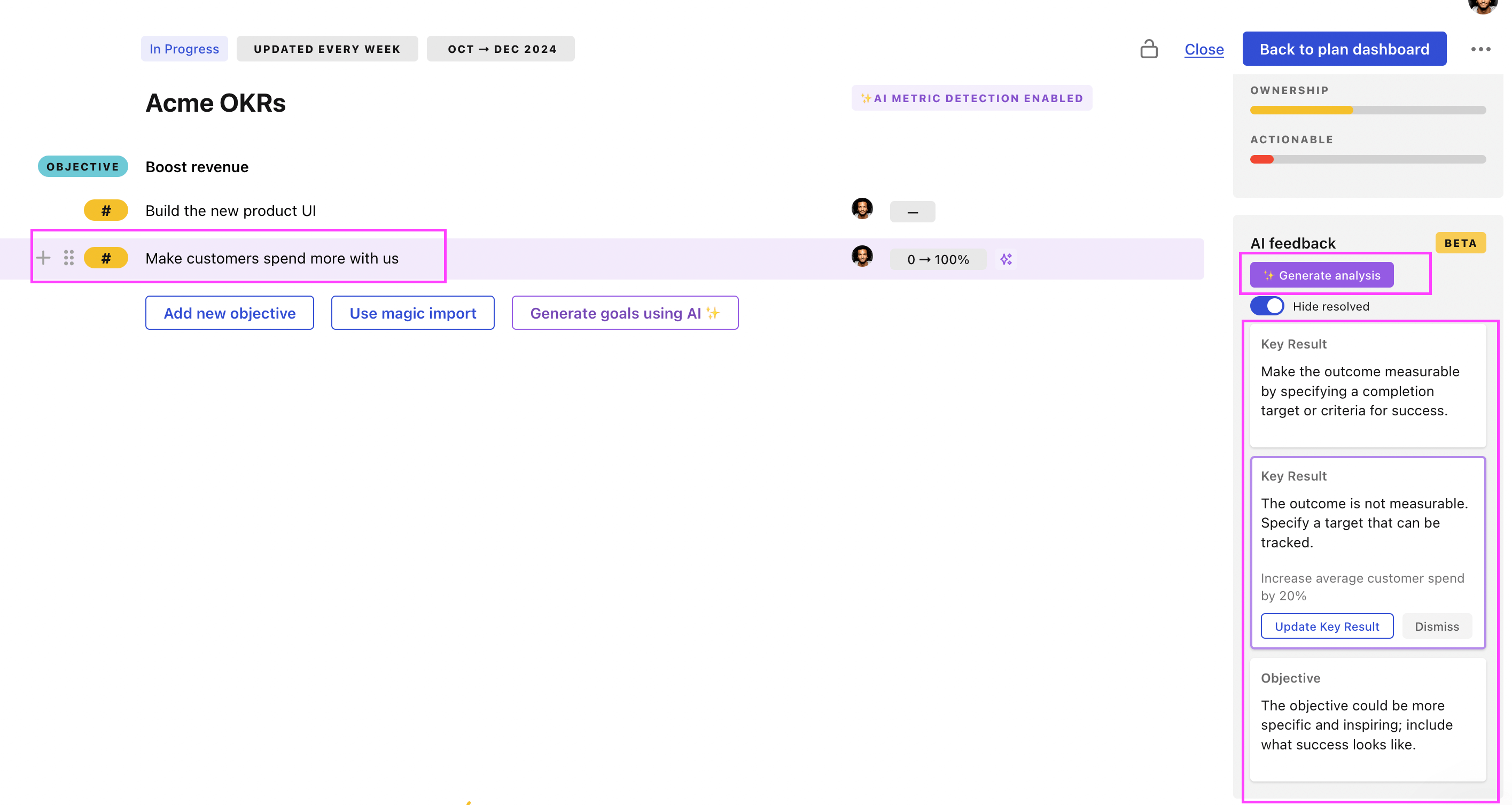
Use Tability feedback to improve existing OKRs
You can also use Tability's AI feedback to improve your OKRs if you already have existing goals. Just import them to the platform and click on the Generate analysis button.
Tability will scan your OKRs and offer different suggestions to improve them. This can range from a small rewrite of a statement to make it clearer to a complete rewrite of the entire OKR.