In short
What is a good iterative design OKR?
A good iterative design OKR pairs one clear objective with two to four measurable key results the team can score every week. It describes an outcome rather than a list of activities, sets targets that are ambitious but scoreable, and is reviewed weekly so blockers surface before the quarter gets away from the team.
These Iterative Design OKR templates are meant to help teams move from ideas and projects to measurable business outcomes. Use them as a starting point, then tailor the metrics and initiatives to the reality of your company.
This page shows the top 1 of 1 template for iterative design, with internal links to related categories and guidance for adapting the examples to your team.
Last template update in this category: 2024-06-21What this category is for
- Teams that need a clearer operating rhythm for iterative design work.
- Managers who want examples they can adapt into outcome-focused quarterly plans.
- Leaders comparing adjacent categories before choosing the best OKR direction.
Best outcomes to track
- Iterative Design priorities tied to measurable business outcomes.
- Weekly check-ins that surface blockers before they become delivery issues.
- Better alignment between initiatives and the metrics that matter.
Related categories
Use these linked categories to explore adjacent planning areas and strengthen the internal topic cluster around iterative design.
Iterative Design OKR examples and templates
Start with these top 1 examples from 1 total template in this category, then adapt the metrics and initiatives to fit your team's constraints and operating cadence.
OKRs to improve stakeholder feedback incorporation through iterative design
 ObjectiveImprove stakeholder feedback incorporation through iterative design
 KRImplement at least 3 significant design changes based on collected feedback
 Propose 3 major design changes based on analysis
- Collect and analyze customer feedback on current design
- Execute and test the proposed design alterations
- KRCollect and categorize feedback from 70% of stakeholders by week 4
- KRAchieve 80% stakeholder satisfaction with the iterative design process by project end
- Monitor and measure stakeholder satisfaction periodically
- Incorporate stakeholder suggestions into design iterations
- Conduct regular feedback sessions with stakeholders
How to use Iterative Design OKRs well
Strong OKRs keep the team focused on measurable outcomes instead of a long task list. That means picking a clear objective, limiting the number of competing priorities, and reviewing progress every week.
Use Iterative Design OKRs to define what success looks like this quarter, then track them weekly so the team can quickly spot blockers, learn, and adjust execution.
Choosing software to run Iterative Design OKRs?
Move from iterative design examples to execution with sourced comparisons from The OKR Software Benchmark.
- Best OKR software rankingSee the overall verdict and the criteria behind each platform score.
- OKR software pricing comparisonCompare verified prices, minimum commitments, and costs at different team sizes.
- Benchmark methodologyReview the published scoring model, source standards, and conflict-of-interest policy.
Related OKR template categories
If you are building a broader plan, these related categories can help you connect iterative design work to adjacent company priorities.
- leadership OKR templates
- strategic planning OKR templates
- operations OKR templates
- operations team OKR templates
- sales OKR templates
- sales team OKR templates
More OKR templates to explore
- OKRs to boost revenue by fostering lucrative partnerships with OOH agencies
- OKRs to enhance proficiency and understanding in Golang fundamentals
- OKRs to gain comprehensive understanding of Behavior Driven Development (BDD)
- OKRs to enhance confidence and development through targeted training
- OKRs to improve management of hourly budget per work order
- OKRs to efficiently monitor and manage the release of billing milestones
Not seeing what you need?
Use Tability AI to generate OKRs based on a prompt
Tability allows you to describe your goals in a prompt, and generate a fully editable OKR template in seconds.
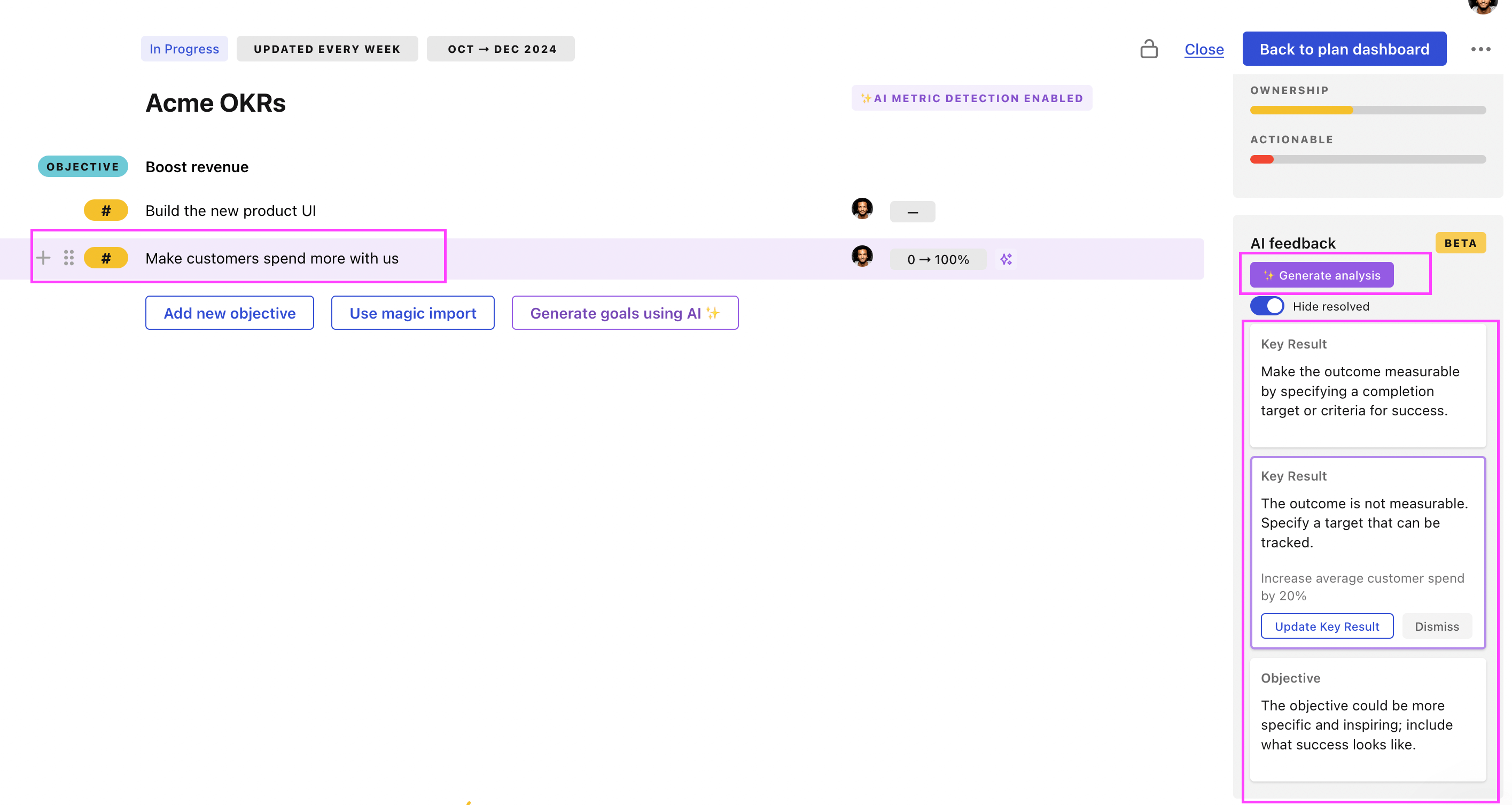
Use Tability feedback to improve existing OKRs
You can also use Tability's AI feedback to improve your OKRs if you already have existing goals. Just import them to the platform and click on the Generate analysis button.
Tability will scan your OKRs and offer different suggestions to improve them. This can range from a small rewrite of a statement to make it clearer to a complete rewrite of the entire OKR.