The proposed strategy, aimed at achieving business growth, is centered on three key pillars: market expansion, operational efficiency, and enhancing institutional capacity. By expanding into new markets, businesses can access new customer bases and diversify revenue streams. For instance, identifying potential markets through research and developing tailored entry strategies can open doors to international sales and partnerships.
Improving operational efficiency involves scrutinizing current processes to find areas for improvement. Implementing lean methodologies and investing in automation can reduce costs and increase productivity. Encouraging employee feedback further aids in pinpointing operational bottlenecks that hinder growth.
Enhancing institutional capacity focuses on strengthening internal resources through professional development and top talent retention. Investing in leadership development and building strategic alliances also bolsters the organization’s ability to adapt and innovate in a competitive landscape.
The strategies
⛳️ Strategy 1: Expand into new markets
- Identify potential new markets through market research
- Evaluate competitive landscape in target markets
- Develop market entry strategies for identified regions
- Adapt existing products to suit new market needs
- Establish local partnerships with distributors or agents
- Assess regulatory requirements for market entry
- Invest in targeted marketing campaigns for new regions
- Monitor performance and adjust strategies as necessary
- Identify and attend key trade shows and industry events
- Launch new pilot projects to test market penetration
⛳️ Strategy 2: Improve operational efficiency
- Conduct an operational audit to identify inefficiencies
- Implement lean methodologies to streamline processes
- Invest in technology to automate repetitive tasks
- Enhance employee training programs for skill development
- Establish clear metrics to track operational performance
- Regularly review and optimise supply chain management
- Set up cross-departmental teams to drive innovation
- Benchmark against industry best practices
- Encourage employee feedback to identify bottlenecks
- Continuously evaluate operational results for improvements
⛳️ Strategy 3: Enhance institutional capacity
- Invest in professional development and training programs
- Attract and retain top talent through competitive packages
- Strengthen organisational culture to enhance teamwork
- Foster leadership development through mentoring schemes
- Implement advanced systems for knowledge management
- Develop succession plans for key leadership roles
- Expand infrastructure to support organizational growth
- Regularly assess staff performance and growth opportunities
- Encourage innovation through dedicated R&D initiatives
- Build strategic alliances with other institutions for expertise sharing
Bringing accountability to your strategy
It's one thing to have a plan, it's another to stick to it. We hope that the examples above will help you get started with your own strategy, but we also know that it's easy to get lost in the day-to-day effort.
That's why we built Tability: to help you track your progress, keep your team aligned, and make sure you're always moving in the right direction.
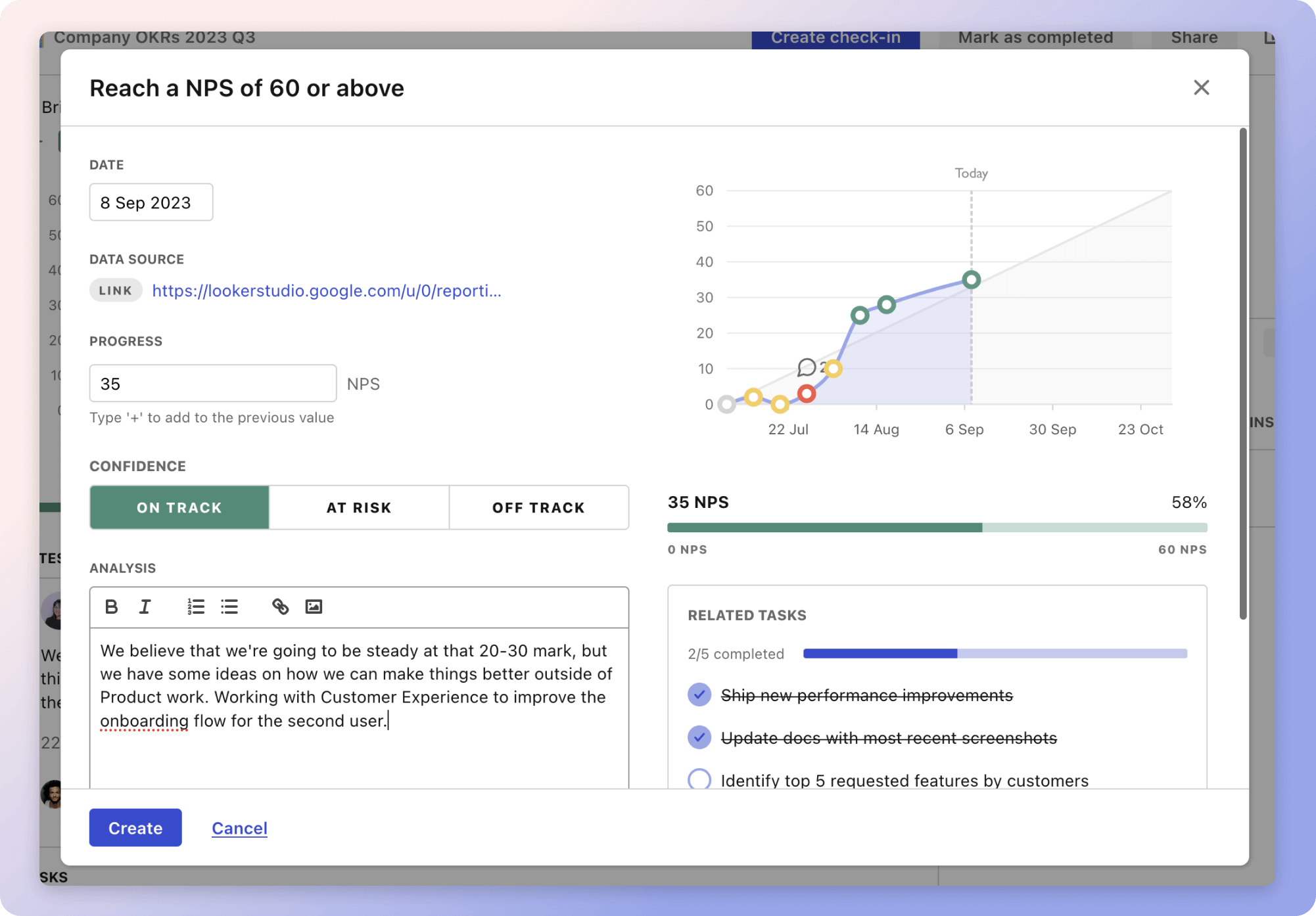
Give it a try and see how it can help you bring accountability to your strategy.