The strategy aims to boost business efficiency and decision-making by integrating AI technologies. It starts with identifying key areas for AI integration by reviewing current processes and pinpointing tasks suitable for automation. For example, departments with repetitive tasks are examined for efficiency through AI tooling. Decision-making processes are also analyzed to enhance operations with AI, consulting department heads to prioritize impactful areas for AI deployment.
AI-powered analytics improve decision-making by incorporating data analytics into workflows. Predictive analytics help forecast trends, offering insights for informed choices. For instance, training staff to interpret AI-generated insights ensures data-driven decisions, while KPIs measure AI's effectiveness, blending analytics with business intelligence.
Enhancing customer relationship management (CRM) focuses on using AI to streamline services. AI tools like chatbots automate customer service, offering personalized interactions based on customer preferences. By segmenting customers and predicting sales opportunities through AI, businesses can refine marketing campaigns and improve targeting. For example, AI-driven sentiment analysis enhances feedback systems, making CRM more effective.
The strategies
⛳️ Strategy 1: Identify key areas for AI integration
- Conduct a comprehensive review of current business processes
- Identify repetitive tasks that could benefit from automation
- Analyse decision-making processes to pinpoint areas with potential for AI enhancements
- Consult department heads to understand inefficiencies and opportunities
- Prioritise areas where AI can offer the most value based on efficiency gains
- Evaluate the potential return on investment for AI implementations
- Research AI tools that align with identified business needs
- Plan a phased AI rollout in key areas for manageable implementation
- Engage stakeholders to ensure alignment with AI integration plans
- Create a roadmap with specific milestones and timelines for AI integration
⛳️ Strategy 2: Utilise AI-powered analytics for decision-making
- Incorporate AI-driven data analytics tools into the decision-making workflow
- Implement predictive analytics to forecast trends and outcomes
- Train staff on interpreting AI-generated insights for informed decision-making
- Develop KPIs to measure the impact of AI analytics on business decisions
- Regularly review AI analytics to refine and improve decision-making processes
- Integrate AI analytics with existing business intelligence platforms
- Collaborate with data scientists to better understand AI model limitations
- Use AI to perform real-time data analysis for agile decision-making
- Make data-driven decisions supported by AI recommendations to avoid bias
- Continuously update AI analytics models to adapt to changing business environments
⛳️ Strategy 3: Enhance customer relationship management with AI
- Leverage AI for automated customer service through chatbots and virtual assistants
- Implement AI tools to personalise customer interactions based on behaviour and preferences
- Utilise AI to segment customers and predict sales opportunities
- Enhance customer feedback systems with AI-driven sentiment analysis
- Incorporate AI to optimise marketing campaigns for better targeting
- Streamline customer onboarding processes with AI automation
- Use AI-powered CRM analytics for better customer insights
- Integrate AI with customer service platforms to improve response times
- Monitor AI performance in CRM to ensure improved satisfaction and loyalty
- Continuously update AI systems with new customer data to refine strategies
Bringing accountability to your strategy
It's one thing to have a plan, it's another to stick to it. We hope that the examples above will help you get started with your own strategy, but we also know that it's easy to get lost in the day-to-day effort.
That's why we built Tability: to help you track your progress, keep your team aligned, and make sure you're always moving in the right direction.
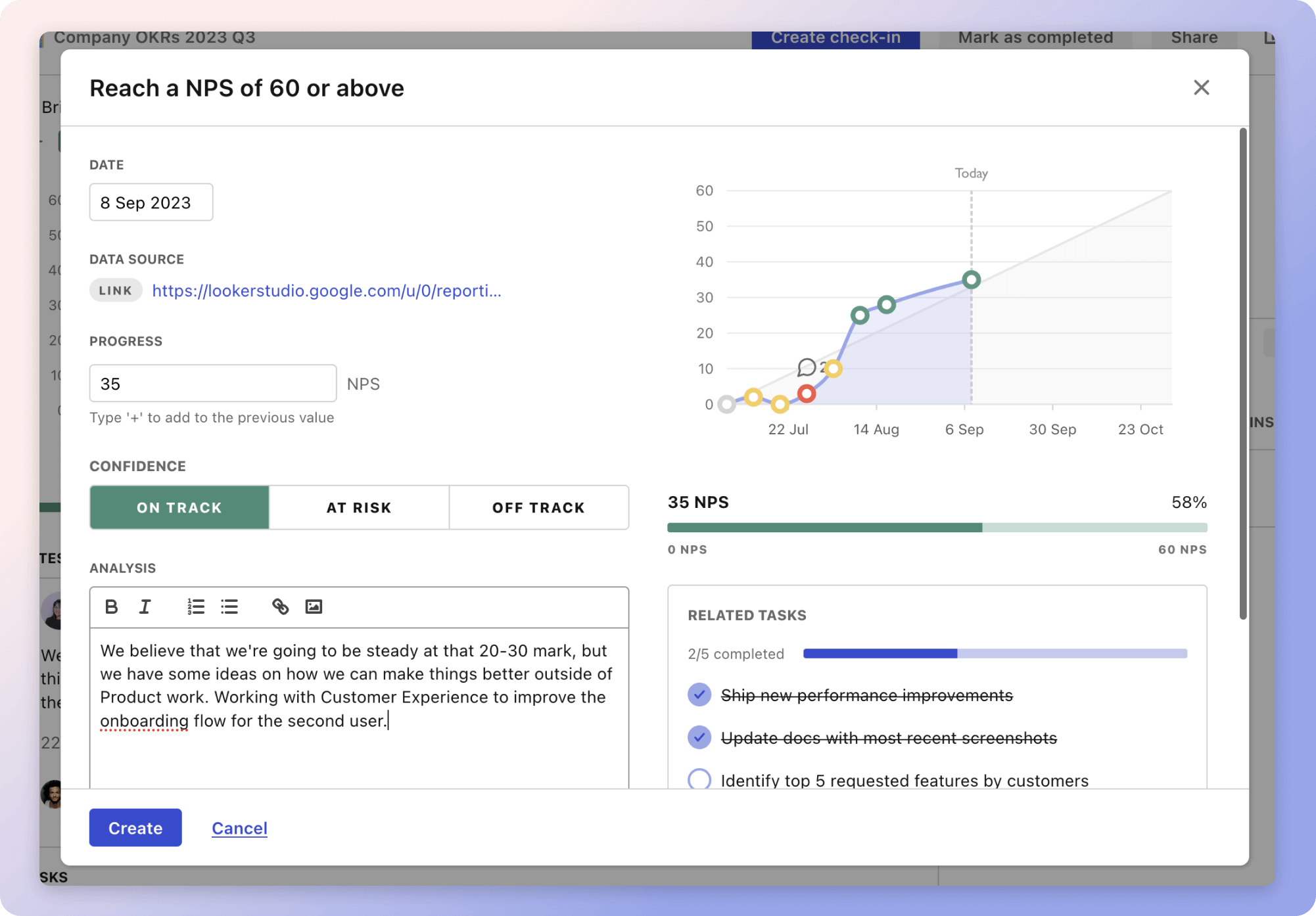
Give it a try and see how it can help you bring accountability to your strategy.