The strategy to market an artist's e-commerce store focuses on increasing visibility and boosting sales through targeted digital marketing initiatives. One approach leverages social media marketing by creating a content calendar for consistent engagement, utilizing Instagram Stories and Reels, and collaborating with art influencers. An example includes running a giveaway to boost audience interaction and employing relevant hashtags to extend reach.
Another critical aspect is optimizing the online store for search engines. This entails conducting keyword research, ensuring mobile-friendliness, and utilizing alt text for images to improve search engine indexing. For instance, detailed product descriptions using strategic keywords enhance store visibility.
Engaging in email marketing campaigns also plays a pivotal role. By building an email list with incentives and segmenting it based on customer behavior, the store can run targeted promotions. Sending newsletters about new collections or using user-generated content fosters community. This method helps maintain customer engagement and draw attention to new art pieces.
The strategies
⛳️ Strategy 1: Leverage social media marketing
- Create a content calendar to maintain consistent posting
- Utilise Instagram Stories and Reels to showcase artwork
- Collaborate with influencers in the art community
- Conduct a social media giveaway to increase engagement
- Research and use relevant hashtags to reach a wider audience
- Engage with followers by responding to comments and messages
- Create visually appealing graphics for posts
- Analyse social media insights to tailor content effectively
- Run targeted ads to reach potential art buyers
- Join Facebook groups related to art to network and share work
⛳️ Strategy 2: Optimise online store for search engines
- Conduct keyword research to identify relevant terms
- Create descriptive and unique titles for each product
- Write detailed product descriptions using chosen keywords
- Ensure website is mobile-friendly
- Improve website loading speed to enhance user experience
- Submit sitemap to search engines for better indexing
- Use alt text for all product images
- Set up Google Analytics to track website performance
- Integrate customer reviews to build credibility
- Update blog with art-related content to drive organic traffic
⛳️ Strategy 3: Engage in email marketing campaigns
- Build an email list by offering a discount on first purchase
- Segment email list based on customer behaviour
- Send a welcome series to new subscribers
- Promote new collections or products through newsletters
- Include user-generated content in emails to build community
- Analyse email open and click-through rates for optimisation
- Utilise a visually appealing template for consistency
- Introduce limited-time offers to create urgency
- Request feedback from customers to improve offerings
- Regularly clean the email list to maintain engagement rates
Bringing accountability to your strategy
It's one thing to have a plan, it's another to stick to it. We hope that the examples above will help you get started with your own strategy, but we also know that it's easy to get lost in the day-to-day effort.
That's why we built Tability: to help you track your progress, keep your team aligned, and make sure you're always moving in the right direction.
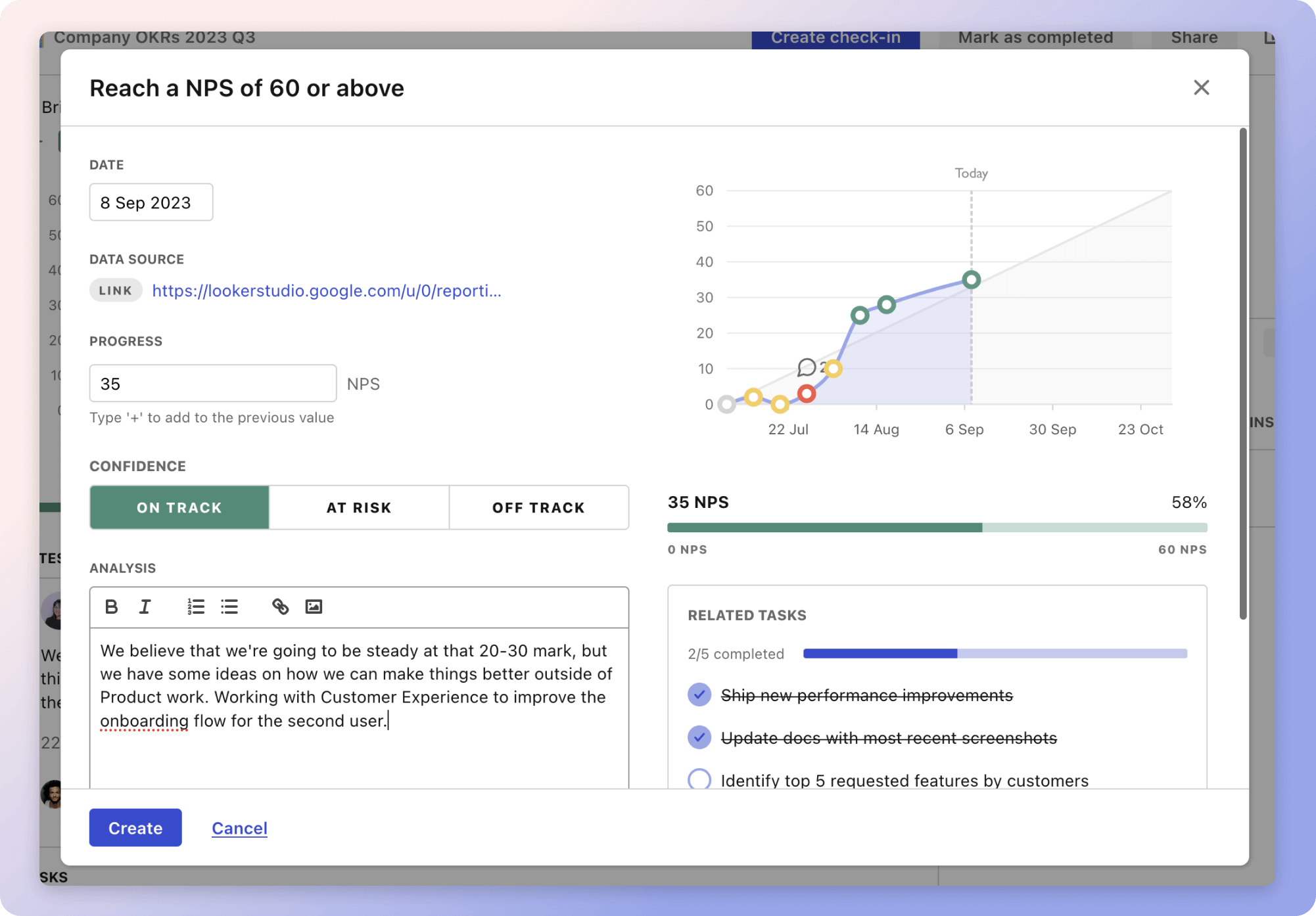
Give it a try and see how it can help you bring accountability to your strategy.