The strategy for launching the Fearless Fund involves several detailed steps to ensure successful marketing. First, a comprehensive marketing plan is established, involving a market analysis and setting clear objectives. For example, understanding the target audience demographics will help define precise marketing goals. Channels that effectively reach the target audience are identified, with specific budgets allocated to each. This plan includes a content calendar and partnerships with complementary brands.
Digital marketing tools are leveraged, focusing on social media and engaging influencers to build anticipation. Targeted advertising campaigns and engaging content are developed. Analytics tools track performance, allowing for A/B testing to optimize ads. Engaging in online communities and monitoring digital trends ensures adaptive strategies.
Maximizing public relations efforts includes drafting press releases and organizing events to boost media coverage. Relationships with journalists and media are nurtured, while user-generated content and customer testimonials are leveraged for authenticity and credibility. Post-launch, feedback loops are established for ongoing improvement and alignment.
The strategies
⛳️ Strategy 1: Establish a comprehensive marketing plan
- Conduct a market analysis to understand the target audience demographics
- Define clear marketing objectives and goals for the launch
- Determine the marketing channels that best reach the target audience
- Develop a timeline for marketing activities leading up to the launch
- Identify key performance indicators to measure campaign success
- Allocate a specific budget for each marketing channel
- Create a content calendar to align with marketing goals
- Collaborate with stakeholders to ensure alignment on marketing strategies
- Secure partnerships with complementary brands to extend reach
- Establish a feedback loop to collect data post-launch for future improvement
⛳️ Strategy 2: Leverage digital marketing tools
- Utilise social media platforms to build anticipation and awareness
- Engage influencers relevant to the target audience to endorse the launch
- Set up targeted advertising campaigns on digital platforms
- Develop engaging content with strong visual and messaging elements
- Optimise website and landing pages for conversion
- Implement email marketing to nurture interested parties
- Use analytics tools to track digital campaign performance
- Run A/B tests to optimise advertisement performance
- Participate in online forums and communities to increase visibility
- Monitor digital trends and adapt strategies accordingly
⛳️ Strategy 3: Maximise public relations efforts
- Draft and distribute a press release announcing the launch
- Organise a launch event to generate media coverage
- Pitch stories to relevant journalists and media outlets
- Identify potential speaking opportunities for leadership
- Create a media kit with facts, figures, and brand story
- Build relationships with key media personnel and influencers
- Submit written pieces to industry publications for additional exposure
- Leverage user-generated content to foster authenticity
- Feature customer testimonials to build credibility
- Coordinate post-launch follow-ups with media outlets
Bringing accountability to your strategy
It's one thing to have a plan, it's another to stick to it. We hope that the examples above will help you get started with your own strategy, but we also know that it's easy to get lost in the day-to-day effort.
That's why we built Tability: to help you track your progress, keep your team aligned, and make sure you're always moving in the right direction.
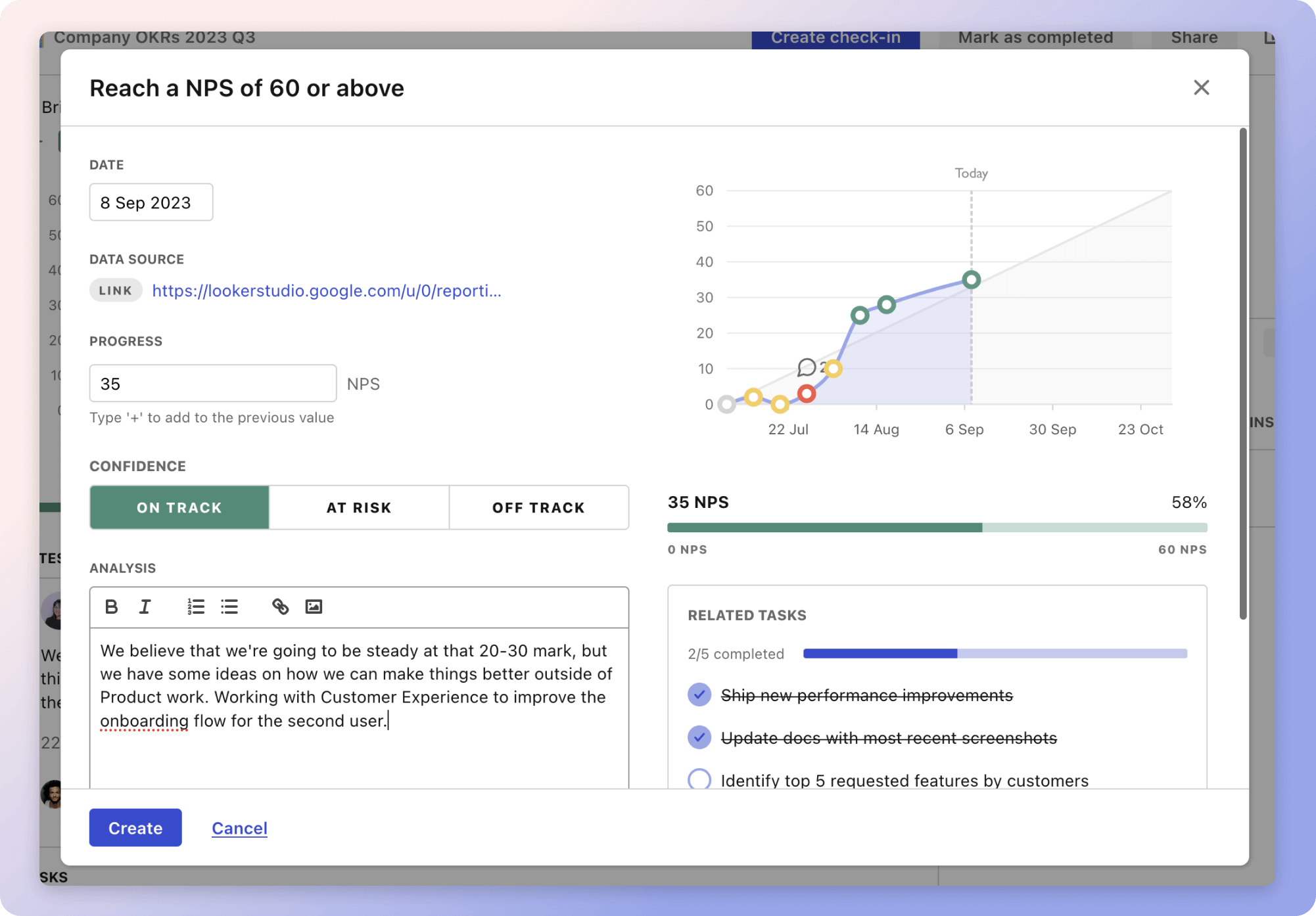
Give it a try and see how it can help you bring accountability to your strategy.