The strategy for designing an AI initiative portfolio focuses on creating a comprehensive suite of AI-driven projects tailored for a tech organization. This involves defining clear objectives such as enhancing efficiency and improving response times. For instance, developing an AI-powered customer support chatbot aims to reduce response times by 40% using natural language processing expertise. Milestones like integrating the chatbot with existing systems and conducting user testing are crucial.
Another project involves launching a predictive analytics platform with a goal of 95% prediction accuracy to foster better decision-making. This requires assembling a team of data scientists and software engineers to develop machine learning models and validate predictions through pilot programs.
The initiative also covers implementing an AI-driven HR recruitment tool intended to reduce hire time by 30% while boosting candidate quality. Partnerships with HR software providers and training for HR staff are integral to ensure successful deployment and integration.
Lastly, optimizing the intelligent supply chain management system aims for a 20% efficiency increase, involving logistics cost-cutting and system reviews to ensure ongoing improvements. This strategic effort demands collaboration with supply chain partners and the application of predictive models for inventory management.
The strategies
⛳️ Strategy 1: Develop the AI-powered customer support chatbot
- Define the objective to improve customer response time by 40%
- Set key results such as reducing average response time to under 2 minutes
- Identify dependencies including natural language processing expertise and customer query datasets
- Create a roadmap with milestones for chatbot development by the tech team
- Conduct user testing with a pilot group to gather feedback
- Integrate the chatbot with existing customer support systems
- Train customer support staff on managing and utilizing the chatbot
- Track progress using metrics like user satisfaction scores and response accuracy
- Develop frequently asked questions based on customer interactions
- Plan regular updates and iterations based on feedback analysis
⛳️ Strategy 2: Launch the predictive analytics platform
- Define the objective to enhance decision-making with 95% prediction accuracy
- Establish key results including generating 5 new business insights quarterly
- Identify dependencies such as data engineering resources and robust data infrastructure
- Assemble a cross-functional team of data scientists and software engineers
- Select the appropriate machine learning models and algorithms
- Collect and preprocess the necessary data sets for training
- Implement the analytics platform for a select business unit to pilot
- Set up validation processes to ensure the accuracy of predictions
- Track adoption rates and user feedback from business units
- Continuously refine algorithms based on new data and user input
⛳️ Strategy 3: Implement the AI-driven HR recruitment tool
- Define the objective to reduce hire time by 30% while increasing candidate quality
- Outline key results such as achieving a 90% satisfaction rate among hiring managers
- Identify dependencies like collaboration with the HR department and access to historical hiring data
- Partner with an HR software provider for integration support
- Develop algorithms to rank candidates based on skills, experience, and cultural fit
- Conduct a pilot recruitment drive with the tool for feedback
- Train HR team members on the new recruitment tool functionality
- Monitor candidate feedback on their experience during the process
- Analyse recruitment data to measure improvement in hire quality and time
- Plan iterations to enhance and adapt the tool based on initial outcomes
⛳️ Strategy 4: Optimise the intelligent supply chain management system
- Define the objective to enhance supply chain efficiency by 20% within a year
- Set key results such as a 25% reduction in logistics costs and improved order accuracy
- Identify dependencies such as collaboration with supply chain partners and existing systems integration
- Select suitable AI models that focus on logistics optimisation
- Ensure data channels are established for real-time processing and updates
- Develop predictive models for inventory management and demand forecasting
- Conduct pilot projects in targeted supply chain segments
- Track performance indicators like delivery times and cost savings
- Utilise feedback to adjust strategies and improve system functionality
- Schedule regular system reviews to drive continuous improvement
Bringing accountability to your strategy
It's one thing to have a plan, it's another to stick to it. We hope that the examples above will help you get started with your own strategy, but we also know that it's easy to get lost in the day-to-day effort.
That's why we built Tability: to help you track your progress, keep your team aligned, and make sure you're always moving in the right direction.
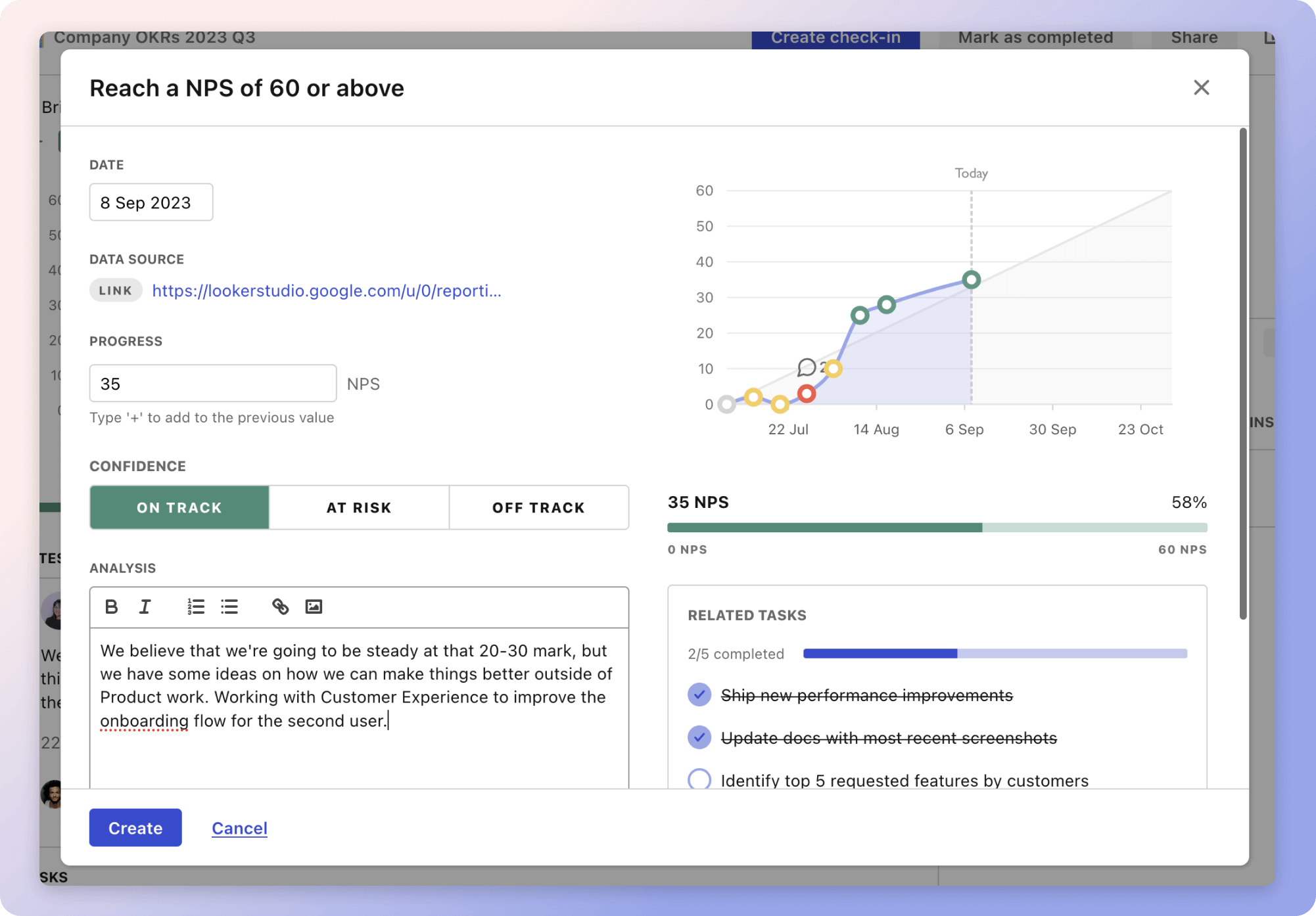
Give it a try and see how it can help you bring accountability to your strategy.