The strategy "Designing an AI initiative portfolio" involves creating an organized plan for integrating artificial intelligence into different areas of a tech organization. It sets specific objectives and key results (OKRs) for each AI initiative to ensure alignment with organizational goals. For example, the strategy includes developing an AI-powered customer support chatbot aimed at reducing response time by 50% and achieving an 85% customer satisfaction score. This initiative requires defining customer pain points and selecting suitable AI tools. Similarly, creating a predictive analytics platform focuses on increasing data-driven decision-making efficiency and involves selecting key data sources and machine learning models.
Another component of this strategy is the implementation of an AI-driven HR recruitment tool. This aims to improve hiring efficiency and candidate match quality by leveraging AI to screen and filter applications. The strategy also covers optimizing intelligent supply chain management to reduce inventory costs and improve delivery times by utilizing predictive models. Each initiative in the portfolio has defined action items, such as piloting programs, setting up progress tracking metrics, and gathering user feedback for continuous improvement.
The strategies
⛳️ Strategy 1: Develop AI-powered customer support chatbot
- Define the objectives and key results (OKRs) for the chatbot initiative: Reduce response time by 50%, achieve customer satisfaction score of 85%
- Conduct a needs assessment to understand customer pain points and identify relevant queries for chatbot integration
- Select the appropriate AI platforms and tools for developing the chatbot
- Establish dependencies: Require integration with existing customer management systems
- Design the conversational flow and user interface of the chatbot
- Develop natural language processing capabilities to understand and respond to customer queries
- Implement a pilot program to test the chatbot with a segment of customers
- Set up progress tracking metrics: Track response time reduction and user satisfaction scores
- Collect feedback from users and iteratively improve the chatbot based on user experiences
- Fully deploy the chatbot and continuously monitor performance against OKRs
⛳️ Strategy 2: Build a predictive analytics platform
- Define the OKRs for the analytics platform: Increase data-driven decision-making efficiency by 40%
- Identify key data sources required for analytics and create a data integration plan
- Select suitable machine learning models for predictive analytics purposes
- Establish dependencies: Ensure availability of clean and structured data
- Prototype the analytics platform with a focus on user accessibility and data visualisation
- Develop algorithms to provide predictive insights into user-defined metrics
- Pilot the analytics platform within a specific department for initial feedback
- Set up progress tracking metrics: Monitor usage statistics and decision outcomes
- Iterate on the platform based on feedback to improve analytics accuracy and usability
- Launch the platform organisation-wide and track performance against OKRs
⛳️ Strategy 3: Implement AI-driven HR recruitment tool
- Define the OKRs for the recruitment tool initiative: Reduce hiring time by 30%, increase candidate match quality by 20%
- Conduct an analysis of existing recruitment processes to identify areas for AI enhancement
- Choose suitable AI technology that can effectively screen and filter candidate applications
- Establish dependencies: Ensure access to historical recruitment data for training models
- Develop algorithms to match candidates to job descriptions based on skills and experience
- Pilot the tool with a selected number of job openings to gather initial user feedback
- Set up progress tracking metrics: Measure recruitment cycle time and quality of hires
- Iterate on the tool to improve predictions and user interface based on recruiter feedback
- Expand the tool's implementation across multiple departments
- Continuously monitor and refine the tool's performance in alignment with OKRs
⛳️ Strategy 4: Optimize intelligent supply chain management
- Define the OKRs for the supply chain optimization initiative: Reduce inventory costs by 25%, improve delivery time by 20%
- Map current supply chain processes to identify inefficiencies
- Select AI technology capable of driving process optimisation through data analysis
- Establish dependencies: Confirm real-time access to supply chain data
- Develop predictive models to anticipate demand changes and optimize stock levels
- Pilot the optimization models in a specific sector of the supply chain to assess performance
- Set up progress tracking metrics: Monitor inventory turnover rates and delivery timelines
- Collect feedback from supply chain managers to refine models and strategies
- Expand optimization techniques across the supply chain
- Regularly review analytics and adjust algorithms to meet and exceed OKRs
Bringing accountability to your strategy
It's one thing to have a plan, it's another to stick to it. We hope that the examples above will help you get started with your own strategy, but we also know that it's easy to get lost in the day-to-day effort.
That's why we built Tability: to help you track your progress, keep your team aligned, and make sure you're always moving in the right direction.
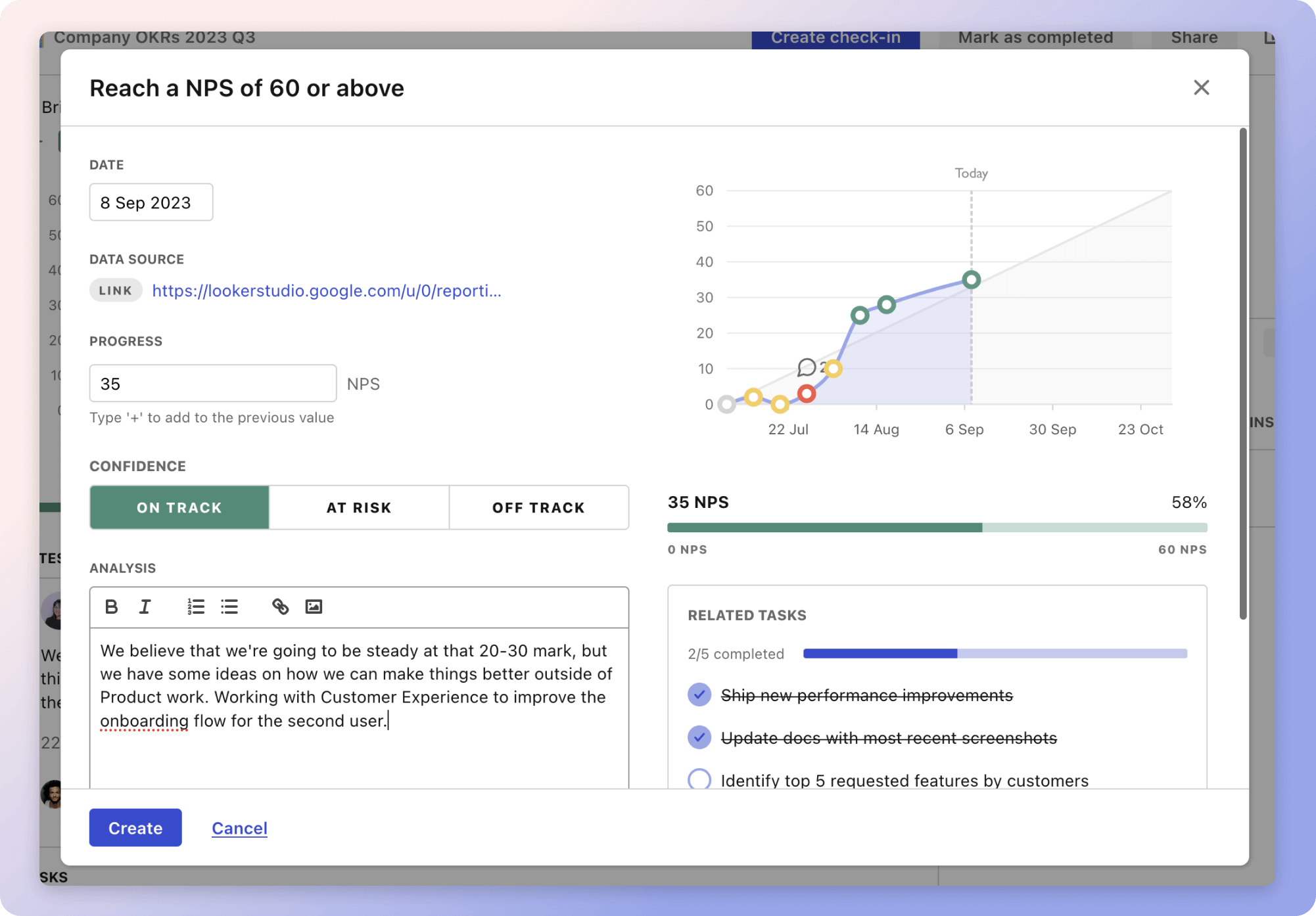
Give it a try and see how it can help you bring accountability to your strategy.