The strategy, "Developing Support and Resistance Break Strategy," focuses on creating a trading approach using the concepts of support and resistance levels. It involves deploying technical analysis tools like moving averages and candlestick patterns to identify potential breakout points. For instance, incorporating Fibonacci retracement levels helps in spotting possible zones where price might reverse or continue, while using Bollinger Bands can assess market volatility to determine breakout potentials.
Another critical aspect is to establish a robust entry and exit plan. This includes defining clear entry points and setting stop-loss orders around support or resistance levels to manage risks. It's essential to continuously review entry points based on market changes and utilize trailing stops to ensure profits are secured. Regular performance tracking against expectations further aids in fine-tuning strategies for optimal results.
Additionally, to enhance decision-making, extensive backtesting with historical data is advocated. Implementing software tools for simulating strategy performance and tracking the profitability of each trade can highlight patterns of successful trades. Further refinement is achieved by adjusting strategies based on backtesting insights and maintaining a detailed trading journal for post-trade analysis.
The strategies
⛳️ Strategy 1: Utilise technical analysis tools
- Identify and confirm key support and resistance levels using historical price data
- Utilise technical indicators such as moving averages for confirmation of trend directions
- Incorporate candlestick pattern analysis to identify potential breakouts
- Use Fibonacci retracement levels to identify potential support and resistance zones
- Analyse volume data alongside price movements to confirm breakouts
- Deploy Bollinger Bands to assess market volatility and breakout potentials
- Use RSI to gauge overbought or oversold conditions that might lead to breaks
- Evaluate chart patterns like head and shoulders for breakout indications
- Trained to recognise false breakouts by studying previous market behaviours
- Establish risk management rules to cut losses when breakouts fail
⛳️ Strategy 2: Create a robust entry and exit plan
- Define clear entry points by marking potential breakout levels on charts
- Set stop-loss orders below support levels or above resistance for loss minimization
- Determine multiple profit-taking levels based on risk-reward ratio analysis
- Analyse risk appetite per trade and adjust position sizes accordingly
- Use pending orders to automate entry and reduce missed opportunities
- Review and adjust entry points regularly based on market development
- Implement trailing stops to lock in profits as trades become profitable
- Regularly reassess market conditions to optimise exit strategies
- Prepare backup exits in case of unexpected market movements
- Track performance against original expectations to fine-tune entries and exits
⛳️ Strategy 3: Enhance decision-making with backtesting and analysis
- Develop a comprehensive backtesting strategy with historical data
- Utilise software tools for simulating strategy performance over different time frames
- Track success rate and profitability of each trade based on defined criteria
- Identify common patterns of successful and unsuccessful trades
- Adjust support and resistance levels based on backtesting insights
- Analyse external factors that influenced past price movements and breakouts
- Implement AI or analytical software to refine strategy precision
- Keep a detailed trading journal for post-trade analysis and lessons learned
- Evaluate strategy against peer or market benchmarks for performance comparison
- Continuously update the strategy based on new data and analysis outcomes
Bringing accountability to your strategy
It's one thing to have a plan, it's another to stick to it. We hope that the examples above will help you get started with your own strategy, but we also know that it's easy to get lost in the day-to-day effort.
That's why we built Tability: to help you track your progress, keep your team aligned, and make sure you're always moving in the right direction.
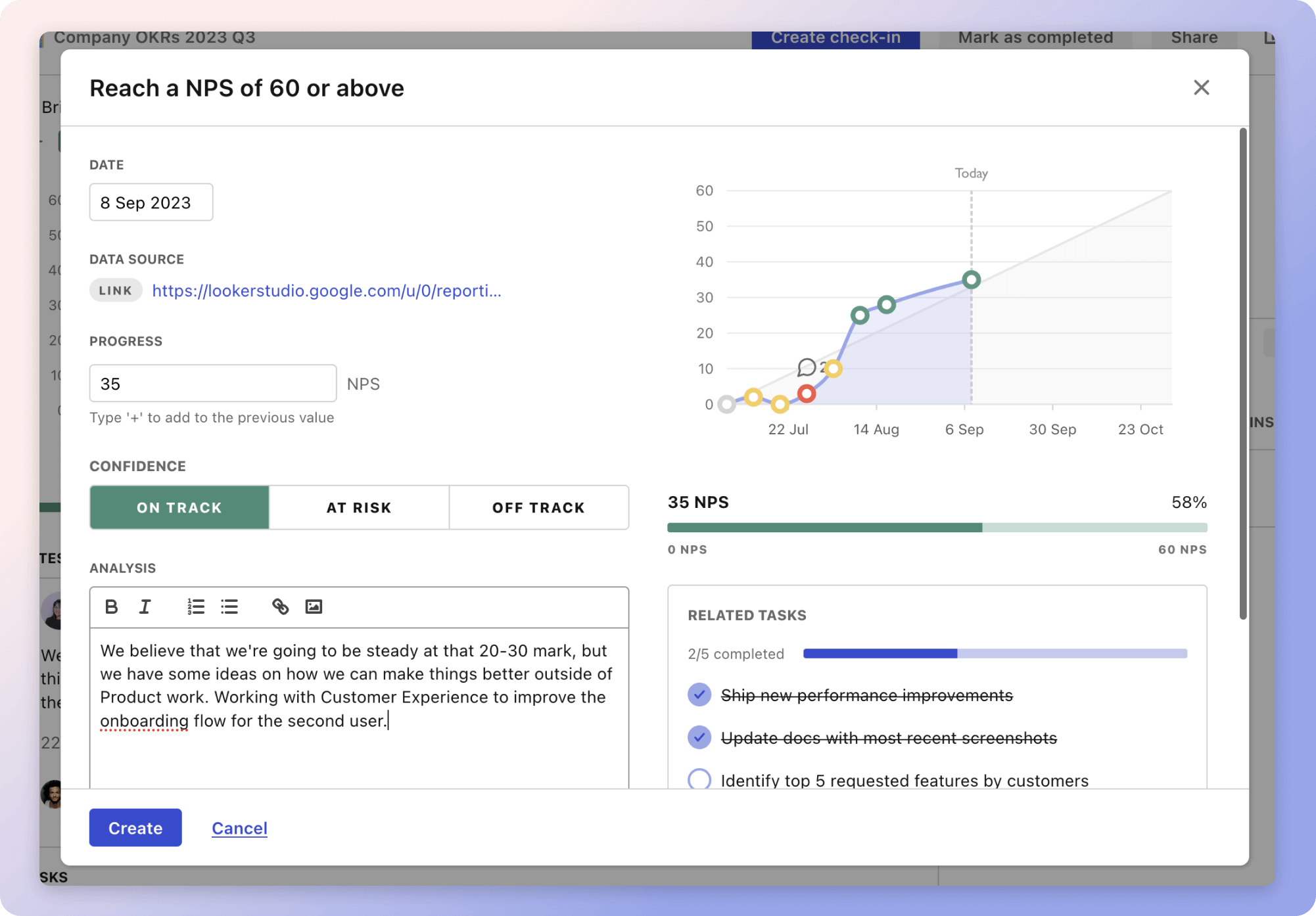
Give it a try and see how it can help you bring accountability to your strategy.