In short
What is a good quality verification OKR?
A good quality verification OKR pairs one clear objective with two to four measurable key results the team can score every week. It describes an outcome rather than a list of activities, sets targets that are ambitious but scoreable, and is reviewed weekly so blockers surface before the quarter gets away from the team.
These Quality Verification OKR templates are meant to help teams move from ideas and projects to measurable business outcomes. Use them as a starting point, then tailor the metrics and initiatives to the reality of your company.
This page shows the top 1 of 1 template for quality verification, with internal links to related categories and guidance for adapting the examples to your team.
Last template update in this category: 2024-03-14What this category is for
- Teams that need a clearer operating rhythm for quality verification work.
- Managers who want examples they can adapt into outcome-focused quarterly plans.
- Leaders comparing adjacent categories before choosing the best OKR direction.
Best outcomes to track
- Quality Verification priorities tied to measurable business outcomes.
- Weekly check-ins that surface blockers before they become delivery issues.
- Better alignment between initiatives and the metrics that matter.
Related categories
Use these linked categories to explore adjacent planning areas and strengthen the internal topic cluster around quality verification.
Priority hubs
Quality Verification OKR examples and templates
Start with these top 1 examples from 1 total template in this category, then adapt the metrics and initiatives to fit your team's constraints and operating cadence.
OKRs to achieve 100% test case updation across all modules
 ObjectiveAchieve 100% test case updation across all modules
 KRAccomplish complete updation and quality verification of all modules by quarter end
 Implement robust quality verification checks
- Schedule time weekly for updating each module
- Regularly track and report update progress
- KRUpdate 25% of test cases in each module by week 3
- Identify modules requiring test case updates
- Revise 25% of test cases per module weekly
- Prioritize and schedule updates for each module
- KRConduct a mid-quarter review to check 50% completion
- Analyze data, confirm 50% objective completion
- Schedule and conduct a mid-quarter review meeting
- Compile all project updates and data for review
How to use Quality Verification OKRs well
Strong OKRs keep the team focused on measurable outcomes instead of a long task list. That means picking a clear objective, limiting the number of competing priorities, and reviewing progress every week.
Use Quality Verification OKRs to define what success looks like this quarter, then track them weekly so the team can quickly spot blockers, learn, and adjust execution.
Choosing software to run Quality Verification OKRs?
Move from quality verification examples to execution with sourced comparisons from The OKR Software Benchmark.
- Best OKR software rankingSee the overall verdict and the criteria behind each platform score.
- OKR software pricing comparisonCompare verified prices, minimum commitments, and costs at different team sizes.
- Benchmark methodologyReview the published scoring model, source standards, and conflict-of-interest policy.
Related OKR template categories
If you are building a broader plan, these related categories can help you connect quality verification work to adjacent company priorities.
- product manager OKR templates
- leadership OKR templates
- strategic planning OKR templates
- operations OKR templates
- operations team OKR templates
- sales OKR templates
More OKR templates to explore
- OKRs to attain and apply advanced leadership skills through an online course
- OKRs to complete online course to enhance tech lead skills
- OKRs to enhance leadership skills through online learning and practical application
- OKRs to enhance tech lead abilities by utilizing online learning and practical application
- OKRs to successfully build a simple React app
- OKRs to improve effectiveness of sales promotion forecasting
Not seeing what you need?
Use Tability AI to generate OKRs based on a prompt
Tability allows you to describe your goals in a prompt, and generate a fully editable OKR template in seconds.
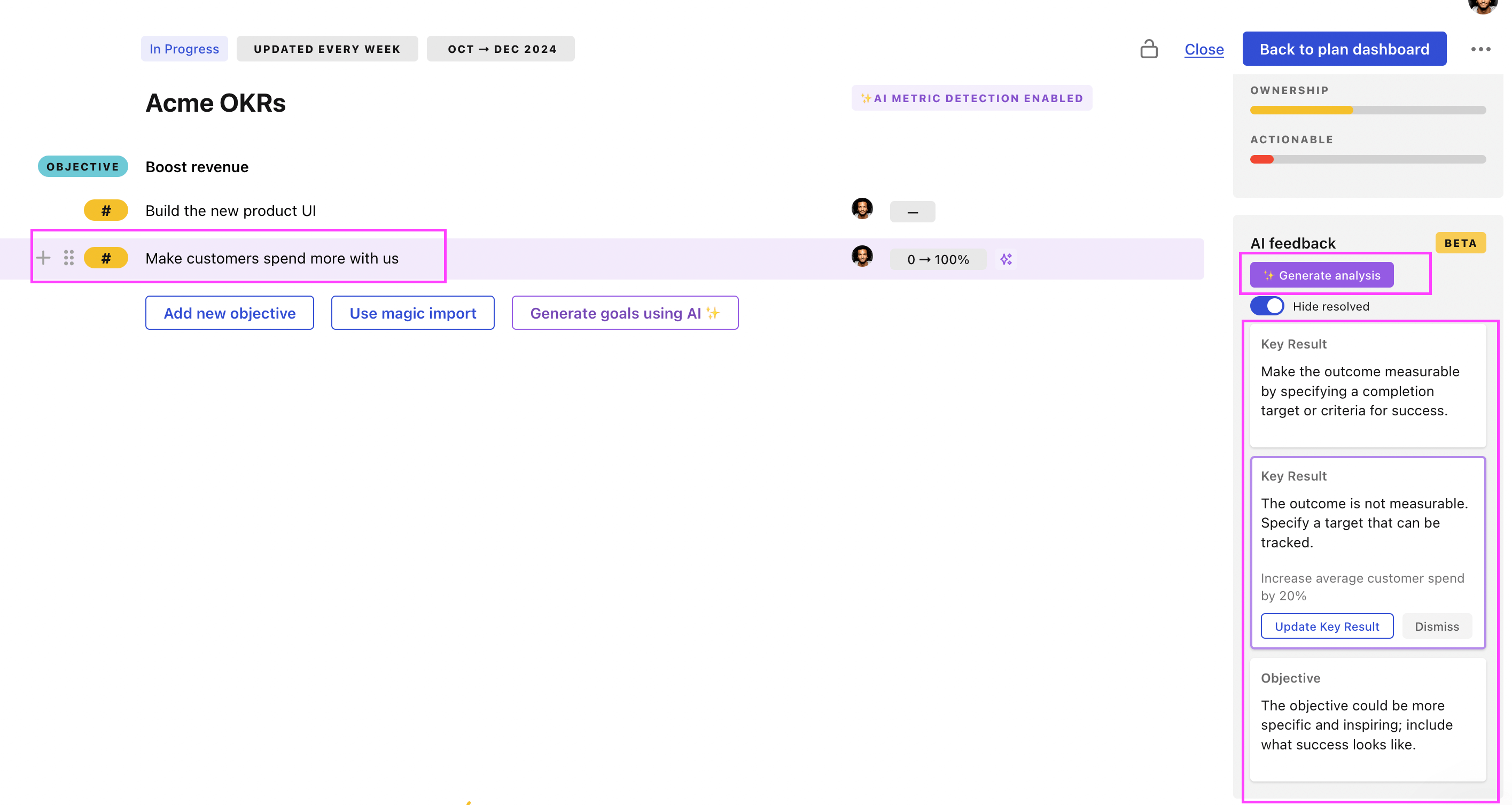
Use Tability feedback to improve existing OKRs
You can also use Tability's AI feedback to improve your OKRs if you already have existing goals. Just import them to the platform and click on the Generate analysis button.
Tability will scan your OKRs and offer different suggestions to improve them. This can range from a small rewrite of a statement to make it clearer to a complete rewrite of the entire OKR.