The strategy focuses on developing a tech startup idea that is both profitable and scalable, addressing real-world issues. It begins with conducting thorough market analysis to identify unsolved problems within current tech trends. By evaluating competitors, surveying potential users, and using tools to track market demand, founders can discover industry gaps and opportunities for innovation. For example, a startup could emerge from an underserved customer need, like delivering advanced data analytics solutions to small businesses.
Another part of the strategy involves leveraging the founder's personal strengths. This includes assessing personal skills and experiences to identify industries where these strengths can be impactful. Founders could benefit by partnering to complement their abilities, thereby crafting a more robust solution, as seen in the collaboration between a technical founder and a marketing guru to launch a software product.
The final piece of the strategy emphasizes prototyping and validating startup ideas. This involves creating initial prototypes to gather feedback and refine concepts based on user input. By conducting SWOT analyses and testing market demand, such as through landing pages or ads, founders ensure the scalability and profitability of ideas. Selecting the most viable idea for full-scale development is crucial, as illustrated by a startup that initially tests various app features through user feedback before launching a minimalist product.
The strategies
⛳️ Strategy 1: Conduct Market Analysis
- Research current tech trends and identify unsolved problems
- Analyse competitors and identify gaps in their offerings
- Conduct surveys or interviews with potential users to gather insights
- Use online tools to identify trending topics and demands
- Compile a list of potential industries with growth potential
- Study successful startups and their business models for inspiration
- Identify underserved customer segments needing tech solutions
- Evaluate market size and potential for scalability
- Assess potential regulatory challenges in chosen industries
- Establish criteria for selecting a promising market to enter
⛳️ Strategy 2: Leverage Personal Strengths
- Make a list of personal strengths, skills, and experiences
- Seek feedback from peers or mentors to identify unrecognized strengths
- Identify industries or problems where these strengths can be applied
- Study case studies of founders who succeeded using similar strengths
- Explore partnerships that complement personal skill gaps
- Join tech forums and communities to gain new insights
- Connect with industry experts for guidance and networking
- Participate in hackathons or innovation challenges
- Reflect on past projects or work that brought satisfaction and success
- Develop a personal goal and vision statement to guide decision making
⛳️ Strategy 3: Prototype and Validate Ideas
- Shortlist the top three startup ideas based on research and strengths
- Create initial prototypes or mockups for each idea
- Gather user feedback through interviews or usability testing
- Refine ideas based on user feedback and technical feasibility
- Develop a basic business plan outlining cost, revenue, and growth
- Conduct a SWOT analysis for each idea to evaluate risks and opportunities
- Test market demand using landing pages or ads
- Analyse financial projections to ensure potential for £10K profit
- Seek mentors or advisors to review and critique ideas
- Select the most promising idea to pursue full-scale development
Bringing accountability to your strategy
It's one thing to have a plan, it's another to stick to it. We hope that the examples above will help you get started with your own strategy, but we also know that it's easy to get lost in the day-to-day effort.
That's why we built Tability: to help you track your progress, keep your team aligned, and make sure you're always moving in the right direction.
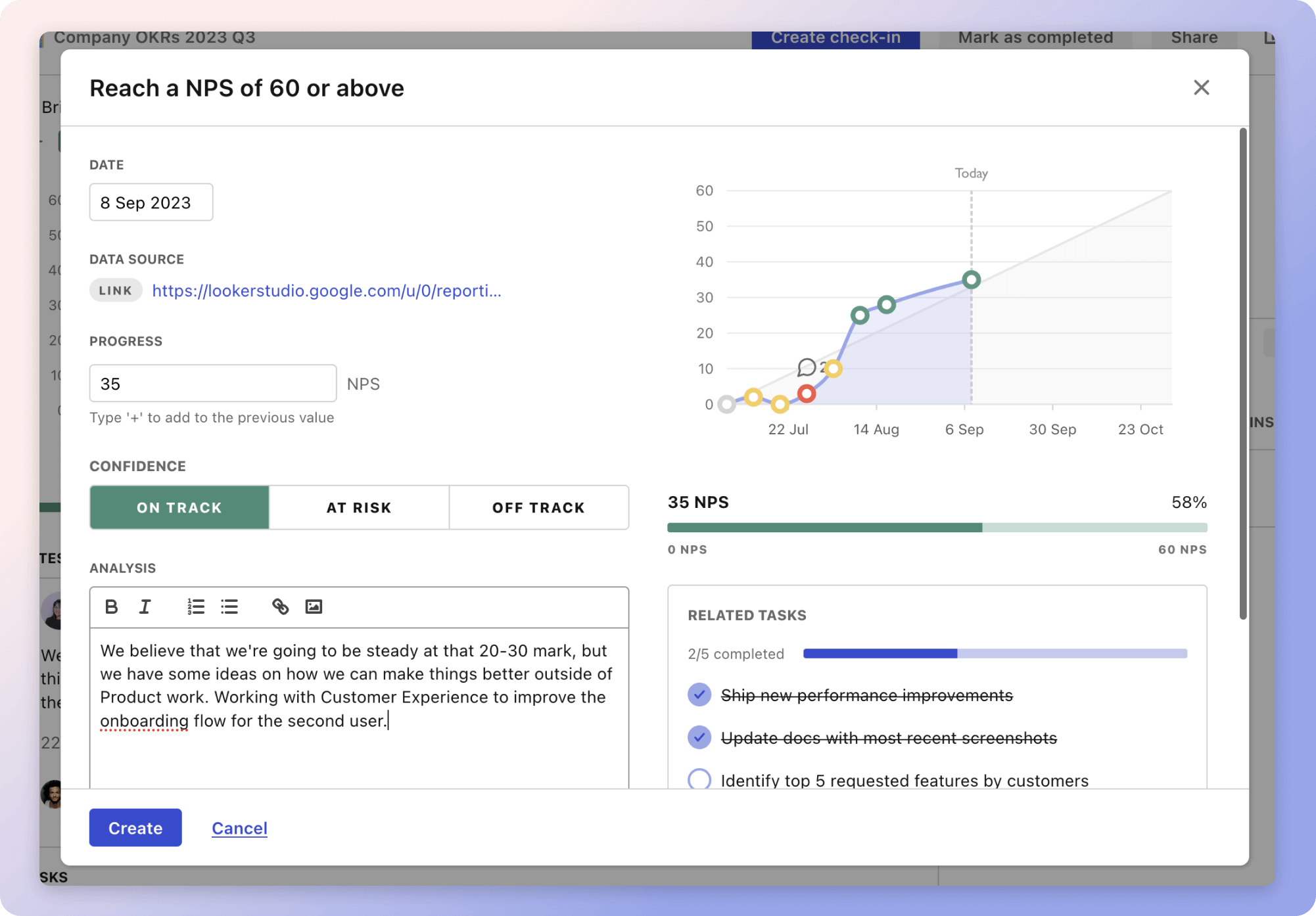
Give it a try and see how it can help you bring accountability to your strategy.