The "Executing a Short-Term Trading Strategy" involves entering a trade at 9:30 am and exiting at 9:45 am, focusing on a 15-minute candle breakout. This strategy sets a profit target of 25 points and a stop loss at 10 points. For example, if the 9:30 am candle breaks out high, the trader will execute a buy order using automated systems for precision and risk management.
Optimizing trade execution is crucial, using a reliable broker for minimal slippage and fast order execution. Automated entry and exit orders ensure discipline, while regular backtesting and maintaining a trading log help refine performance, identifying areas for improvement.
Risk management practices include allocating a maximum of 2% of capital per trade and adjusting position sizes based on account growth. By setting daily loss limits and preparing contingency plans, traders maintain emotional control during trades, ensuring calculated decisions even during fast market movements.
The strategies
⛳️ Strategy 1: Define Your Entry and Exit Rules
- Set up your trading platform to display 15-minute candlestick charts
- Identify the high and low of the 9.30am candle
- Monitor the market closely for a breakout beyond the high or a breakdown below the low
- Prepare to enter a trade at 9.45am based on the breakout direction
- Set a stop loss at 10 points opposite the trade direction
- Set a take profit order for 25 points in the trade direction
- Ensure all orders are automated to execute precisely at 9.45am
- Verify proper risk management by ensuring stop loss and take profit levels are properly calculated
- Exit all positions exactly at 9.45am regardless of market conditions
- Review the trade for adherence to the strategy rules after the market closes
⛳️ Strategy 2: Optimise Trade Execution
- Use a reliable broker with minimal slippage and fast order execution
- Test your internet connection before market open to ensure stability and speed
- Utilise a trading platform that supports automated entry and exit orders
- Place your stop loss and take profit orders immediately after trade execution
- Cross-check valuable news sources to account for unexpected market movements
- Create alerts for entry points based on the 15-minute candle high and low breakout
- Backtest the strategy regularly to find potential improvements and validate performance
- Maintain a trading log to monitor outcomes and refine decision-making
- Remain disciplined and avoid adjusting stop loss or profit targets during active trade
- Take note of any deviations in order execution time and adjust for future trades
⛳️ Strategy 3: Enhance Risk Management
- Allocate no more than 2% of your trading capital to a single trade
- Use position sizing tools to determine the appropriate trade size based on risk tolerance
- Implement a systematic approach for adjusting position sizes relative to trading account growth
- Set a daily loss limit to prevent over-trading and maintain emotional control
- Identify suitable liquidity markets to minimise risk of slippage during fast movements
- Utilise stop-limit orders to gain more control over execution prices
- Prepare contingency plans in case of unexpected technological failures
- Periodically reassess the risk-reward ratio and adjust the strategy as needed
- Seek feedback from trading mentors or communities to identify potential risk factors
- Ensure thorough after-action reviews for ongoing refinement of risk management tactics
Bringing accountability to your strategy
It's one thing to have a plan, it's another to stick to it. We hope that the examples above will help you get started with your own strategy, but we also know that it's easy to get lost in the day-to-day effort.
That's why we built Tability: to help you track your progress, keep your team aligned, and make sure you're always moving in the right direction.
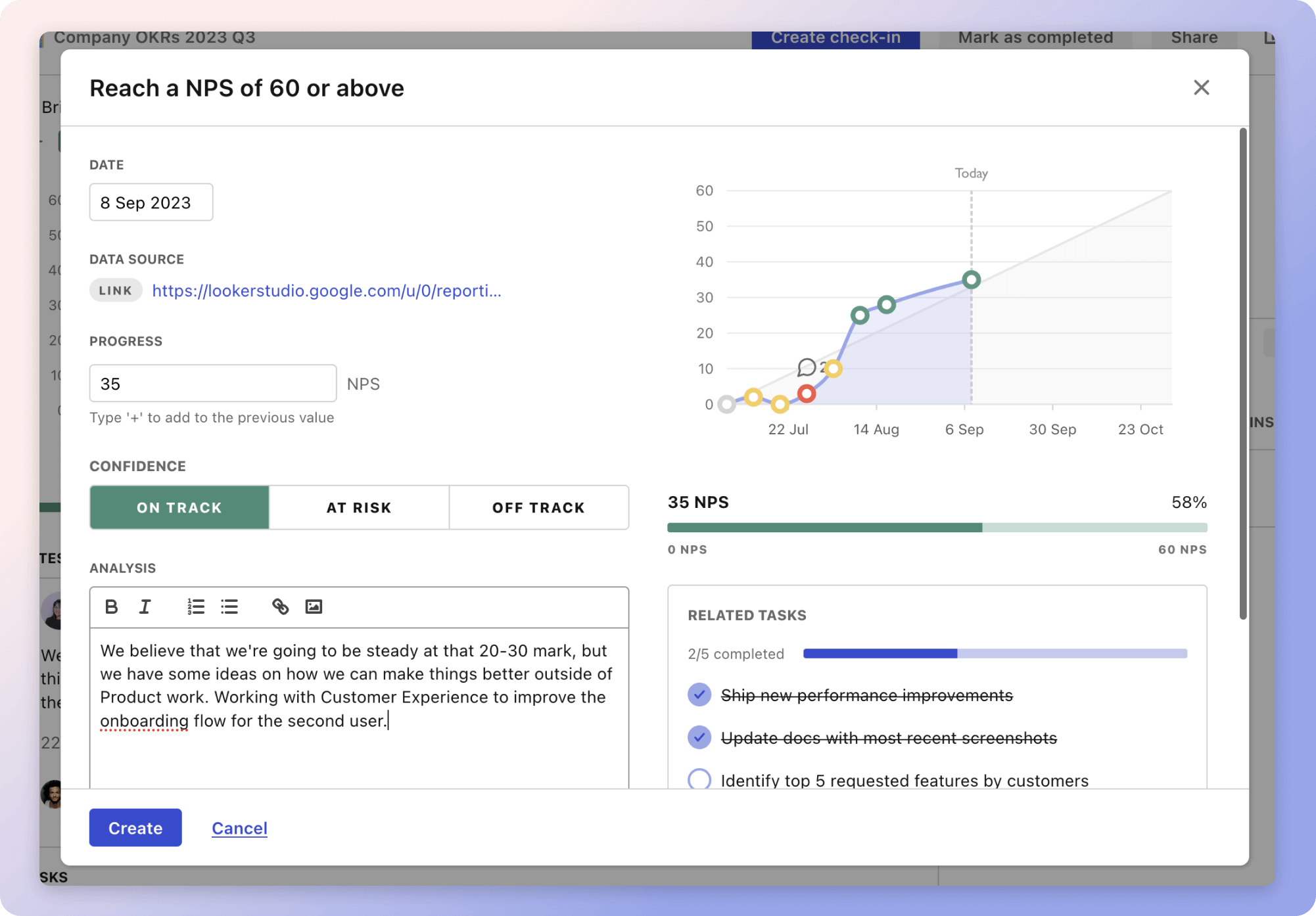
Give it a try and see how it can help you bring accountability to your strategy.