The strategy outlined focuses on creating a forex trading robot that is efficient and profitable. Initially, the focus is on conducting thorough market research to understand key trading pairs, analyze historical price data, and evaluate existing trading algorithms. This involves engaging with trading communities for insights and subscribing to market analysis resources. For example, successful algorithms could be studied to identify effective features that can be adapted for your robot.
Next, the strategy involves designing and developing the trading algorithm itself. This includes setting specific trading objectives, choosing a programming language, and testing the algorithm in simulated environments. For instance, implementing risk management features ensures that the robot adapts to market fluctuations, thereby safeguarding potential profits.
Finally, implementing and monitoring the trading robot is crucial. This stage involves deploying the robot with a reliable broker, setting up monitoring systems, and making adjustments based on performance metrics. Maintenance and user feedback play a significant role in the robot's ongoing success, ensuring that the robot remains responsive to the dynamic forex market.
The strategies
⛳️ Strategy 1: Conduct thorough market research
- Identify key forex trading pairs to focus your robot on
- Analyse historical price data for selected pairs
- Research successful trading algorithms and strategies
- Understand current market trends and factors affecting them
- Study existing forex trading robots and their performance
- Engage with forex trading communities for insights
- Subscribe to forex market analysis and news resources
- Determine key performance indicators for success
- Evaluate potential risks associated with forex trading
- Compile a comprehensive market research report
⛳️ Strategy 2: Design and develop the trading algorithm
- Set clear trading goals and objectives for the robot
- Decide on a programming language for development
- Create an algorithm that incorporates multiple trading strategies
- Implement risk management features in the algorithm
- Develop a backtesting framework to test the algorithm
- Optimise the algorithm based on backtesting results
- Integrate technical indicators and signals into the algorithm
- Test the algorithm in a simulated trading environment
- Continuously refine the algorithm for improved performance
- Document the development process and revisions made
⛳️ Strategy 3: Implement and monitor the trading robot
- Choose a reliable forex broker with API access
- Deploy the trading robot in a live trading environment
- Set up automated monitoring and alert systems
- Regularly review and analyse robot performance
- Make adjustments based on performance analysis
- Safeguard against potential technical failures
- Establish a clear protocol for stopping losses
- Plan regular maintenance and updates of the robot
- Gather feedback from users and traders
- Prepare periodic reports assessing robot success
Bringing accountability to your strategy
It's one thing to have a plan, it's another to stick to it. We hope that the examples above will help you get started with your own strategy, but we also know that it's easy to get lost in the day-to-day effort.
That's why we built Tability: to help you track your progress, keep your team aligned, and make sure you're always moving in the right direction.
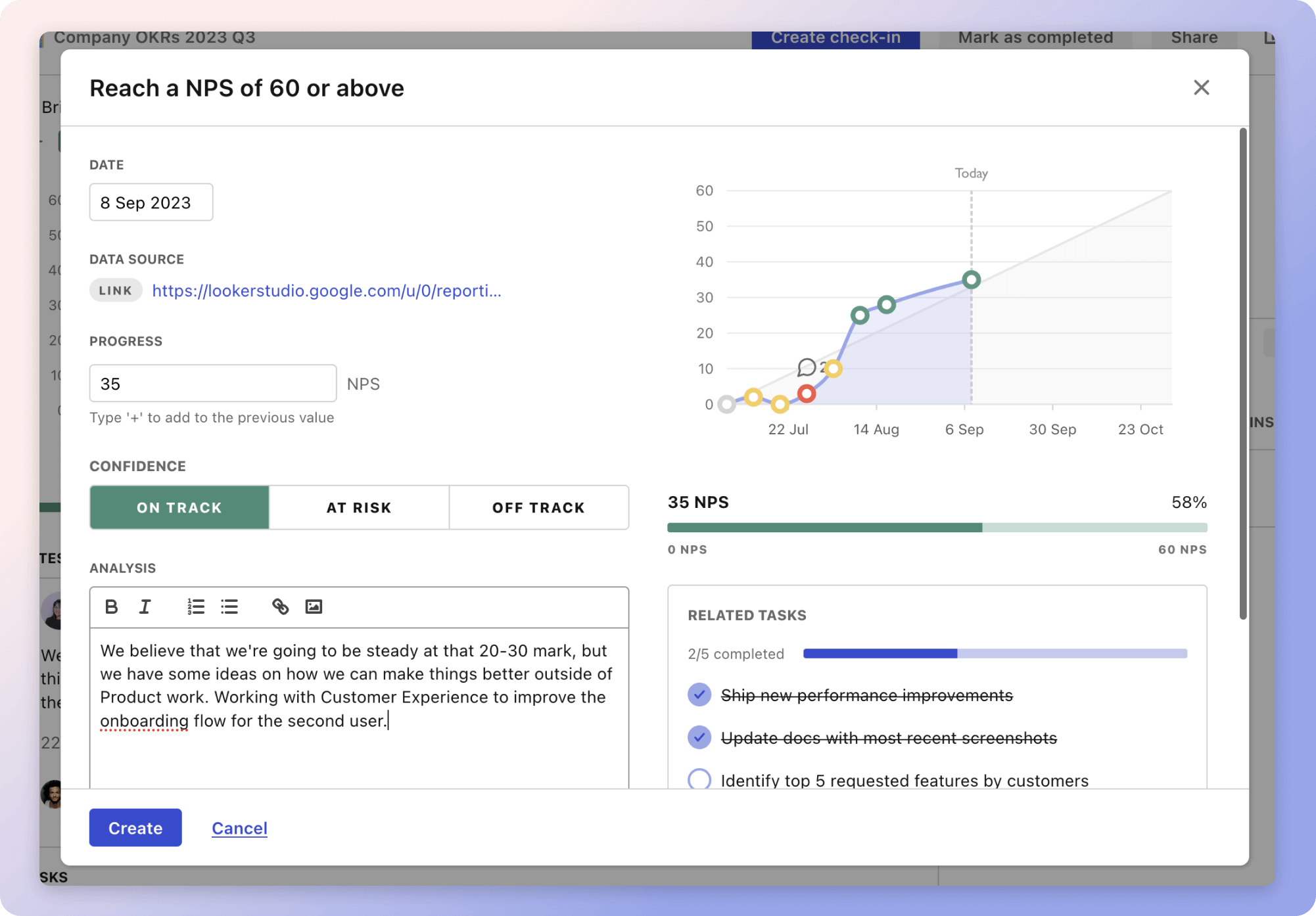
Give it a try and see how it can help you bring accountability to your strategy.