The strategy, "Adjusting customer success strategies for different segments," aims to elevate customer satisfaction and retention by tailoring approaches to specific customer groups. The first initiative focuses on customized onboarding experiences. This involves analyzing the unique needs of each segment and crafting distinct onboarding processes. For example, webinars and training sessions are tailored to different demographics, and feedback is gathered to refine the processes.
Another significant aspect is enhancing proactive communication plans. Customers are segmented based on behavior, allowing personalized communication calendars and touchpoints. For example, utilizing customer data can help foresee potential issues and share relevant customer stories to enhance connection and anticipation.
Finally, refining support protocols ensures that comprehensive, segment-specific support documentation and resources are available, addressing common challenges and providing dedicated support for high-value segments. A feedback system is implemented for continuous improvement, and collaboration with product teams addresses specific feature requests, aligning support with customer needs.
The strategies
⛳️ Strategy 1: Create customised onboarding experiences
- Analyse the unique needs and objectives of each customer segment
- Develop distinct onboarding processes for each segment
- Design specific educational materials for each demographic
- Host tailored webinars and training sessions aimed at different groups
- Allocate customer success managers based on their expertise with certain segments
- Set milestone check-ins to ensure onboarding goals are met
- Gather initial feedback from customers regarding the onboarding process
- Refine onboarding processes based on customer feedback
- Implement a tracking system for onboarding progress
- Celebrate onboarding milestones with personalised touches
⛳️ Strategy 2: Enhance proactive communication plans
- Segment the customer base into groups with similar behaviours
- Design communication calendars specific to each customer group
- Set personalised touchpoints throughout the year for each segment
- Utilise customer data to anticipate and address potential issues
- Regularly review communication effectiveness with analytical tools
- Train the customer success team on segment-specific communication tactics
- Leverage feedback loops to continually adjust communication strategies
- Incorporate a variety of communication channels suited to different segments
- Share customer stories and case studies relevant to particular segments
- Use survey tools to perform quarterly satisfaction assessments
⛳️ Strategy 3: Refine support protocols and resources
- Identify common challenges faced by each customer segment
- Develop comprehensive support documentation tailored to each segment
- Create a segment-based knowledge base for frequently asked questions
- Implement live chat or a dedicated hotline for high-value segments
- Provide additional training resources for complex product features
- Teach customer success teams to recognise segment-specific issues
- Facilitate regular training sessions for support staff
- Collect and analyse support data to identify patterns by segment
- Implement a feedback system for continuous improvement
- Collaborate with product teams to address segment-specific feature requests
Bringing accountability to your strategy
It's one thing to have a plan, it's another to stick to it. We hope that the examples above will help you get started with your own strategy, but we also know that it's easy to get lost in the day-to-day effort.
That's why we built Tability: to help you track your progress, keep your team aligned, and make sure you're always moving in the right direction.
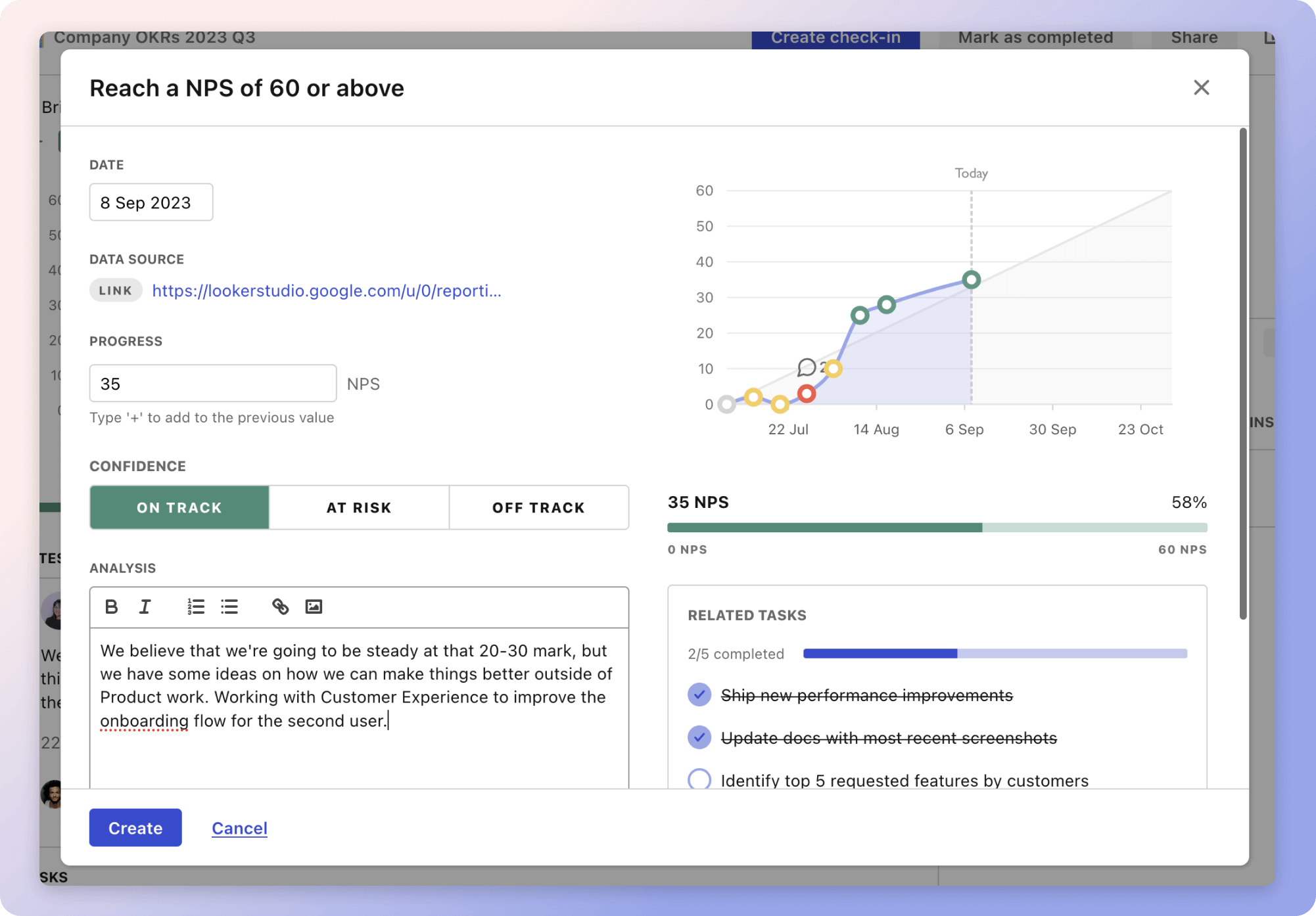
Give it a try and see how it can help you bring accountability to your strategy.