The strategy "Making a profit while helping others" focuses on generating profit by positively impacting the community. By developing a socially conscious product line, businesses can gain a dual advantage. For instance, conducting market research to identify social needs helps in designing products that resonate with community values. Engaging community organizations can improve product relevance, while using sustainable materials and a transparent supply chain reinforces ethical practices.
Partnerships with charitable organizations can also enhance community impact. This involves aligning with charities that share business values, which enables joint initiatives that maximize outreach. Offering company resources and encouraging employee volunteerism can nurture these collaborations. Showcasing such partnerships via marketing channels further strengthens the business's social commitment.
A sustainable business model is integral to this strategy. Conducting sustainability audits, setting clear goals, and investing in renewable energy embodies long-term thinking. By training employees and reducing waste, the company integrates sustainability into daily operations. This not only attracts eco-conscious customers but also sets a standard within the corporate social responsibility framework.
The strategies
⛳️ Strategy 1: Develop a socially conscious product line
- Research market needs that align with social causes
- Engage with community organisations to understand their needs
- Design products that address identified social needs
- Source sustainable materials and ethical suppliers
- Create a transparent supply chain to demonstrate ethical practices
- Establish a pricing model that ensures affordability and profit
- Set up a portion of proceeds to be donated to relevant charities
- Implement a strong marketing campaign highlighting social impact
- Gather customer feedback to refine the product line
- Evaluate and report on the social impact of the product line
⛳️ Strategy 2: Create partnerships with charitable organisations
- Identify charities aligned with your business values
- Propose mutually beneficial partnership schemes
- Develop joint fundraising or event initiatives
- Leverage the charity’s network to reach a wider audience
- Offer your business resources or services to the partner charity
- Promote the partnership through your marketing channels
- Enable employees to volunteer during work hours
- Solicit feedback from the charity to improve collaboration
- Showcase partnership outcomes on your website
- Regularly review the effectiveness of partnerships
⛳️ Strategy 3: Implement a sustainable business model
- Conduct an audit to assess current sustainability practices
- Set clear sustainability goals and objectives
- Invest in renewable energy solutions for operations
- Reduce waste by implementing recycling programmes
- Identify and reduce carbon emissions associated with business activities
- Train employees on sustainability best practices
- Incorporate sustainability into corporate social responsibility policies
- Gain certifications for sustainable business practices
- Engage customers with sustainability campaigns
- Track and report on the business’s sustainability performance
Bringing accountability to your strategy
It's one thing to have a plan, it's another to stick to it. We hope that the examples above will help you get started with your own strategy, but we also know that it's easy to get lost in the day-to-day effort.
That's why we built Tability: to help you track your progress, keep your team aligned, and make sure you're always moving in the right direction.
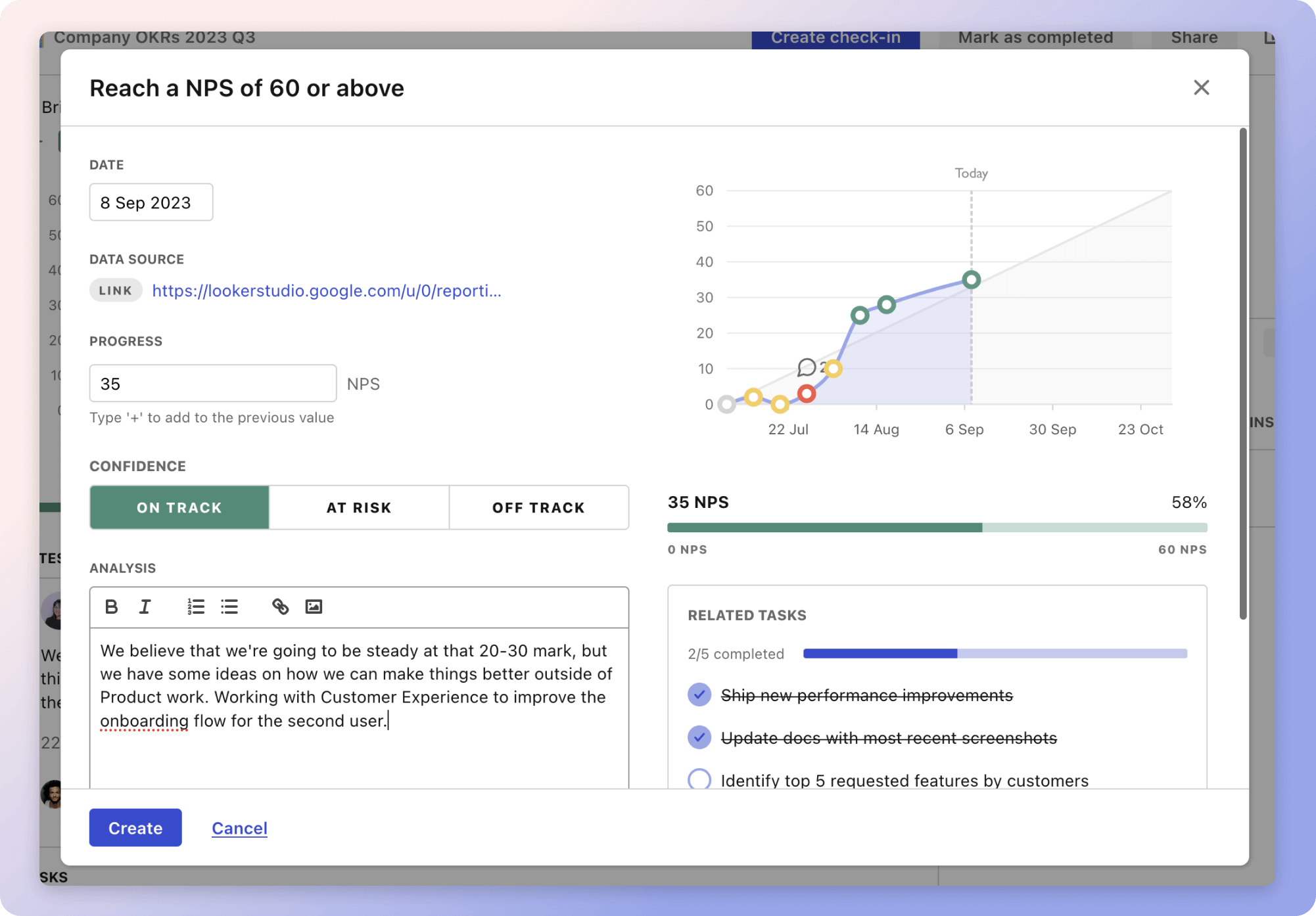
Give it a try and see how it can help you bring accountability to your strategy.