The strategy focuses on establishing a 100MW Battery Energy Storage System by engaging with key stakeholders and communities. This involves identifying stakeholders like local government and industry experts and gathering input through meetings. For example, conducting workshops educates residents on the system’s benefits, while a stakeholder advisory group provides ongoing guidance.
Developing a robust project plan is crucial, starting with a feasibility study to assess site suitability and demanding technical requirements. Securing permits, selecting technology providers, and ensuring scalability are vital steps. For instance, incorporating renewable sources can augment storage capabilities, highlighting the importance of a comprehensive planning phase.
Implementing a technological framework involves installing advanced battery units and ensuring grid compatibility. Pilot tests confirm system functionality. Ongoing maintenance and real-time tracking ensure efficiency and reliability. Technical training and setting up a support hotline facilitate immediate resolution of issues, ensuring the system remains up-to-date and effective.
---
The strategies
⛳️ Strategy 1: Engage with stakeholders and communities
- Identify key stakeholders, including local government, community leaders, and industry experts
- Conduct stakeholder meetings to gather input and feedback on the project
- Develop a communication plan to keep stakeholders informed throughout the project
- Organise community workshops to educate residents about the benefits of the energy storage system
- Establish a stakeholder advisory group to provide ongoing guidance and support
- Create a feedback mechanism to address community concerns and suggestions
- Engage with local educational institutions to promote energy storage awareness
- Utilise social media platforms to disseminate information about the project
- Collaborate with environmental groups to ensure sustainability objectives are met
- Prepare periodic reports to update stakeholders on project progress
⛳️ Strategy 2: Develop a robust project plan
- Conduct a feasibility study to assess site suitability and technical requirements
- Secure necessary funding and investment for the project
- Obtain required permits and regulatory approvals for construction
- Develop a detailed project timeline and milestones
- Select suitable technology providers and contractors for system integration
- Design infrastructure for the energy storage system, considering scalability
- Incorporate renewable energy sources where feasible to augment storage
- Prepare an environmental impact assessment to ensure minimal ecological disruption
- Integrate safety and risk management protocols into the project plan
- Establish a project management team to oversee implementation phases
⛳️ Strategy 3: Implement and support the technological framework
- Install state-of-the-art battery energy storage units at designated sites
- Ensure systems are compatible with existing grid infrastructure
- Run pilot tests to validate system functionality and reliability
- Develop a maintenance schedule to ensure long-term operational efficiency
- Implement a control and monitoring system for real-time performance tracking
- Conduct technical training programs for staff and local technicians
- Set up a technological support hotline for immediate issue resolution
- Create a protocol for software updates and technological advancements
- Collaborate with technology partners for ongoing innovation and improvements
- Document system performance data to analyse efficiency and areas for improvement
Bringing accountability to your strategy
It's one thing to have a plan, it's another to stick to it. We hope that the examples above will help you get started with your own strategy, but we also know that it's easy to get lost in the day-to-day effort.
That's why we built Tability: to help you track your progress, keep your team aligned, and make sure you're always moving in the right direction.
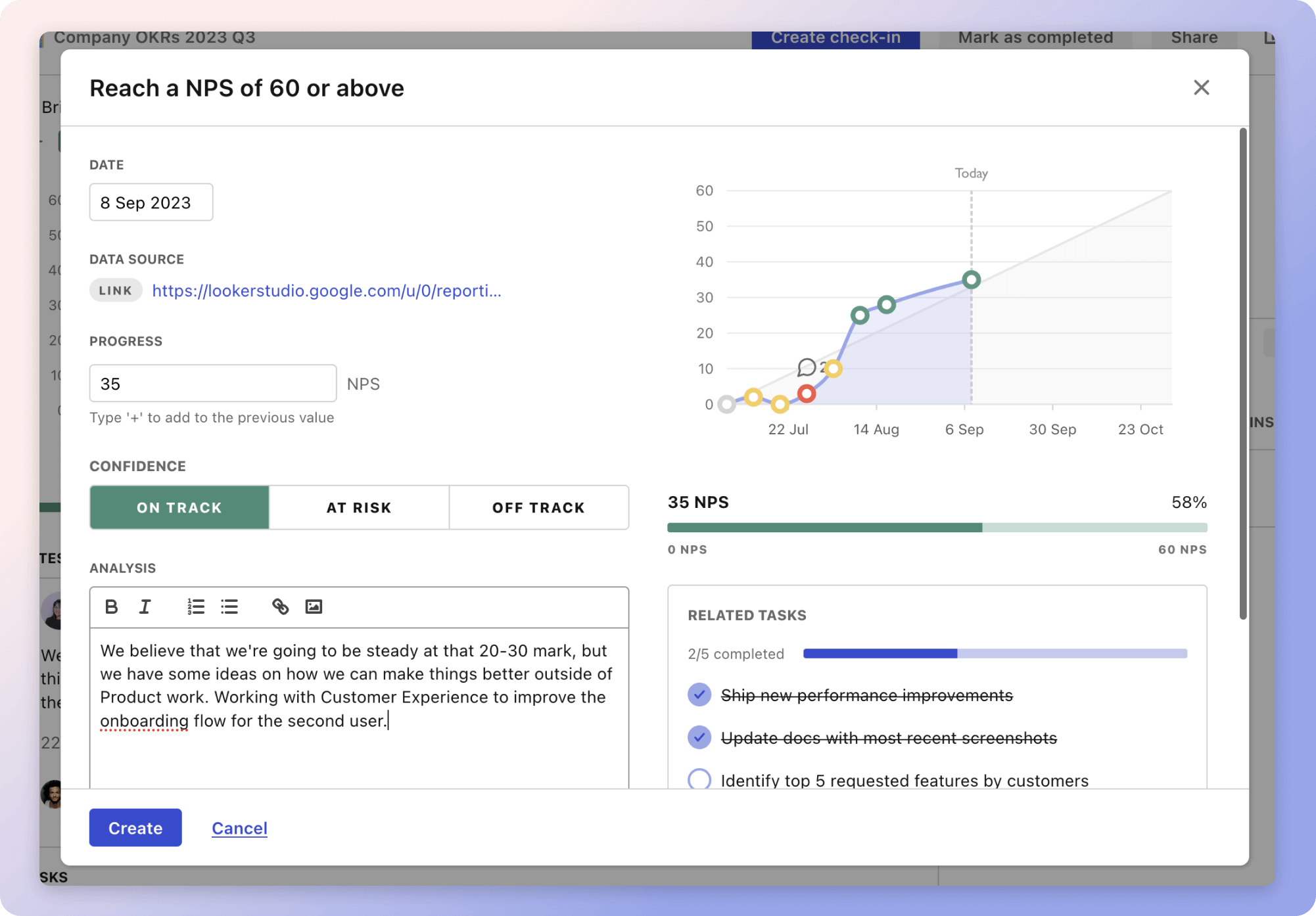
Give it a try and see how it can help you bring accountability to your strategy.