The strategy for developing an XAUUSD autotrading bot involves several critical steps. The first phase is comprehensive market research, where you analyze historical price trends of XAUUSD over the past decade and identify economic indicators, geopolitical events, and trading strategies that influence gold prices. This step helps in understanding the dynamics of the XAUUSD market and selecting suitable trading strategies for automation.
Next, develop and rigorously test the autotrading algorithm. Select an appropriate programming language and platform, design the algorithm with built-in risk management, and implement a robust backtesting framework. Testing under different market conditions ensures the algorithm’s adaptability, while simulation of live trading and continuous monitoring helps in iterative improvements for optimal performance.
Lastly, deploy the bot in live markets while monitoring real-time performance closely. Establish a system for automatic reporting and ensure compliance with regulatory requirements. Continuously analyze results for optimization opportunities and make adjustments as needed to maintain an edge in changing market conditions.
The strategies
⛳️ Strategy 1: Conduct thorough market research
- Analyse historical XAUUSD price trends over the past 10 years
- Identify key economic indicators affecting XAUUSD prices
- Study major geopolitical events influencing gold trading
- Examine different trading strategies successful in the XAUUSD market
- Gather insights from expert traders specialising in XAUUSD
- Investigate technological platforms suitable for trading automation
- Review profitable autotrading bots in the market for insights
- Identify key variables and parameters to monitor in XAUUSD trading
- Analyse competitors' autotrading strategies in the XAUUSD market
- Conduct surveys or interviews with frequent XAUUSD traders
⛳️ Strategy 2: Develop and test the autotrading algorithm
- Choose a programming language and platform for bot development
- Design an algorithm based on your research findings
- Incorporate risk management protocols into the algorithm
- Implement a backtesting framework using historical data
- Test the algorithm under various market conditions
- Fine-tune the algorithm based on backtesting results
- Simulate live trading in a controlled environment
- Integrate real-time data feeds for accurate decision making
- Continuously monitor and assess the bot’s performance
- Make iterative improvements for better performance
⛳️ Strategy 3: Deploy and evaluate the bot in live markets
- Set up necessary forex trading accounts and infrastructure
- Deploy the autotrading bot in a live but low-risk environment
- Monitor the bot's operations and performance in real-time
- Establish a system for automatic reporting and analytics
- Ensure compliance with any regulatory requirements
- Implement safety protocols for unexpected market volatility
- Continually analyse results to identify optimization areas
- Gather user feedback if the bot is made commercially available
- Prepare contingency plans for rapid bot adjustments
- Regularly update the bot to adapt to market changes
Bringing accountability to your strategy
It's one thing to have a plan, it's another to stick to it. We hope that the examples above will help you get started with your own strategy, but we also know that it's easy to get lost in the day-to-day effort.
That's why we built Tability: to help you track your progress, keep your team aligned, and make sure you're always moving in the right direction.
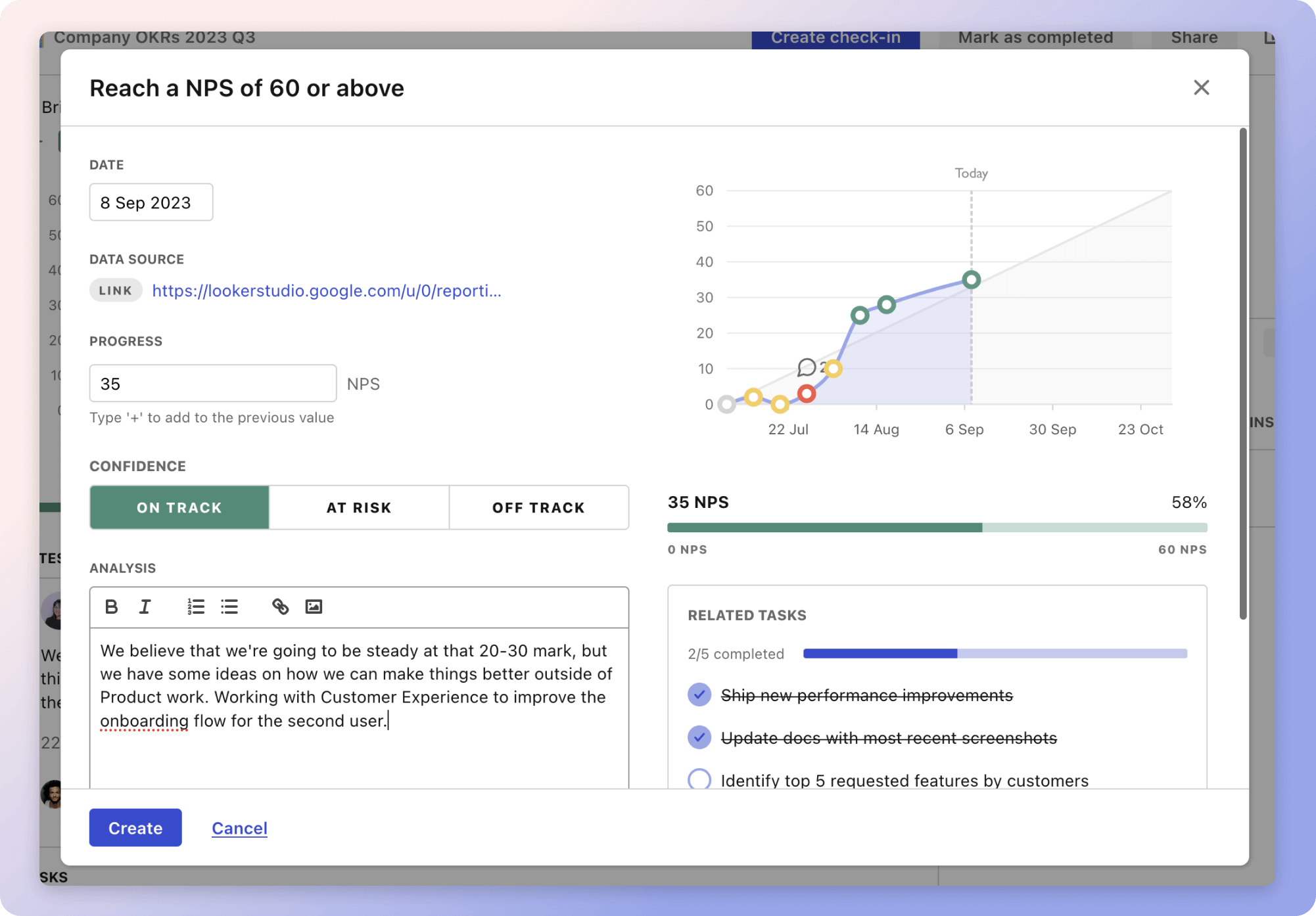
Give it a try and see how it can help you bring accountability to your strategy.