The strategy involves developing a Forex indicator and expert advisor to enhance trading decisions. It begins with understanding the fundamentals, such as studying basic forex concepts, existing indicators, market conditions, and risk management strategies. For example, by analyzing historical data, you can identify patterns that provide insightful guidance for future trades.
The next phase focuses on the design of the indicator and expert advisor, where you define objectives, rules, and incorporate technical analysis. Coding platforms are selected, and prototypes developed, aiming for effective real-time alert systems and robust risk management components, ensuring comprehensive trading solutions.
The final strategy involves testing and optimization, utilizing backtesting and forward testing in demo environments. Continuous iteration and feedback, especially from beta testers, ensure compliance and optimal performance across different conditions. Monitoring deployments and preparing user documentation is crucial for seamless implementation.
The strategies
⛳️ Strategy 1: Understand the fundamentals
- Research basic forex trading concepts and terminology
- Study existing indicators and their functions
- Identify key features of a successful expert advisor
- Learn about various market conditions and their implications
- Analyse historical data to identify patterns
- Familiarise yourself with common trading platforms like MetaTrader
- Understand risk management strategies in forex trading
- Follow key influencers and trends in the forex market
- Study past successful forex expert advisors and models
- Join online forums and communities dedicated to forex trading
⛳️ Strategy 2: Design your indicator and expert advisor
- Select a coding platform for developing your indicator and advisor
- Set clear objectives and rules for your indicator and expert advisor
- Create a blueprint outlining the algorithm and logic
- Ensure your design incorporates risk management components
- Incorporate technical analysis into your design
- Draft initial prototypes of your indicator's visual outputs
- Plan for backtesting capabilities within your design
- List required data inputs to be utilised by the software
- Decide on alert systems for real-time trading decisions
- Consult with experienced traders or developers for feedback
⛳️ Strategy 3: Test and optimise your solutions
- Backtest your indicator and expert advisor using historical data
- Analyse the performance results to identify areas of improvement
- Iterate on your design based on test findings
- Perform forward testing in a demo account environment
- Adjust parameters for optimal performance in different market conditions
- Seek feedback from beta testers within trading communities
- Ensure compliance with trading platform and market regulations
- Monitor real-time deployments for unforeseen issues
- Fine-tune the response to market volatility and rapid changes
- Prepare a user guide and documentation for end-users
Bringing accountability to your strategy
It's one thing to have a plan, it's another to stick to it. We hope that the examples above will help you get started with your own strategy, but we also know that it's easy to get lost in the day-to-day effort.
That's why we built Tability: to help you track your progress, keep your team aligned, and make sure you're always moving in the right direction.
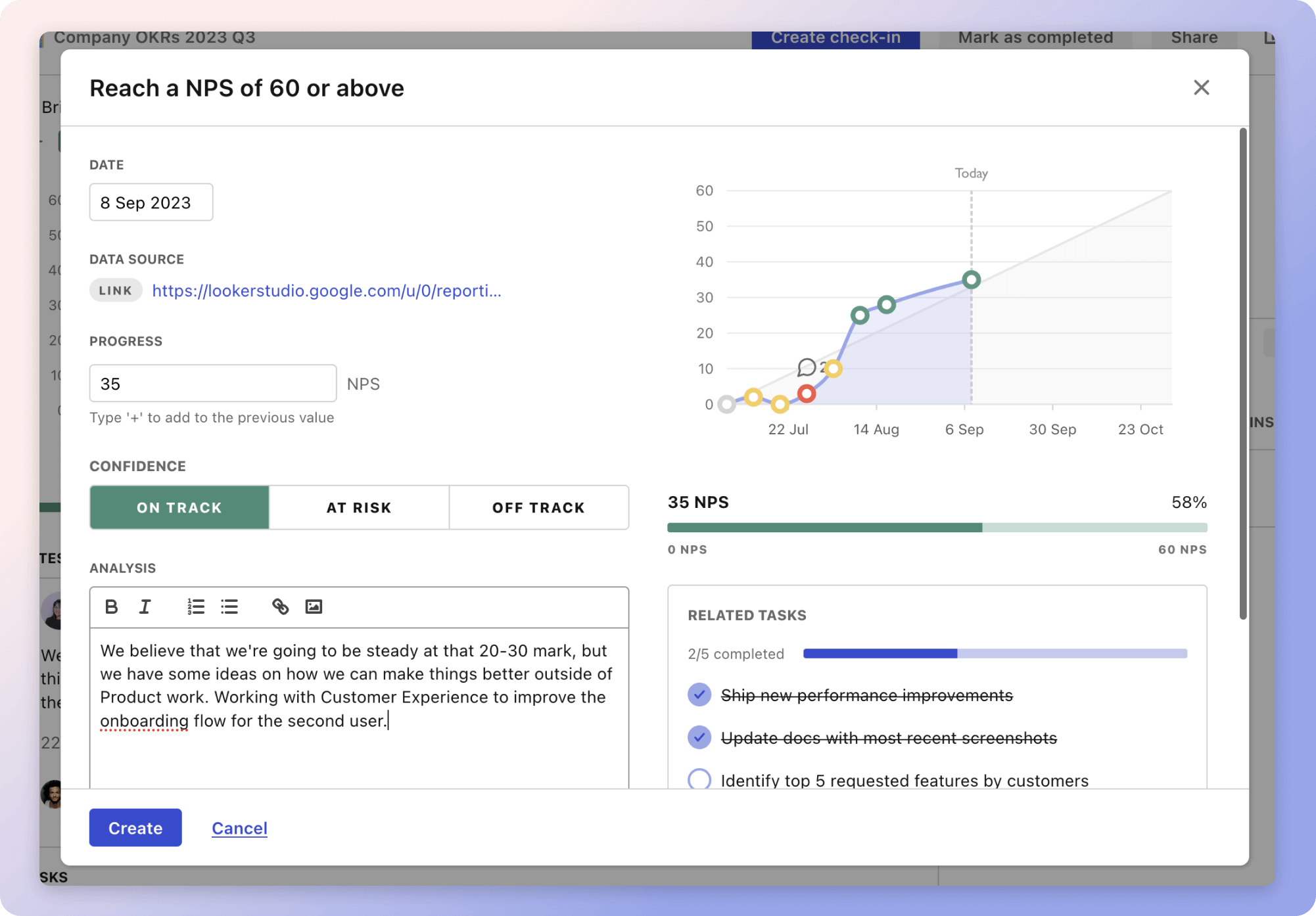
Give it a try and see how it can help you bring accountability to your strategy.