The strategy revolves around developing an AI portfolio for digital businesses to improve decision-making, automate workflows, and enhance customer engagement using AI tools. Initially, clear objectives are defined by identifying key business processes requiring improvement and pinpointing decision-making processes that could benefit from AI insights. The next phase involves selecting the appropriate AI tools. This entails assessing existing AI and machine learning tools, piloting them with small teams, and ensuring adequate end-user training. Finally, building a skilled AI team is crucial. This team will consist of AI specialists dedicated to fostering a culture of collaboration and innovation within the organization.
The strategies
⛳️ Strategy 1: Define clear objectives
- Identify key business processes that need improvement
- Determine specific decision-making processes that can benefit from AI insights
- List customer engagement touchpoints to enhance with AI tools
- Define success metrics for each AI tool or application
- Conduct workshops with stakeholders to gather input on potential AI applications
- Rank the initiatives based on potential impact and feasibility
- Develop a timeline for the implementation of each AI solution
- Allocate resources for the development of each AI initiative
- Identify pilot projects to test the feasibility of each AI initiative
- Set up a feedback loop to continuously assess the effectiveness of AI solutions
⛳️ Strategy 2: Select appropriate AI tools
- Assess existing AI and machine learning tools in the market
- Evaluate tools based on their capabilities to meet defined objectives
- Consult with IT specialists to ensure compatibility with current systems
- Pilot selected AI tools with a small team for targeted use cases
- Solicit feedback from users to evaluate tool functionality and usability
- Create a deployment plan for successful AI tools company-wide
- Ensure adequate training is provided for end-users of AI tools
- Monitor and manage AI tool usage to optimize performance
- Continually update tool parameters to align with evolving business goals
- Establish a partnership with AI vendors for ongoing support and upgrades
⛳️ Strategy 3: Build a skilled AI team
- Identify required AI skill sets within the organization
- Recruit AI specialists with experience in machine learning and data analysis
- Set up an AI center of excellence to drive strategic AI initiatives
- Provide ongoing training and development for current staff in AI technologies
- Create a collaborative environment for AI team members to share insights
- Define clear roles and responsibilities for the AI team
- Organize regular meetings to review project progress and challenges
- Encourage cross-functional collaboration between AI and other departments
- Promote a culture of innovation within the AI team
- Measure team performance against set objectives and refine strategies as necessary
Bringing accountability to your strategy
It's one thing to have a plan, it's another to stick to it. We hope that the examples above will help you get started with your own strategy, but we also know that it's easy to get lost in the day-to-day effort.
That's why we built Tability: to help you track your progress, keep your team aligned, and make sure you're always moving in the right direction.
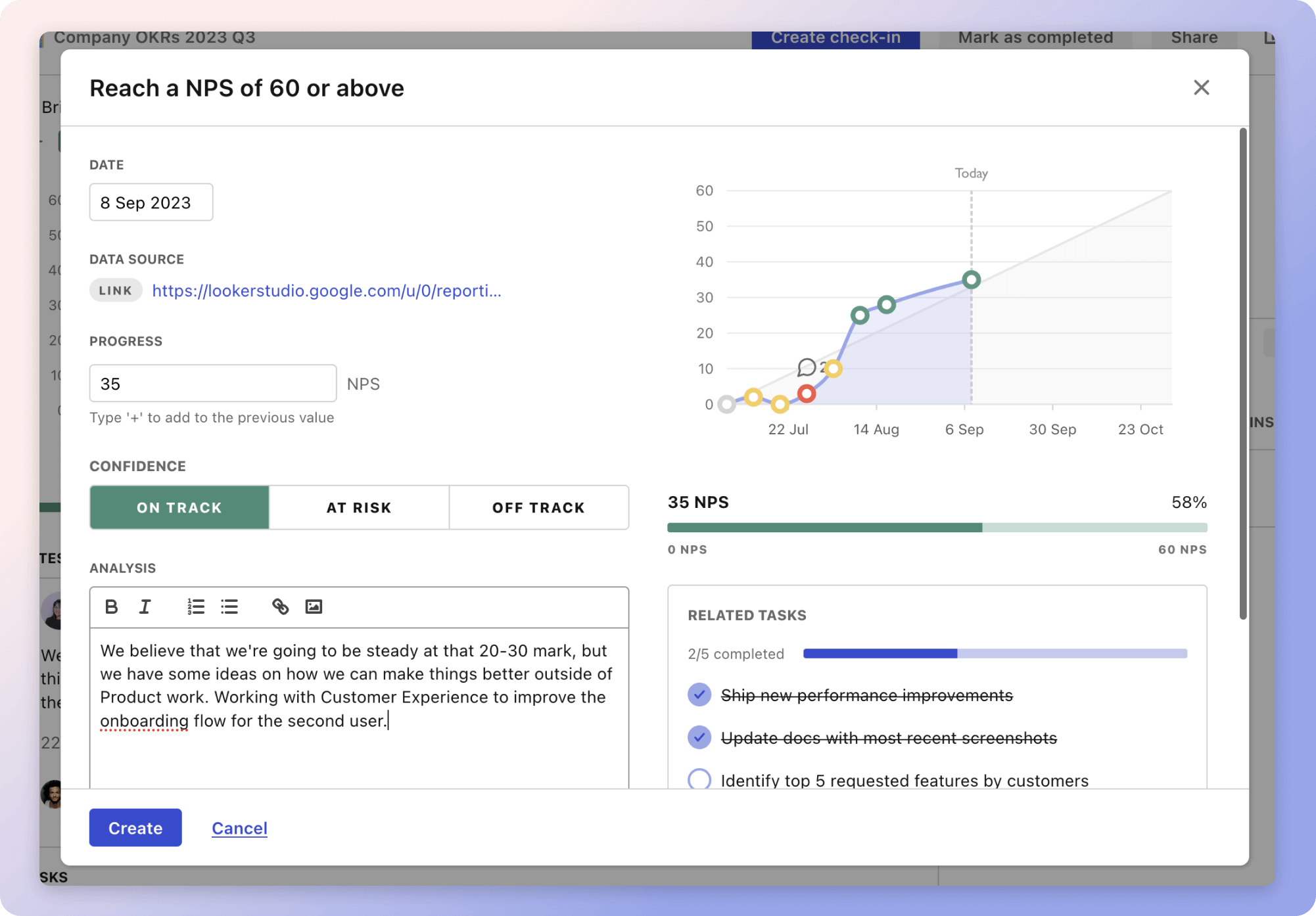
Give it a try and see how it can help you bring accountability to your strategy.