The strategy outlined focuses on structuring and optimizing support groups within a campaign. The primary goal is to register and coordinate these groups under a single, cohesive campaign framework. One key approach involves developing a centralized database. This entails identifying all existing support groups, creating a comprehensive registration tool, validating and segmenting data, and ensuring secure access. For example, regular database updates and biannual audits will help maintain data integrity and usability for decision-making.
Another important strategy is facilitating communication among support groups. Establishing a communication platform and organizing monthly meetings can enhance collaboration and information dissemination. Initiatives such as newsletters and social media engagement are designed to update the groups on the campaign’s progress. For instance, a dedicated helpline can provide necessary assistance, ensuring resource sharing and protocol consistency.
Finally, aligning efforts through a campaign framework is crucial. This includes defining goals, developing toolkits, and involving group leaders in strategic planning. For example, workshops can be hosted to explain the campaign objectives and facilitate collaboration through shared projects. Regular reviews ensure that the framework evolves to meet the campaign’s needs, making it crucial for progress tracking and acknowledging successful groups.
The strategies
⛳️ Strategy 1: Develop a centralised database
- Identify all existing support groups within the scope of the campaign
- Create a comprehensive database to register these groups
- Develop a standard registration form for information consistency
- Implement data validation processes to ensure data accuracy
- Segment the groups by region, size, and focus area
- Assign a campaign representative to manage the database
- Provide secure access to authorised personnel only
- Regularly update the database to accommodate new registrations
- Schedule biannual audits to maintain data integrity
- Use the database to generate reports and insights for decision-making
⛳️ Strategy 2: Facilitate regular communication
- Establish a communication platform for all registered groups
- Organise monthly online meetings to discuss progress and challenges
- Create a newsletter to provide regular campaign updates
- Set up a dedicated helpline for support group queries
- Encourage the sharing of resources and best practices among groups
- Develop standard communication protocols to ensure consistency
- Provide training on effective communication tools and strategies
- Utilise social media to enhance visibility and engagement
- Gather feedback from groups to improve communication efforts
- Monitor communication channels to assess effectiveness
⛳️ Strategy 3: Align efforts through a campaign framework
- Define the overarching goals and objectives of the campaign
- Develop a unified framework to guide support group activities
- Create toolkits with resources and templates for group use
- Host workshops to explain the campaign framework and objectives
- Include support group leaders in the planning and implementation process
- Set measurable targets for each group under the framework
- Establish a system for tracking group progress and outcomes
- Recognise and reward groups who meet or exceed their targets
- Facilitate collaboration through shared projects and initiatives
- Regularly review the framework to ensure it aligns with campaign goals
Bringing accountability to your strategy
It's one thing to have a plan, it's another to stick to it. We hope that the examples above will help you get started with your own strategy, but we also know that it's easy to get lost in the day-to-day effort.
That's why we built Tability: to help you track your progress, keep your team aligned, and make sure you're always moving in the right direction.
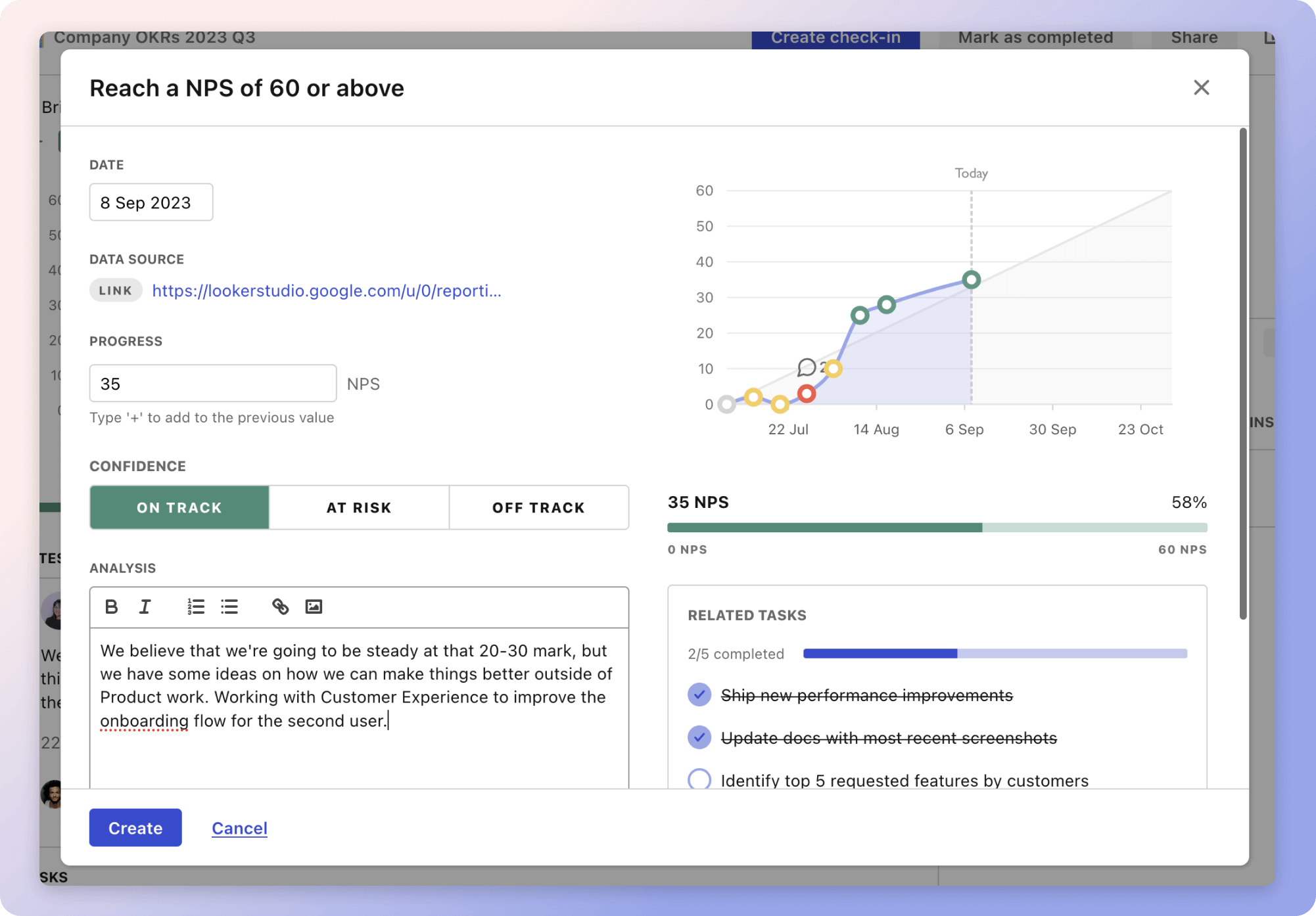
Give it a try and see how it can help you bring accountability to your strategy.