Developing an AI initiative portfolio involves several strategies aimed at enhancing business operations through advanced technology. The first strategy, implementing AI-driven decision support systems, focuses on optimizing decision-making processes using AI. By collaborating with data scientists and leveraging AI models, businesses can improve decision accuracy and streamline operations, much like using a GPS for efficient route planning.
The second strategy targets automating business workflows. Identifying repetitive tasks suitable for AI transformation, businesses can significantly reduce manual labor, akin to an assembly line using machines instead of manual workers, ensuring more efficient and error-free processes.
Lastly, enhancing customer engagement through AI solutions aims to personalize interactions. By employing AI chatbots and personalized recommendations, companies can improve customer support quality and satisfaction, much like a personalized shopping experience tailored to a customer’s preferences, ensuring higher engagement and loyalty.
The strategies
⛳️ Strategy 1: Implement AI-driven decision support systems
- Identify key decision-making processes that can benefit from AI
- Evaluate existing AI tools and platforms suitable for decision support
- Collaborate with data scientists to align AI models with business goals
- Develop a prototype of the AI-driven decision support system
- Conduct pilot testing with selected departments for feedback and improvements
- Integrate AI decision support tools into existing business systems
- Train staff on effectively utilising AI-driven decision-making tools
- Monitor the impact of the AI systems on decision-making processes
- Adjust and refine AI algorithms based on performance data
- Report the benefits and efficiencies gained from AI implementations
⛳️ Strategy 2: Automate business workflows with AI technology
- Identify repetitive and manual processes suitable for automation
- Research relevant AI and machine learning tools for workflow automation
- Partner with technology vendors to procure needed automation solutions
- Map out current workflows to pinpoint automation opportunities
- Develop and test AI-powered workflow automation prototypes
- Deploy automation tools in phases to manage change effectively
- Provide training to employees on the new automated workflows
- Establish performance metrics to analyse the impact of automation
- Iterate and improve on the automation processes based on feedback
- Document cost savings and efficiency improvements from workflow automation
⛳️ Strategy 3: Enhance customer engagement through AI solutions
- Identify key touchpoints in the customer journey that can benefit from AI
- Explore AI tools for personalised marketing and customer engagement
- Implement AI chatbots to provide 24/7 customer support
- Leverage machine learning to offer personalised recommendations
- Integrate AI-driven insights into customer relationship management (CRM) systems
- Test AI-powered features with a focus group of customers
- Gather and analyse customer feedback on AI-driven experiences
- Continuously update AI models to reflect customer preferences and trends
- Provide training for marketing and customer service teams on AI tools
- Measure improvements in customer engagement and satisfaction over time
Bringing accountability to your strategy
It's one thing to have a plan, it's another to stick to it. We hope that the examples above will help you get started with your own strategy, but we also know that it's easy to get lost in the day-to-day effort.
That's why we built Tability: to help you track your progress, keep your team aligned, and make sure you're always moving in the right direction.
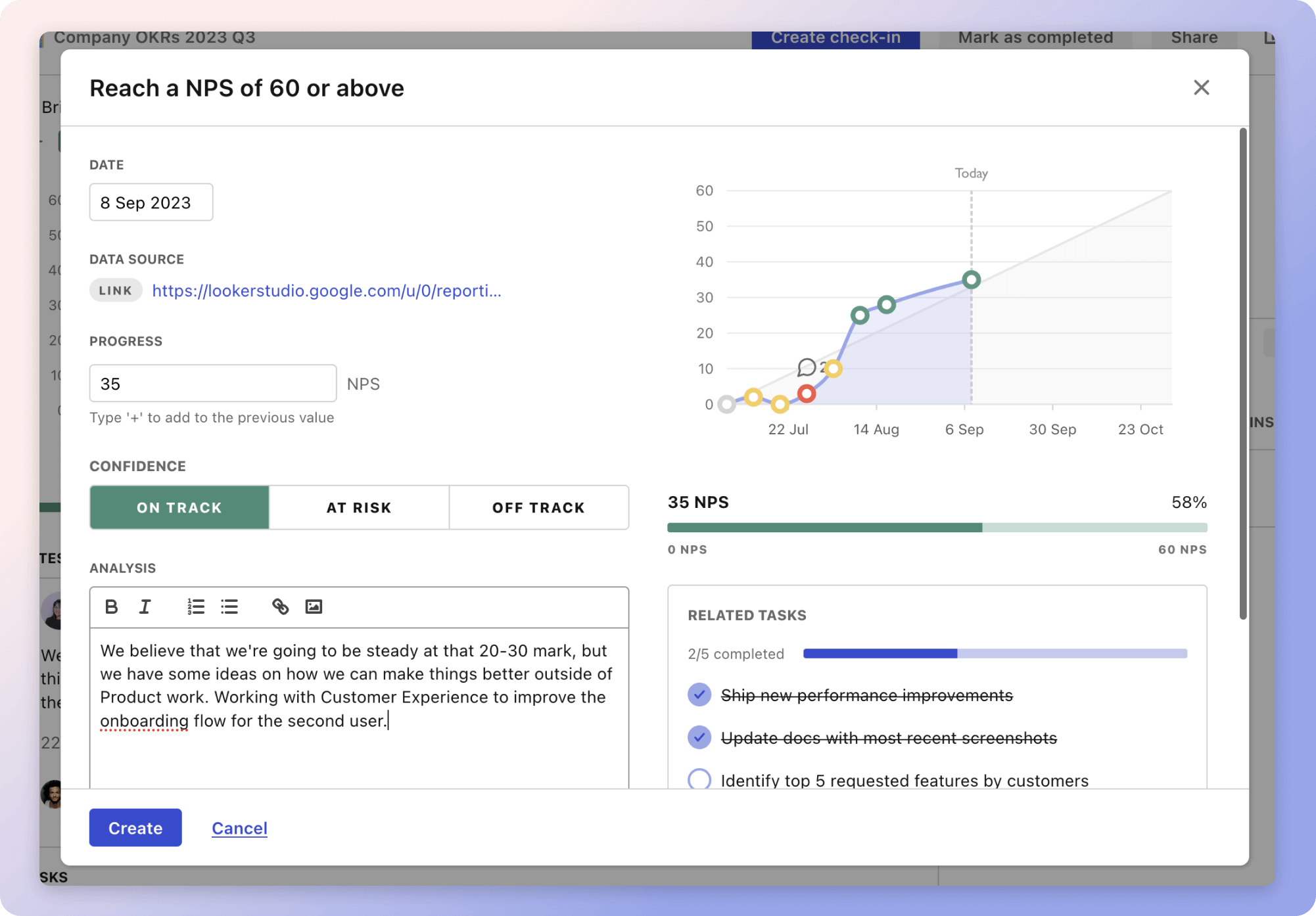
Give it a try and see how it can help you bring accountability to your strategy.