The strategy detailed in your JSON file is about establishing a peer support system within an organization to boost employee well-being and collaboration. It breaks down the process into three key areas: setting objectives, selecting and training supporters, and creating communication channels. Each area involves several action items which collectively ensure the system is robust and impactful.
For example, under "Establish clear objectives and goals," the strategy emphasizes aligning the peer support system with the organization's mission, setting measurable goals, and gathering stakeholder input, akin to building a blueprint before construction. In the "Select and train peer supporters" section, the focus is on criteria for selecting candidates and implementing an effective training program with skills such as empathy and active listening, ensuring peer supporters are well-prepared. Lastly, in "Create engagement and communication channels," the strategy promotes awareness and easy access through various platforms and regular feedback, helping maintain a supportive community.
The strategies
⛳️ Strategy 1: Establish clear objectives and goals
- Define the purpose and scope of the peer support system
- Identify key outcomes you want to achieve with the peer support network
- Set measurable goals to track the effectiveness of the peer support system
- Align the peer support system with the organisation’s values and mission
- Gather input from stakeholders to ensure a comprehensive approach
- Research best practices in existing peer support models
- Define the roles and responsibilities of peer supporters
- Identify potential challenges and create strategies to address them
- Ensure the objectives are flexible to adapt to changes
- Communicate the objectives clearly to all participants
⛳️ Strategy 2: Select and train peer supporters
- Create a criteria to identify suitable peer supporter candidates
- Promote the peer supporter role and invite applications
- Design an effective training program focusing on active listening, empathy, and communication skills
- Provide guidelines for confidentiality and boundaries
- Utilise role-playing exercises to simulate peer support scenarios
- Create a support system within the peer supporters group
- Offer continuous learning opportunities through workshops and seminars
- Evaluate peer supporters' performance regularly to ensure effectiveness
- Implement a feedback mechanism for peer supporters
- Recognise and reward peer supporters for their contributions
⛳️ Strategy 3: Create engagement and communication channels
- Develop a marketing plan to raise awareness about the peer support system
- Utilise various platforms like newsletters, bulletin boards, and digital forums to spread the word
- Host introductory workshops or webinars to engage employees
- Establish a communication channel where peers can connect easily
- Schedule regular meetings or catch-up sessions for peer supporters to share experiences
- Create an FAQ resource to address potential questions about the program
- Foster a culture of openness and encouragement around seeking support
- Gather regular feedback from participants to improve the communication process
- Utilise storytelling to share success stories and build credibility
- Ensure there's a feedback loop to respond to the needs and suggestions of the users
Bringing accountability to your strategy
It's one thing to have a plan, it's another to stick to it. We hope that the examples above will help you get started with your own strategy, but we also know that it's easy to get lost in the day-to-day effort.
That's why we built Tability: to help you track your progress, keep your team aligned, and make sure you're always moving in the right direction.
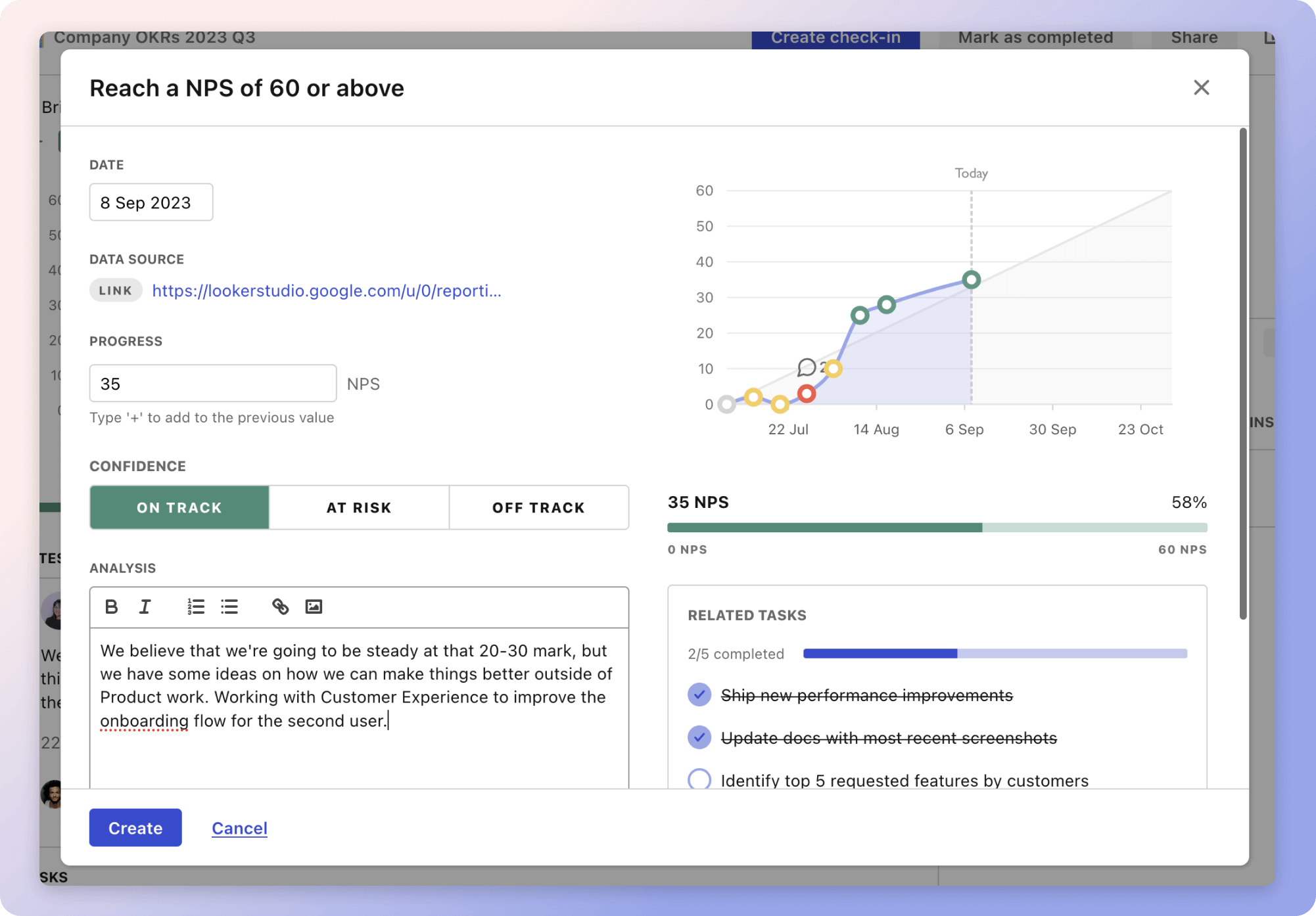
Give it a try and see how it can help you bring accountability to your strategy.