The strategy outlined focuses on researching and analyzing children-focused cultural or educational programs. The first step involves conducting comprehensive desk research to identify regions and institutions of interest. For example, using academic databases and published case studies helps gather information on programs that emphasize innovation in learning and play-based methods. This data collection is complemented by specifics like program concepts and audience engagement.
Next, engaging with stakeholders provides further insights. By preparing targeted questions, researchers can understand program success, challenges, and the role of technology. Interviews reveal unique cultural elements and provide recommendations for similar programs, enhancing the research depth.
Finally, analyzing and synthesizing the collected data involves organizing it into a thematic format to identify patterns and innovative practices. For example, methods to maintain children’s interest are compared across programs to determine success factors. A comprehensive report documents these findings, guiding future programming. This structured approach ensures a thorough understanding of educational innovations relevant for Winter 2025 initiatives.
The strategies
⛳️ Strategy 1: Conduct comprehensive desk research
- Identify regions of interest for the research
- Develop a list of cultural and educational institutions in these regions
- Use academic databases to gather data on existing programs
- Search for published case studies in educational journals
- Collect data from each institution's official website
- Identify programs focusing on children’s cultural or educational development
- Gather information on play-based and interactive learning methods
- Record the organising entity, project title, and date of each program
- Compile descriptions focusing on concept, audience, and engagement
- Note key learnings adaptable for future programming
⛳️ Strategy 2: Engage with key stakeholders for insights
- Identify stakeholders in each selected institution
- Prepare questions focusing on program success and innovation
- Contact stakeholders for interviews or information exchanges
- Request data on participant engagement levels and feedback
- Discuss observed challenges and solutions in program delivery
- Inquire about techniques used to maintain children’s interest
- Ask about the role of technology in learning facilitation
- Investigate any unique cultural elements incorporated
- Gather recommendations for implementing similar programs
- Compile responses for further analysis and insights
⛳️ Strategy 3: Analyse and synthesise collected data
- Organise collected data into a structured format
- Use thematic analysis to identify recurring themes
- Evaluate the effectiveness of different engagement methods
- Identify innovative practices in play-based learning
- Compare success metrics across different programs
- Determine factors that contribute to a program’s effectiveness
- Highlight unique engagement techniques used by each program
- Summarise key learnings for each case study
- Assess adaptability of these practices for Winter 2025 programming
- Draft a comprehensive report documenting findings and insights
Bringing accountability to your strategy
It's one thing to have a plan, it's another to stick to it. We hope that the examples above will help you get started with your own strategy, but we also know that it's easy to get lost in the day-to-day effort.
That's why we built Tability: to help you track your progress, keep your team aligned, and make sure you're always moving in the right direction.
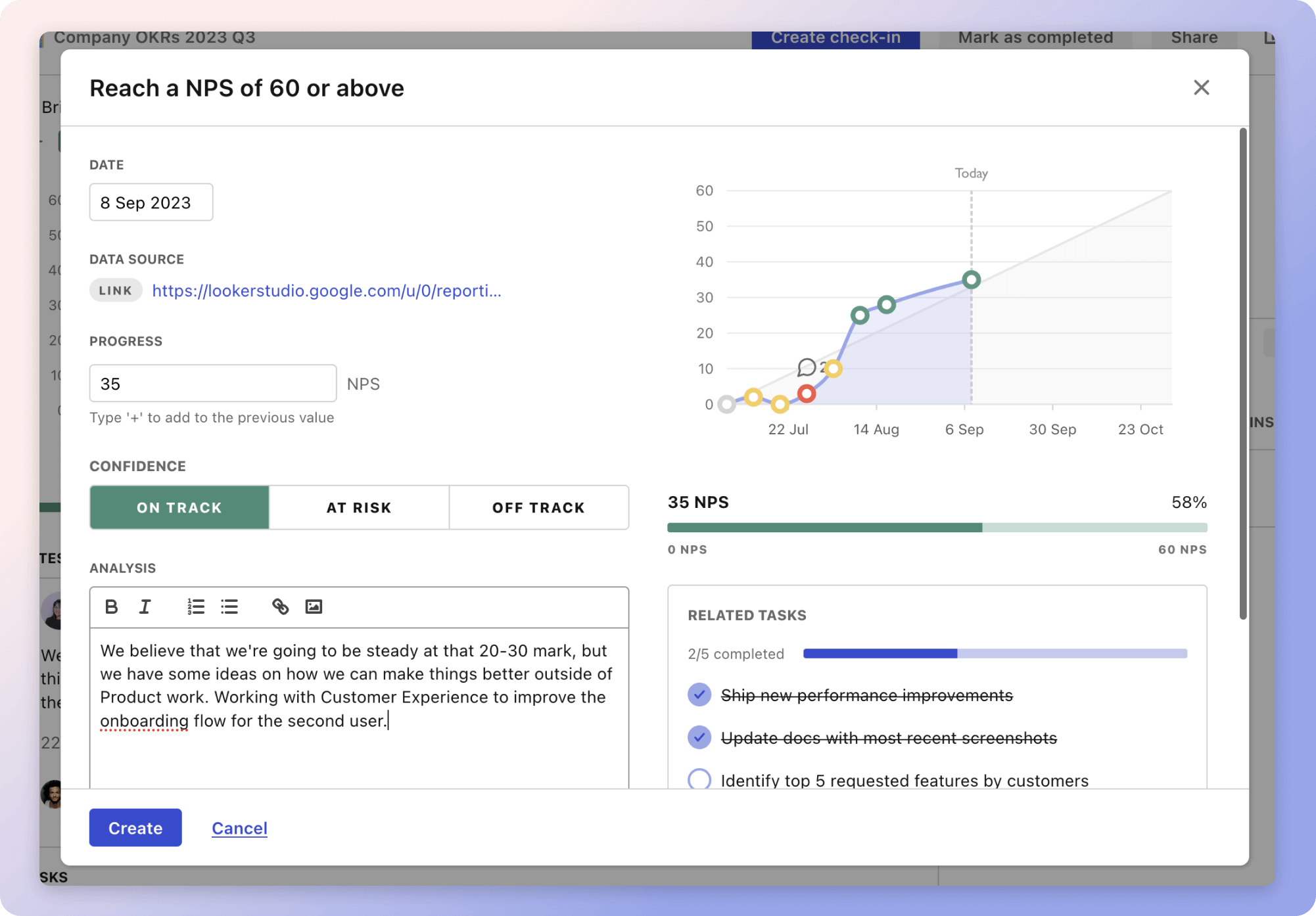
Give it a try and see how it can help you bring accountability to your strategy.