The strategy titled "Trading matches successfully" focuses on effectively trading matches to maximize returns. It begins by emphasizing the importance of identifying target markets. This involves researching regions with high demand and understanding competitors, pricing trends, and cultural preferences. For example, a company might look at regions where match consumption is high and ensure its product design aligns with local tastes.
The next part of the strategy is building a robust supply chain. Key actions include securing reliable suppliers and negotiating with logistics providers. For instance, a company could establish contracts with local distributors and implement quality control measures to ensure product consistency and efficiency.
Lastly, developing a marketing and sales strategy is essential. This includes creating a unique selling proposition and leveraging social media for brand awareness. Additionally, the strategy suggests using local promotional materials. An example could be training sales teams in negotiation tactics specific to different cultures to expand market reach.
The strategies
⛳️ Strategy 1: Identify target markets
- Research regions with a high demand for matches
- Identify key competitors within those regions
- Understand regional pricing trends and tariffs
- Compile a list of potential buyers and distributors
- Evaluate cultural preferences in design and branding
- Analyse historical data on match consumption patterns
- Assess transportation and logistical considerations
- Determine regulatory requirements for importing matches
- Identify potential political or economic risks
- Develop an initial entry strategy for selected markets
⛳️ Strategy 2: Build a robust supply chain
- Secure reliable suppliers for raw materials
- Establish quality control measures for production
- Negotiate long-term contracts with logistics providers
- Implement a just-in-time inventory management system
- Develop partnerships with local distributors
- Invest in storage facilities for inventory management
- Identify backup suppliers to mitigate risks
- Create a transparent traceability system for products
- Ensure compliance with international trade standards
- Automate supply chain processes where possible
⛳️ Strategy 3: Develop a marketing and sales strategy
- Define unique selling propositions for your matches
- Utilise social media to create brand awareness
- Attend trade shows to network with potential buyers
- Develop promotional materials tailored to local cultures
- Leverage testimonials and case studies from satisfied partners
- Train sales teams on cultural nuances and negotiation tactics
- Set up online sales channels to reach a wider audience
- Offer promotional discounts to initial buyers
- Monitor and track sales performance metrics
- Adjust marketing strategies based on feedback and performance
Bringing accountability to your strategy
It's one thing to have a plan, it's another to stick to it. We hope that the examples above will help you get started with your own strategy, but we also know that it's easy to get lost in the day-to-day effort.
That's why we built Tability: to help you track your progress, keep your team aligned, and make sure you're always moving in the right direction.
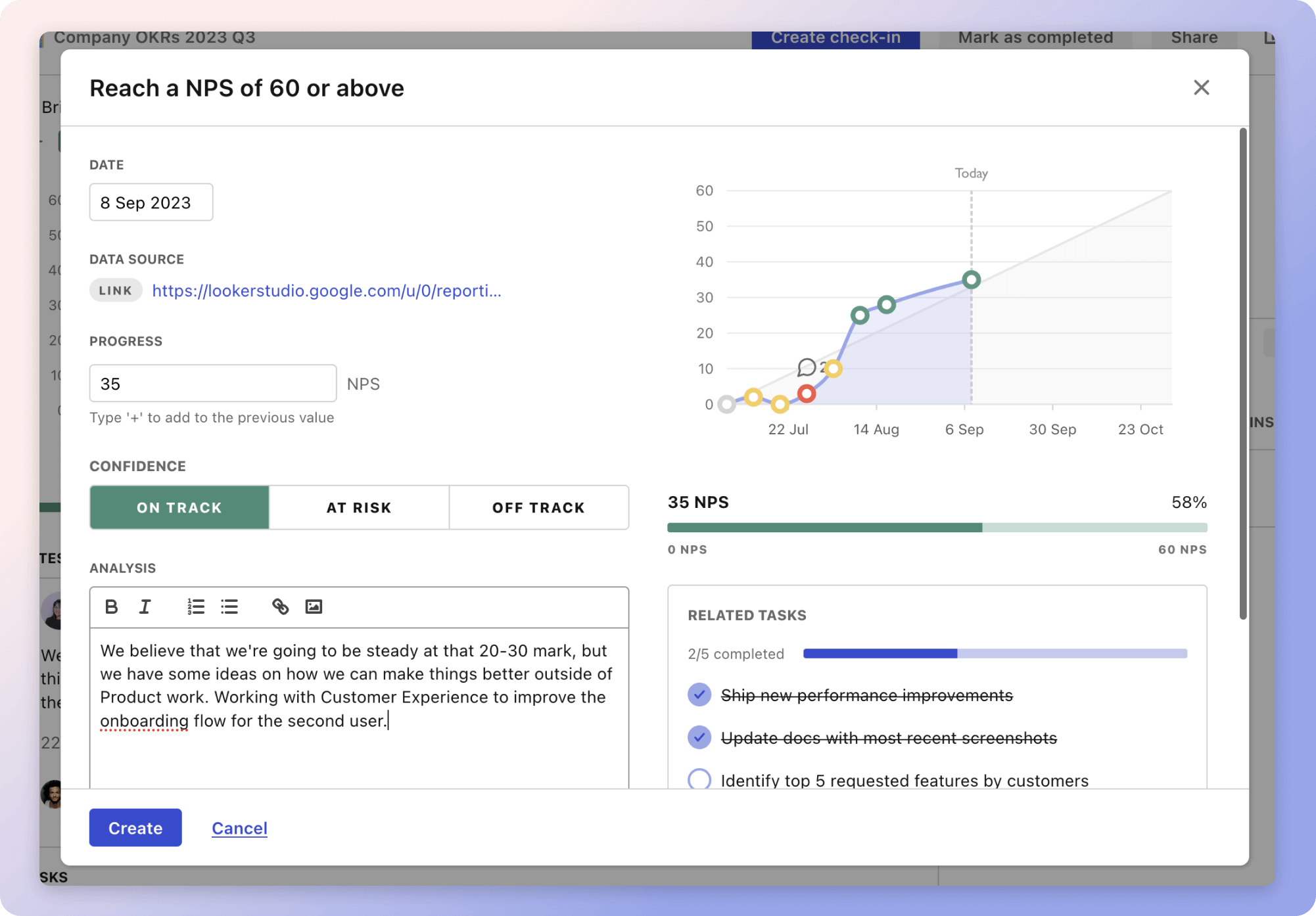
Give it a try and see how it can help you bring accountability to your strategy.