The strategy detailed in the JSON is about establishing a small local intelligence agency focused on gathering and analyzing information for strategic purposes. The first strategy outlines developing a solid foundation by researching legal requirements, defining the agency's scope, forming an organizational structure, and hiring skilled professionals. For instance, creating a detailed business plan can help allocate resources efficiently and ensure the smooth operation of the agency.
The second strategy focuses on building a network of informants, where key actions include identifying individuals with access to valuable information and ensuring their confidentiality. An example might be using social media platforms to gather open-source intelligence while maintaining secure communication channels.
The third strategy emphasizes implementing effective analysis and reporting processes. It suggests investing in data analysis tools and training analysts to process intelligence data. For example, using visualization tools can help in presenting information clearly to stakeholders, ensuring insights are actionable and lead to informed decision-making.
The strategies
⛳️ Strategy 1: Develop a solid foundation
- Research legal requirements and obtain necessary permits and approvals
- Determine the scope and objectives of the agency
- Create a detailed business plan covering budget, resources, and timelines
- Identify the key areas of operation and potential information sources
- Establish an organisational structure with clearly defined roles
- Hire experienced professionals with a background in intelligence and security
- Develop comprehensive policies and procedures for operations
- Invest in secure communication and data storage systems
- Conduct risk assessments to identify potential threats
- Create a code of ethics and compliance guidelines
⛳️ Strategy 2: Build a network of informants
- Identify individuals with potential access to valuable information
- Establish discreet channels for communication and information exchange
- Provide training for informants on information gathering techniques
- Monitor and assess the reliability and loyalty of informants periodically
- Ensure confidentiality and protect informant identities
- Develop a rewards system for valuable information
- Build relationships with key community figures for intelligence
- Use social media and online platforms to gather open-source intelligence
- Create a system for securely receiving and processing information
- Regularly update and maintain informant dossiers
⛳️ Strategy 3: Implement effective analysis and reporting
- Invest in advanced data analysis tools and software
- Develop a standardised method for processing intelligence data
- Train analysts in critical thinking and analytical techniques
- Establish regular reporting protocols and formats
- Use visualisation tools to present data effectively
- Conduct regular briefings with stakeholders to share insights
- Evaluate the impact of intelligence on decision-making
- Adjust analysis techniques based on feedback and results
- Keep up-to-date with new methodologies and technology in intelligence
- Ensure data security and integrity throughout the analysis process
Bringing accountability to your strategy
It's one thing to have a plan, it's another to stick to it. We hope that the examples above will help you get started with your own strategy, but we also know that it's easy to get lost in the day-to-day effort.
That's why we built Tability: to help you track your progress, keep your team aligned, and make sure you're always moving in the right direction.
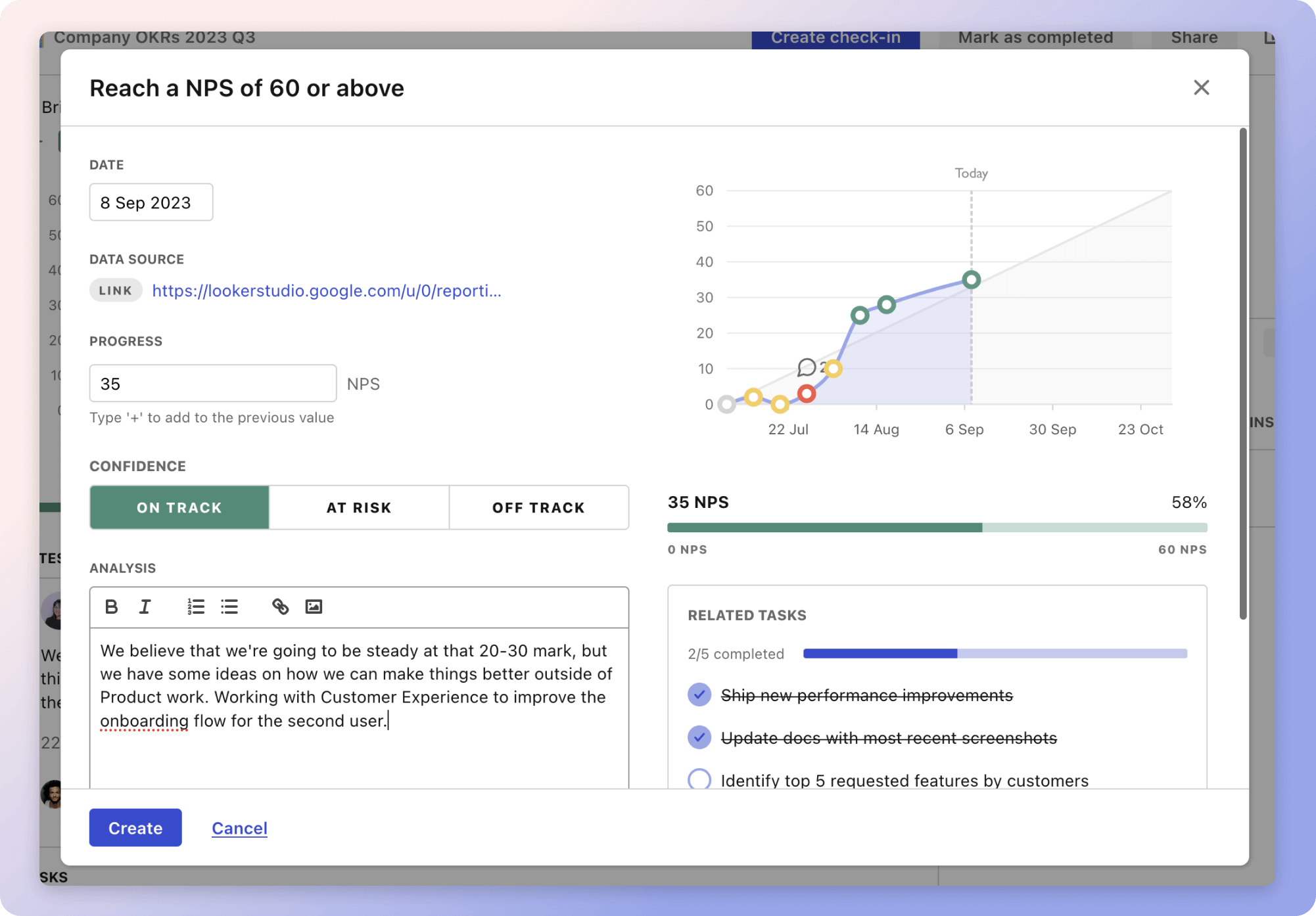
Give it a try and see how it can help you bring accountability to your strategy.