The strategy focuses on improving professional interactions, especially in a co-working space. It highlights maintaining clear boundaries to ensure a respectful work environment. For example, scrutinizing past communications for appropriateness helps in identifying areas needing improvement and limits potential misunderstandings. Additionally, fostering professional relationships without blurring personal and work lines ensures a healthy workspace.
Another aspect of the strategy is building rapport that remains professional. Engaging in casual but work-related conversations and being consistently supportive, like organizing team lunches, helps in building a cohesive team. Finally, personal and team growth is emphasized by focusing on learning from challenges and attending development workshops.
The strategies
⛳️ Strategy 1: Prioritise professional boundaries
- Reflect on personal and professional boundaries and the importance of maintaining them
- Assess the tone and nature of past communications for appropriateness
- Limit non-business related messaging unless initiated by the other party
- Avoid ambiguous language that could be misinterpreted
- Refrain from making insinuations or suggestive comments
- Focus on discussing topics related to mutual professional interests
- Limit the use of emojis and other informal communication styles
- Seek feedback from trusted colleagues on the professionalism of past interactions
- Ensure any future meetings or conversations are clearly defined in purpose
- Regularly reassess and realign communication strategies to remain professional
⛳️ Strategy 2: Build a friendly, yet professional rapport
- Express genuine interest in the wellbeing of other colleagues
- Engage in casual yet work-related conversation starters
- Offer professional advice or assistance when appropriate
- Foster a supportive work environment by encouraging team collaboration
- Initiate group activities or lunches to promote team cohesion
- Be consistent in messages to avoid mixed signals
- Address any potential misunderstandings directly and promptly
- Use humour appropriately and sparingly to maintain a professional demeanor
- Regularly check in on professional goals and accomplishments
- Maintain transparency in communication to build trust
⛳️ Strategy 3: Enhance personal growth and team management
- Evaluate recent challenges and setbacks to identify learning points
- Reconnect with team members for support and motivation
- Attend professional development workshops and training
- Establish clear communication channels with team members
- Create a plan to mitigate revenue loss after key departures
- Set realistic goals and timelines for team projects
- Encourage feedback from the team to foster an open environment
- Implement regular check-ins and progress updates with the team
- Cultivate resilience by embracing flexibility and adaptability
- Focus on building a robust professional network to open new opportunities
Bringing accountability to your strategy
It's one thing to have a plan, it's another to stick to it. We hope that the examples above will help you get started with your own strategy, but we also know that it's easy to get lost in the day-to-day effort.
That's why we built Tability: to help you track your progress, keep your team aligned, and make sure you're always moving in the right direction.
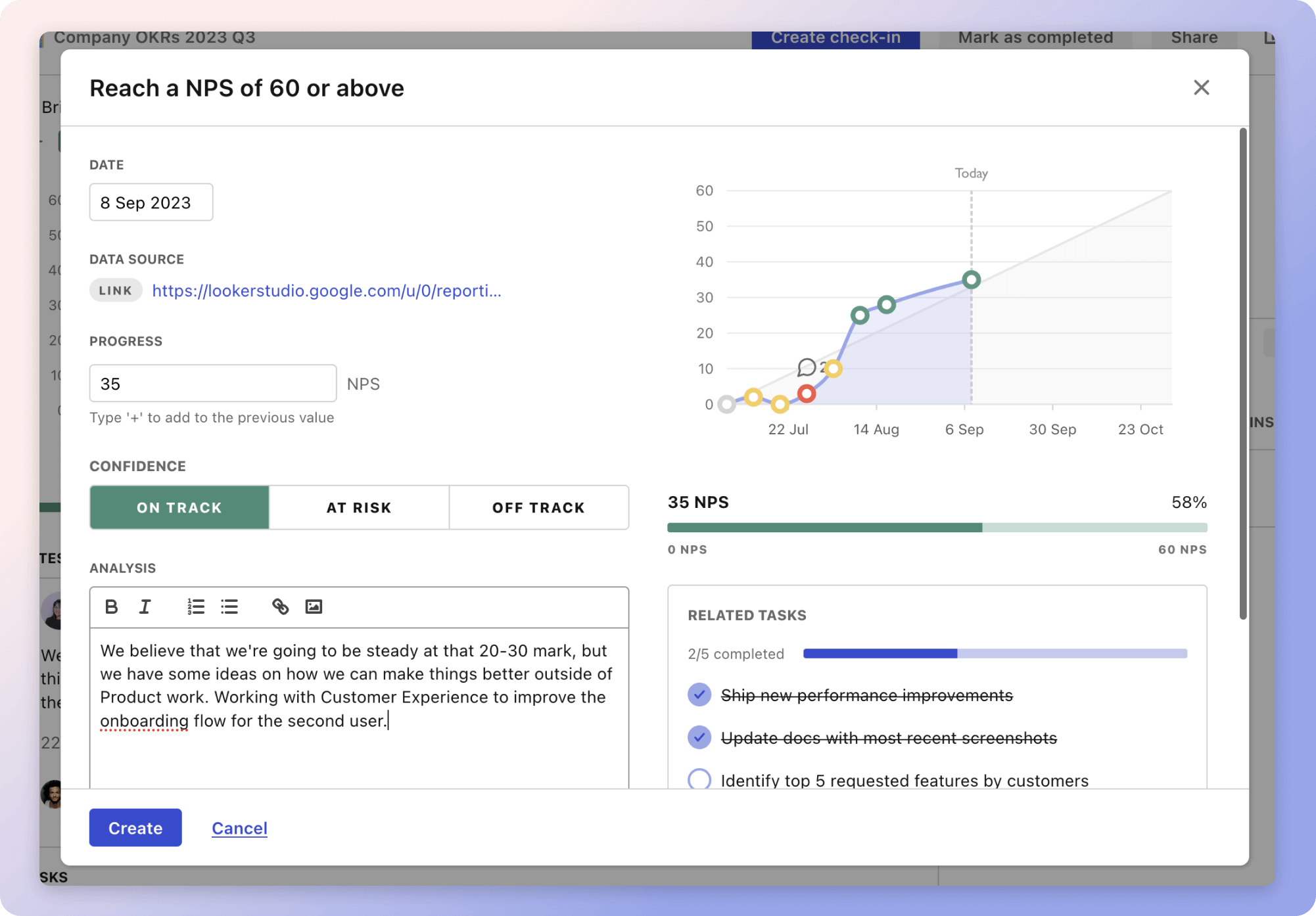
Give it a try and see how it can help you bring accountability to your strategy.