The strategy for investing in Nifty 50 focuses on conducting thorough research, creating a diversified portfolio, and implementing a systematic investment plan (SIP). In the research phase, investors are encouraged to study the historical performance of Nifty 50, analyze economic factors, and follow relevant news. For example, checking GDP and inflation rates can inform future trends. A diversified portfolio involves allocating funds across different sectors and balancing investments between large-cap, mid-cap, and small-cap companies. Including dividend-paying stocks and considering ETFs for diversification are also suggested.
The systematic investment plan strategy emphasizes regular investments, such as weekly or monthly SIPs, using a reliable broker. This approach encourages long-term growth, automatically maintaining periodic investments regardless of market fluctuations.
The strategies
⛳️ Strategy 1: Conduct thorough research
- Study the historical performance of Nifty 50
- Identify the top performing sectors within Nifty 50
- Analyse economic factors affecting Nifty 50 movements
- Follow the news and announcements related to the companies in Nifty 50
- Review quarterly and annual reports of major Nifty 50 companies
- Subscribe to financial analysis from reputed sources
- Use stock analysis tools to evaluate the technical indicators
- Check analyst ratings and investment sentiments
- Explore market forecasts and expert opinions
- Keep track of macroeconomic indicators like GDP and inflation
⛳️ Strategy 2: Create a diversified portfolio
- Allocate funds across various sectors represented in Nifty 50
- Balance between large-cap, mid-cap and small-cap companies
- Invest in companies with strong fundamentals and potential for growth
- Consider including dividend-paying stocks for passive income
- Limit the exposure to high-risk stocks
- Regularly reassess the portfolio and adjust allocations
- Consider using exchange-traded funds (ETFs) for diversification
- Research on index funds tracking Nifty 50 for safer bets
- Invest a portion in defensive stocks to hedge against volatility
- Review past investment successes and apply similar strategies
⛳️ Strategy 3: Implement systematic investment plan (SIP)
- Decide on a fixed amount to invest regularly in Nifty 50 stocks
- Choose weekly or monthly SIP based on cash flow
- Conduct SIP through a reliable broker or trading platform
- Monitor the performance of SIP investments periodically
- Adjust the SIP amount based on market conditions and personal finance
- Focus on long-term growth and ignore short-term market fluctuations
- Utilise automatic payment systems for hassle-free transactions
- Prevent market timing errors by maintaining SIP discipline
- Evaluate the SIP performance annually against market indices
- Increase SIP contributions with salary hikes or financial windfalls
Bringing accountability to your strategy
It's one thing to have a plan, it's another to stick to it. We hope that the examples above will help you get started with your own strategy, but we also know that it's easy to get lost in the day-to-day effort.
That's why we built Tability: to help you track your progress, keep your team aligned, and make sure you're always moving in the right direction.
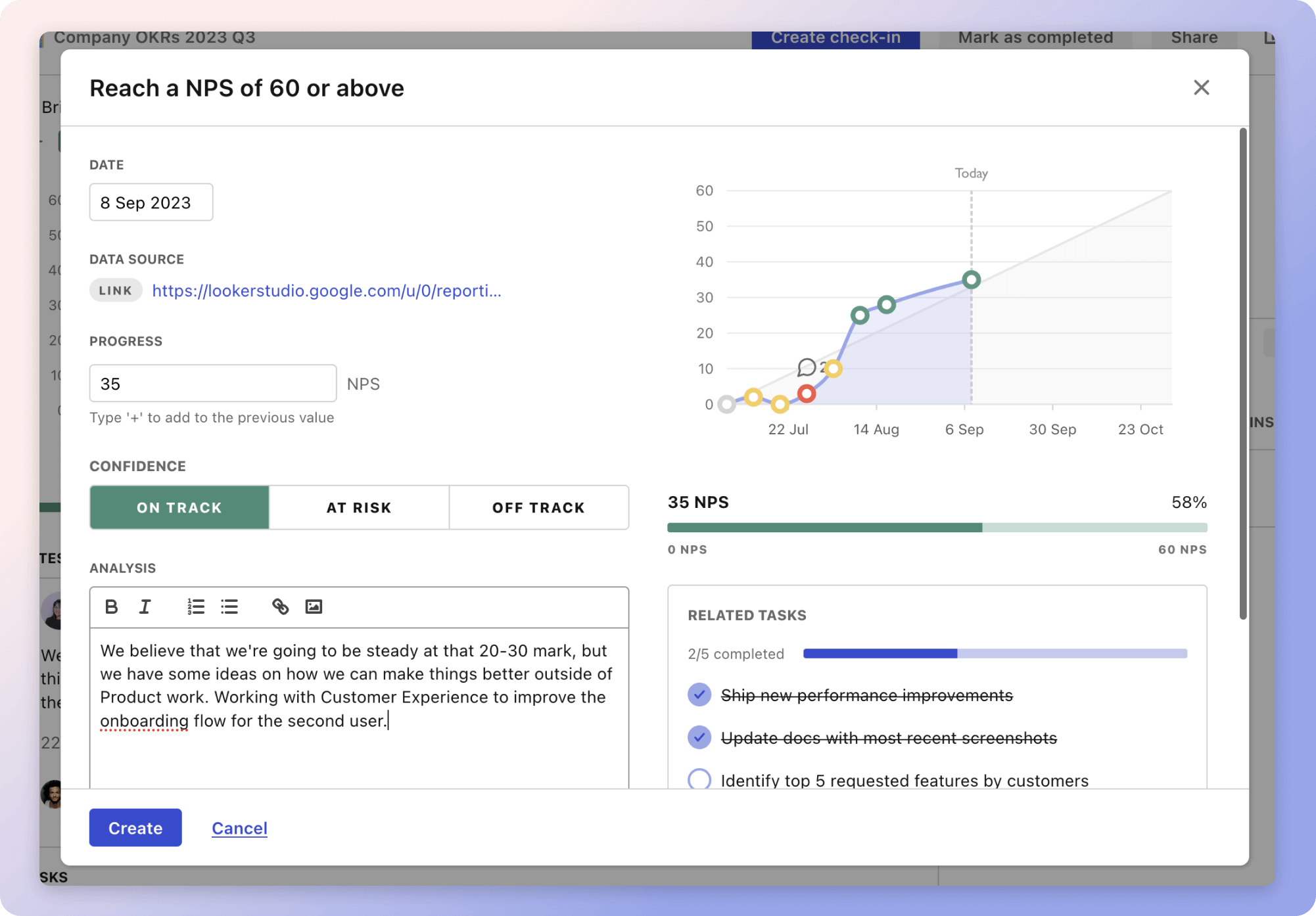
Give it a try and see how it can help you bring accountability to your strategy.