The strategy involves creating a personalized trading bot to enhance trading performance and profitability. The initial step is defining clear trading objectives. This includes setting financial goals, selecting target markets, and determining acceptable risk levels. Clearly documenting these objectives ensures a focused approach to trading.
Choosing the right trading platform and tools is crucial for successful bot integration. Elements to consider include compatibility with APIs, platform security, and availability of demo accounts. A well-researched choice enables seamless algorithm deployment and testing.
Developing and testing trading algorithms forms the core of the strategy. This involves learning programming languages for algorithm creation, backtesting with historical data, and fine-tuning based on performance metrics. Introducing machine learning can further enhance decision-making, ultimately refining the trading bot.
The strategies
⛳️ Strategy 1: Define clear trading objectives
- Determine financial goals for trading
- Decide on the markets to focus on
- Set acceptable levels of risk
- Identify desired trading frequency
- Establish a maximum drawdown limit
- Create a timeline for evaluating performance
- Specify target benchmarks for success
- Determine capital allocation
- Research legal and tax implications
- Document these objectives clearly
⛳️ Strategy 2: Choose the right trading platform and tools
- Research trading platforms compatible with bot integration
- Evaluate platform fees and commissions
- Assess availability of APIs for automation
- Check platform security protocols
- Ensure compatibility with preferred programming languages
- Test platform's user support options
- Consider the liquidity of assets available
- Seek platforms with a good reputation in the market
- Evaluate the ease of backtesting strategies
- Choose a platform offering demo accounts for practice
⛳️ Strategy 3: Develop and test the trading algorithms
- Identify trading strategies that suit objectives
- Learn programming languages suitable for algorithm development
- Utilise machine learning to enhance decision-making
- Develop risk management algorithms
- Implement position sizing algorithms
- Backtest algorithms using historical data
- Optimise algorithms based on backtesting results
- Run simulations under various market conditions
- Evaluate algorithm performance metrics
- Iterate and refine algorithms before deployment
Bringing accountability to your strategy
It's one thing to have a plan, it's another to stick to it. We hope that the examples above will help you get started with your own strategy, but we also know that it's easy to get lost in the day-to-day effort.
That's why we built Tability: to help you track your progress, keep your team aligned, and make sure you're always moving in the right direction.
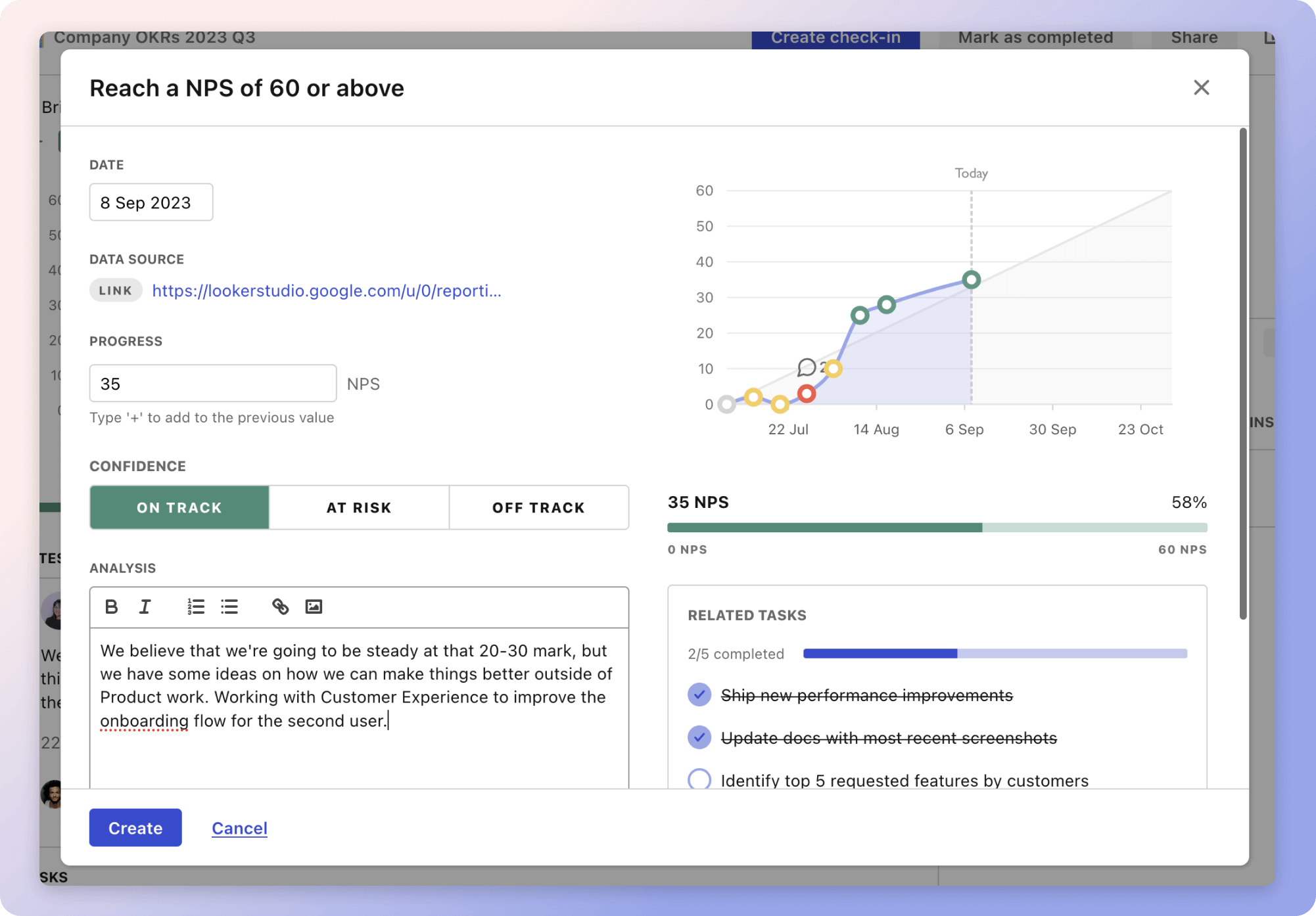
Give it a try and see how it can help you bring accountability to your strategy.