The AI strategy for the Kenyan bank is designed to enhance efficiency, customer experience, and competitiveness. It begins by assessing current AI capabilities and identifying opportunities. This involves conducting technology audits, engaging stakeholders, and analyzing customer data to pinpoint areas for AI improvements, such as fraud detection and risk management. For instance, by benchmarking against leading banks' practices, the bank can align with best practices globally.
The strategy progresses to implementing AI initiatives. This includes prioritizing projects based on potential impact, developing pilot programs, and setting up project management protocols. For example, integrating AI solutions with existing systems and conducting employee training ensures successful implementation. Feedback mechanisms further refine these initiatives.
Lastly, establishing a sustainable AI culture involves creating a vision statement, defining governance frameworks, and promoting open collaboration. By engaging with regulatory bodies and fostering partnerships with universities, the bank ensures compliant and innovative AI practices. Consistent communication of successes helps inspire an AI-focused culture.
The strategies
⛳️ Strategy 1: Assess current capabilities and identify opportunities
- Conduct a technology audit to evaluate existing AI and data analytics tools
- Engage with internal stakeholders to understand their needs and expectations regarding AI
- Analyze current customer data to identify patterns and areas for improving customer service
- Benchmark against AI practices of leading banks locally and internationally
- Identify key areas for AI implementation such as fraud detection, customer service automation, and risk management
- Establish a cross-functional AI committee to oversee strategy development
- Conduct a skills gap analysis to determine AI training needs within the organisation
- Engage with industry experts to gain insight into AI trends and opportunities
- Assess compliance and regulatory requirements related to AI adoption in the banking sector
- Develop a report summarising key findings and recommendations for AI opportunities
⛳️ Strategy 2: Develop and implement AI initiatives
- Prioritise AI projects based on impact potential and alignment with business goals
- Select appropriate AI technologies and service providers through a request for proposal process
- Develop a pilot program for one selected AI initiative to test feasibility and benefits
- Set up project management protocols to oversee the implementation of AI initiatives
- Define clear success metrics and KPIs to measure the impact of AI projects
- Integrate AI solutions with existing banking infrastructure and systems
- Conduct employee training programs to enhance AI literacy and skills
- Launch a customer awareness campaign about the new AI-driven services
- Implement feedback mechanisms to gather insights from customers and employees
- Review and refine the AI initiatives based on feedback and performance data
⛳️ Strategy 3: Establish a sustainable AI culture
- Create a vision statement that defines the bank's AI aspirations and goals
- Incorporate AI readiness into the strategic goals of all departments
- Define governance frameworks for AI to ensure ethical and transparent use
- Establish a continuous learning platform for staff to develop AI competencies
- Promote open collaboration between AI specialists and banking teams
- Regularly update the AI strategy based on technological advancements and feedback
- Engage actively with regulatory bodies to ensure compliant AI practices
- Foster partnerships with universities and research institutions to access AI talent
- Implement recognition and incentive programs for innovative AI contributions
- Communicate successes and progress consistently to inspire an AI-focused culture
Bringing accountability to your strategy
It's one thing to have a plan, it's another to stick to it. We hope that the examples above will help you get started with your own strategy, but we also know that it's easy to get lost in the day-to-day effort.
That's why we built Tability: to help you track your progress, keep your team aligned, and make sure you're always moving in the right direction.
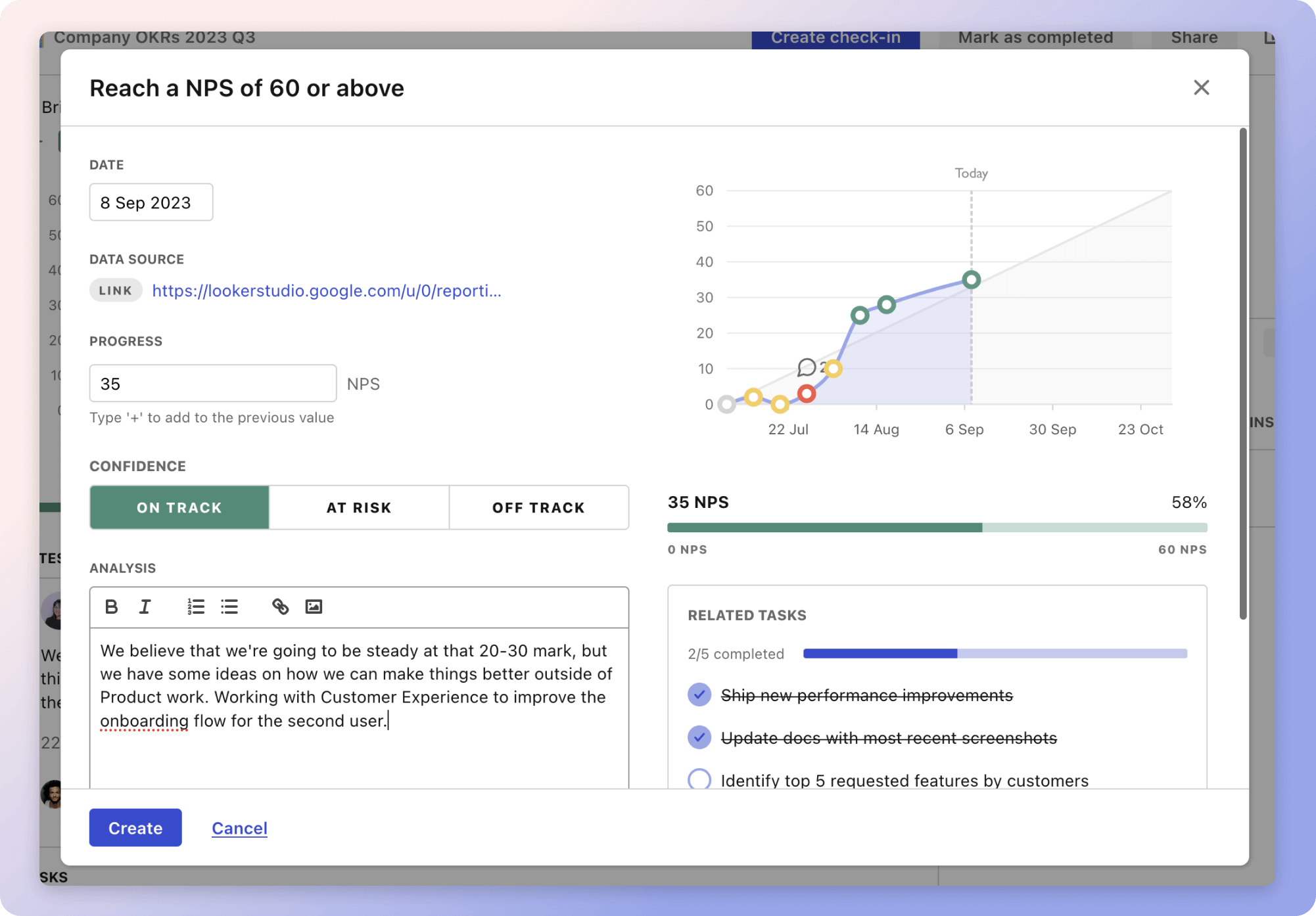
Give it a try and see how it can help you bring accountability to your strategy.