The strategy for trading XAUUSD focuses on leveraging price action analysis on a five-minute chart. The primary objective is to identify and trade key order blocks, targeting over 50 trades with a profit factor above 1.3 and drawdown below 50%. This involves marking potential order block zones and confirming their validity by observing historical respect of these levels. An example includes initiating a buy trade when price touches a bullish order block and reverses.
Furthermore, the strategy incorporates the existing market structure for optimal entry and exit decisions. Traders are advised to identify significant swing highs and lows to better understand trend direction and align trades with the overall market movement. This approach benefits from using trailing stops to secure profits.
Additionally, technical indicators such as RSI or Stochastic are used for added confirmation. These indicators help identify overbought or oversold conditions near order blocks, providing an extra layer of validation before executing trades. Backtesting across different market conditions ensures the effectiveness of the strategy.
The strategies
⛳️ Strategy 1: Identify and Trade Key Order Blocks
- Analyse five-minute XAUUSD charts to identify potential order block zones
- Mark the boundaries of these order blocks using horizontal lines
- Wait for price action to retrace back to these order blocks
- Confirm order block validity by monitoring if price respects these levels in the past
- Initiate a buy trade if the price touches a bullish order block and shows signs of reversal
- Initiate a sell trade if the price touches a bearish order block and shows resistance
- Set a stop-loss order slightly beyond the order block boundary
- Set a minimum risk-to-reward ratio of 1:2 for potential take profit levels
- Backtest this strategy on historical data to ensure the sample size of over 50 trades
- Review and optimise the strategy periodically to ensure a profit factor above 1.3 and drawdown below 50%
⛳️ Strategy 2: Use Market Structure for Optimal Entry and Exit
- Identify the current market structure and trend on the XAUUSD five-minute chart
- Mark significant swing highs and lows to determine trend direction
- Wait for order blocks to form at areas of confluence with identified market structure
- Enter trades when there is a clear break or bounce from an order block within the trend
- Use a trailing stop feature to lock in profits as the price moves in favour
- Set initial stop-loss orders within the nearest structural highs or lows beyond order blocks
- Aim for larger take-profit targets by considering overall market structure and potential reversals
- Ensure the strategy generates a minimum of 50 trades by testing across different market conditions
- Track performance metrics regularly to ensure they meet the desired profit factor and drawdown criteria
- Continuously optimise the stop-loss and take-profit settings based on observed market behaviours
⛳️ Strategy 3: Incorporate Technical Indicators for Additional Confirmation
- Select a set of technical indicators such as RSI or Stochastic to confirm order block trades
- Use these indicators to identify overbought or oversold conditions near order blocks
- Only initiate trades when price action aligns with signals from at least one confirming indicator
- Adjust indicator settings to work effectively on the five-minute timeframe on XAUUSD
- Backtest the strategy using historical data to verify the effectiveness of additional indicators
- Implement stop-loss and take-profit levels that align with indicator-based trade entries
- Regularly evaluate the performance to ensure the strategy produces over 50 trades fitting criteria
- Monitor the profit factor and drawdown post-trade execution to confirm achievement of objectives
- Adapt indicator parameters in response to changing market dynamics without overfitting
- Continuously assess the combination of price action and indicator signals for trade validation
Bringing accountability to your strategy
It's one thing to have a plan, it's another to stick to it. We hope that the examples above will help you get started with your own strategy, but we also know that it's easy to get lost in the day-to-day effort.
That's why we built Tability: to help you track your progress, keep your team aligned, and make sure you're always moving in the right direction.
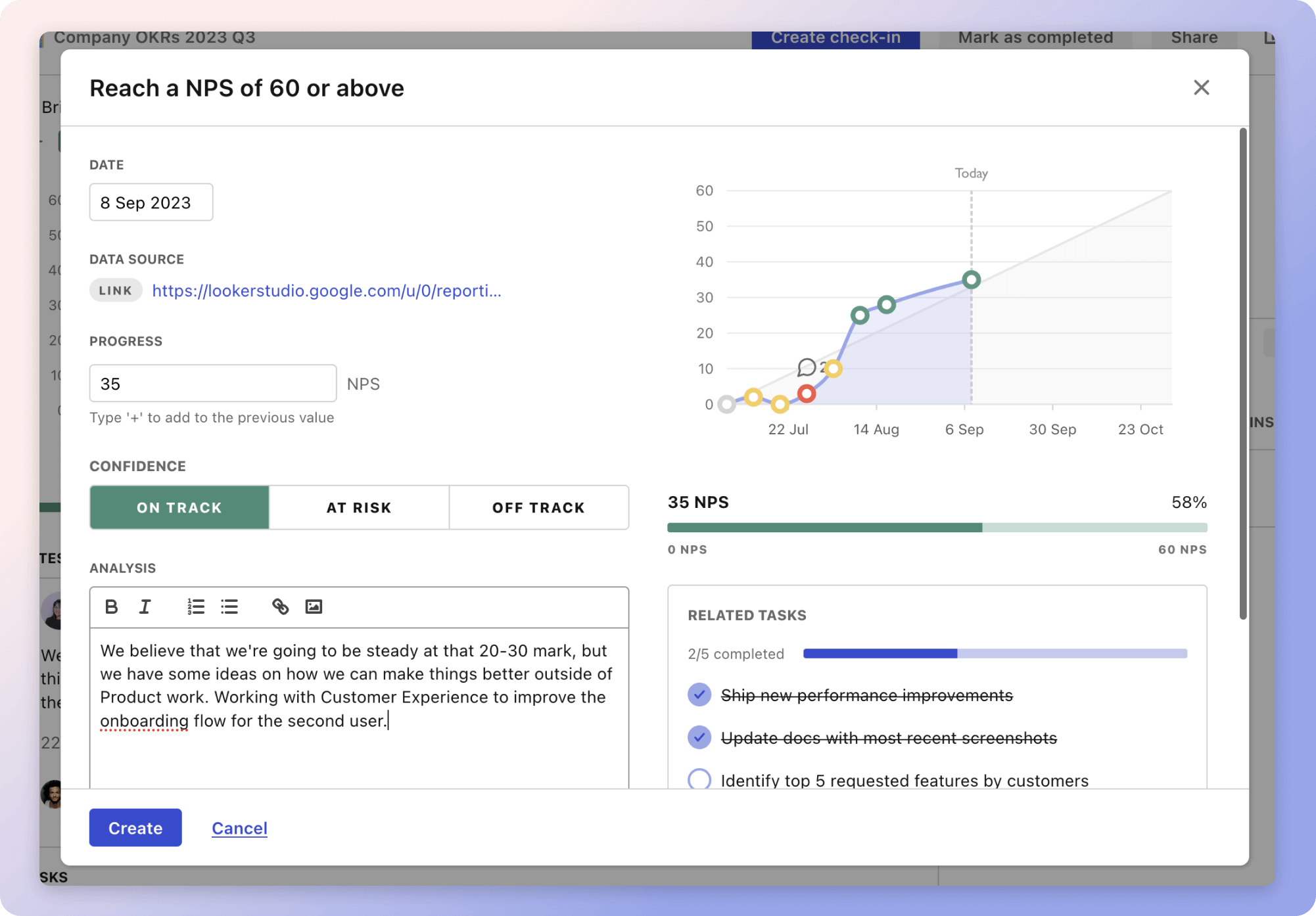
Give it a try and see how it can help you bring accountability to your strategy.