The strategy aims to create a comprehensive chaplaincy program for high school students by 2026, focusing on their spiritual, emotional, and social well-being. It includes assessing current needs and resources by conducting surveys and interviews with students, teachers, and parents to identify gaps and set clear objectives. For instance, best practices from other schools are researched and feedback is sought from stakeholders to refine the strategy.
New programs are developed and implemented, such as designing a curriculum to address identified needs, introducing mindfulness sessions, and launching peer-support groups. Partnerships with local organizations and pilot programs help gather feedback to improve the offerings. This involves organizing workshops and seminars, and facilitating mentoring opportunities.
The final aspect focuses on engaging and training staff and students. Regular training sessions for staff, the establishment of a student chaplaincy council, and the introduction of peer mentoring schemes are crucial. These efforts are aimed at empowering students, fostering supportive relationships, and promoting the chaplaincy program through awareness campaigns and social media.
The strategies
⛳️ Strategy 1: Assess current needs and resources
- Conduct surveys to gather feedback from students, teachers, and parents about their needs
- Evaluate the existing chaplaincy program and resources available
- Identify gaps in the current chaplaincy offerings
- Research best practices in chaplaincy programs in other high schools
- Interview staff and students to understand their expectations from the chaplaincy
- Analyse data to prioritise the most pressing needs
- Set clear objectives based on the needs assessment
- Compile a report summarising the findings of the assessment
- Seek input from stakeholders on the assessment report
- Revise objectives and strategies based on stakeholder feedback
⛳️ Strategy 2: Develop and implement new chaplaincy programs
- Design a curriculum that addresses the identified spiritual and emotional needs of students
- Introduce mindfulness and meditation sessions as part of the program
- Launch peer-support groups for students to share their experiences and support each other
- Organise chaplain-led workshops and seminars on relevant topics
- Develop partnerships with local religious and community organisations
- Institute regular one-on-one pastoral care sessions with the chaplain
- Create mentoring opportunities between senior students and lower grades
- Pilot new programs with a select group of students and gather feedback
- Adjust programs based on pilot feedback to ensure they meet student needs
- Formally roll out revised programs to the wider student body
⛳️ Strategy 3: Engage and train staff and students
- Host regular training sessions for staff on supporting student well-being
- Provide chaplaincy-specific training for faculty and support staff
- Establish a student chaplaincy council to involve students in program development
- Designate chaplaincy ambassadors among the student population
- Introduce peer mentoring schemes to foster supportive relationships
- Facilitate workshops that empower students to lead chaplaincy initiatives
- Create awareness campaigns to promote the chaplaincy program
- Leverage social media and school communications to highlight chaplaincy activities
- Offer professional development opportunities for chaplaincy team members
- Monitor participation in training and evaluate its impact on program effectiveness
Bringing accountability to your strategy
It's one thing to have a plan, it's another to stick to it. We hope that the examples above will help you get started with your own strategy, but we also know that it's easy to get lost in the day-to-day effort.
That's why we built Tability: to help you track your progress, keep your team aligned, and make sure you're always moving in the right direction.
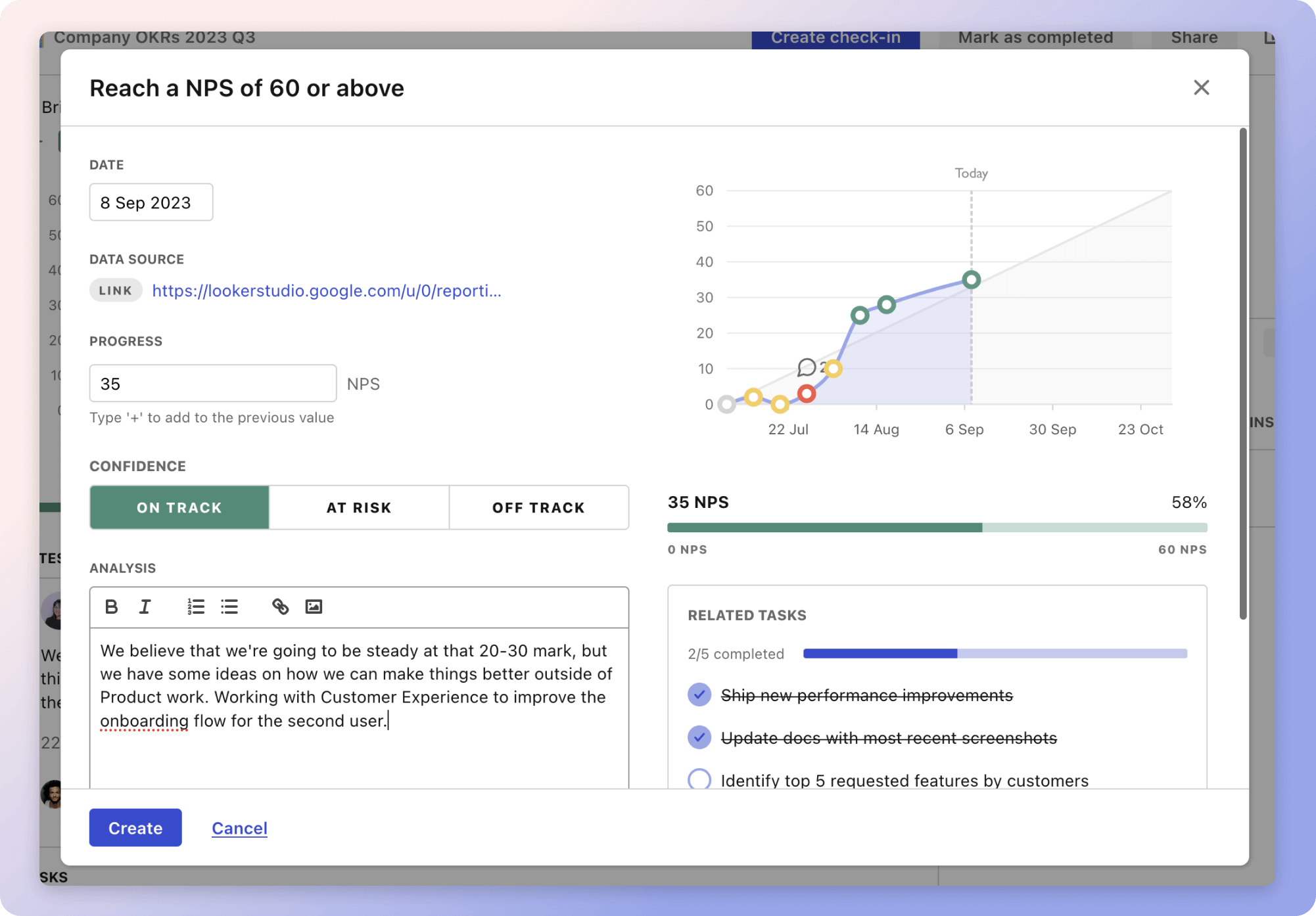
Give it a try and see how it can help you bring accountability to your strategy.