The strategy outlined is focused on implementing RSI-based trading, aiming to maximize profits by buying assets when the Relative Strength Index (RSI) is low and selling them when high. To start, you set up RSI indicators appropriately. For example, use a 14-day timeframe for the RSI and identify when RSI levels go below 30 to consider buying, and above 70 for selling. Backtesting these settings helps evaluate their effectiveness on various asset classes.
A disciplined trading plan is essential. Define a budget and establish clear rules for trades based on RSI levels. Include stop-loss orders to mitigate risks, and use a trading journal to document decisions, facilitating continuous improvement. Feedback from mentors or forums can refine the strategy over time.
Integrating RSI signals with broader market analysis strengthens decision-making. Use additional technical indicators and conduct fundamental analysis to verify RSI signals. Keep abreast of market news and technological advancements, diversify your portfolio, and participate in trading communities for peer insights to enhance strategy effectiveness and adaptability.
The strategies
⛳️ Strategy 1: Configure RSI indicators appropriately
- Select a reliable trading platform that offers RSI analysis tools
- Set RSI indicator to the standard 14-day timeframe for consistency
- Identify the specific RSI level below which you will consider buying, typically below 30
- Identify the specific RSI level above which you will consider selling, typically above 70
- Backtest the RSI settings with historical data to assess the effectiveness
- Adjust the RSI period based on asset volatility if necessary
- Determine and document your entry and exit signals
- Check the RSI indicator's compatibility with different asset classes
- Monitor RSI levels periodically to confirm accuracy
- Evaluate the results of RSI predictions regularly to improve strategy
⛳️ Strategy 2: Develop a disciplined trading plan
- Define a specific budget for your trading activities
- Establish clear rules for when to enter a trade when RSI is low
- Set rules for when to execute a sell order when RSI is high
- Incorporate stop-loss orders to minimize potential losses
- Determine position sizing based on risk management principles
- Use a journal to record each trade and its RSI context
- Allocate specific times for trading and analysis sessions
- Seek periodic feedback on trading performance from mentors or forums
- Revisit and adjust trading rules based on market conditions
- Implement routine evaluations to maintain alignment with your overall financial goals
⛳️ Strategy 3: Integrate with broader market analysis
- Analyse overall market trends alongside RSI signals for a comprehensive view
- Identify several assets to track using RSI to diversify your portfolio
- Consider fundamental analysis to confirm RSI-based decisions
- Utilise other technical indicators like moving averages to support RSI signals
- Monitor economic news and events that might impact asset prices
- Review sector performance for potential impacts on your chosen assets
- Stay informed about technological advances in trading analysis
- Subscribe to market reports and insights for consistent updates
- Participate in trading communities for shared experiences and insights
- Adapt strategies quickly in response to significant market shifts
Bringing accountability to your strategy
It's one thing to have a plan, it's another to stick to it. We hope that the examples above will help you get started with your own strategy, but we also know that it's easy to get lost in the day-to-day effort.
That's why we built Tability: to help you track your progress, keep your team aligned, and make sure you're always moving in the right direction.
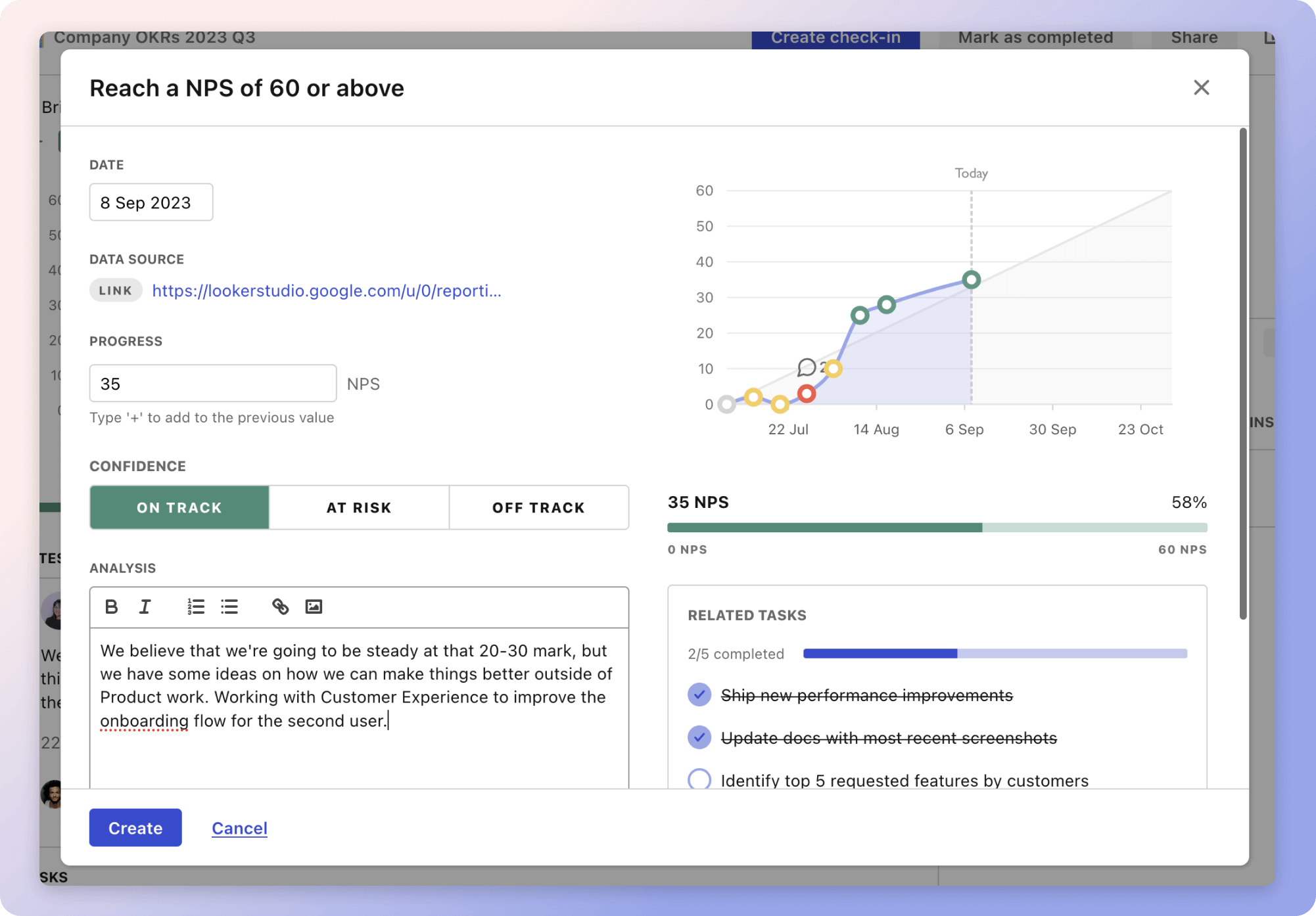
Give it a try and see how it can help you bring accountability to your strategy.