The strategy "Preparing for ECE Subjects in 50 Days" aims at effectively managing study time to cover crucial Electrical and Computer Engineering subjects. Initially, the focus is on core topics, spending 1.5 hours a day per subject. Key actions include making summarised notes and solving past papers weekly to strengthen understanding. For instance, using recommended textbooks ensures access to essential material while participating in online forums aids in clearing doubts.
The next component emphasizes active learning, like group study sessions and making flashcards to reinforce concepts. Additionally, teaching topics to peers and participating in quizzes helps retain information. Techniques like spaced repetition aid in memorization, ensuring effective learning.
Lastly, a customized timetable ensures efficient use of time by dividing study sessions into one-hour blocks and incorporating breaks. Difficult subjects are prioritized, and flexibility is maintained to adjust plans based on progress. Tracking progress with a journal helps in achieving learning goals. Time management tools further optimize this process, keeping motivation high.
The strategies
⛳️ Strategy 1: Focus on core topics
- List all core ECE subjects and prioritise them
- Dedicate initial days to understanding fundamental concepts
- Allocate 1.5 hours daily to each core subject
- Use textbooks and recommended reading materials
- Create summarised notes for quick revisions
- Solve previous years' question papers weekly
- Join online forums to discuss and clarify doubts
- Practice problem-solving techniques daily
- Schedule weekly tests to assess understanding
- Revise all core subjects in the final week
⛳️ Strategy 2: Utilise active learning methods
- Engage in group study sessions twice a week
- Record and listen to lectures or podcasts related to ECE topics
- Create and use flashcards for important concepts
- Teach learnt topics to peers to reinforce understanding
- Make mind maps to connect related concepts
- Participate in online quizzes and interactive modules
- Allocate 30 minutes daily for review and self-reflection
- Identify weak areas through mock tests and focus on them
- Incorporate educational videos for visual learning
- Use spaced repetition techniques for memorisation
⛳️ Strategy 3: Develop a tailored timetable
- Divide daily study sessions into focused time blocks of 1 hour each
- Set specific and achievable daily learning goals
- Plan short breaks between study sessions to enhance concentration
- Allocate weekends for in-depth practice and revision
- Track daily progress using a journal or checklist
- Prioritise difficult subjects earlier in the study plan
- Use apps or planners to manage time effectively
- Stay flexible and adjust study plans based on progress
- Schedule weekly reviews to consolidate what you've learned
- Include relaxation or leisure activities to maintain motivation
Bringing accountability to your strategy
It's one thing to have a plan, it's another to stick to it. We hope that the examples above will help you get started with your own strategy, but we also know that it's easy to get lost in the day-to-day effort.
That's why we built Tability: to help you track your progress, keep your team aligned, and make sure you're always moving in the right direction.
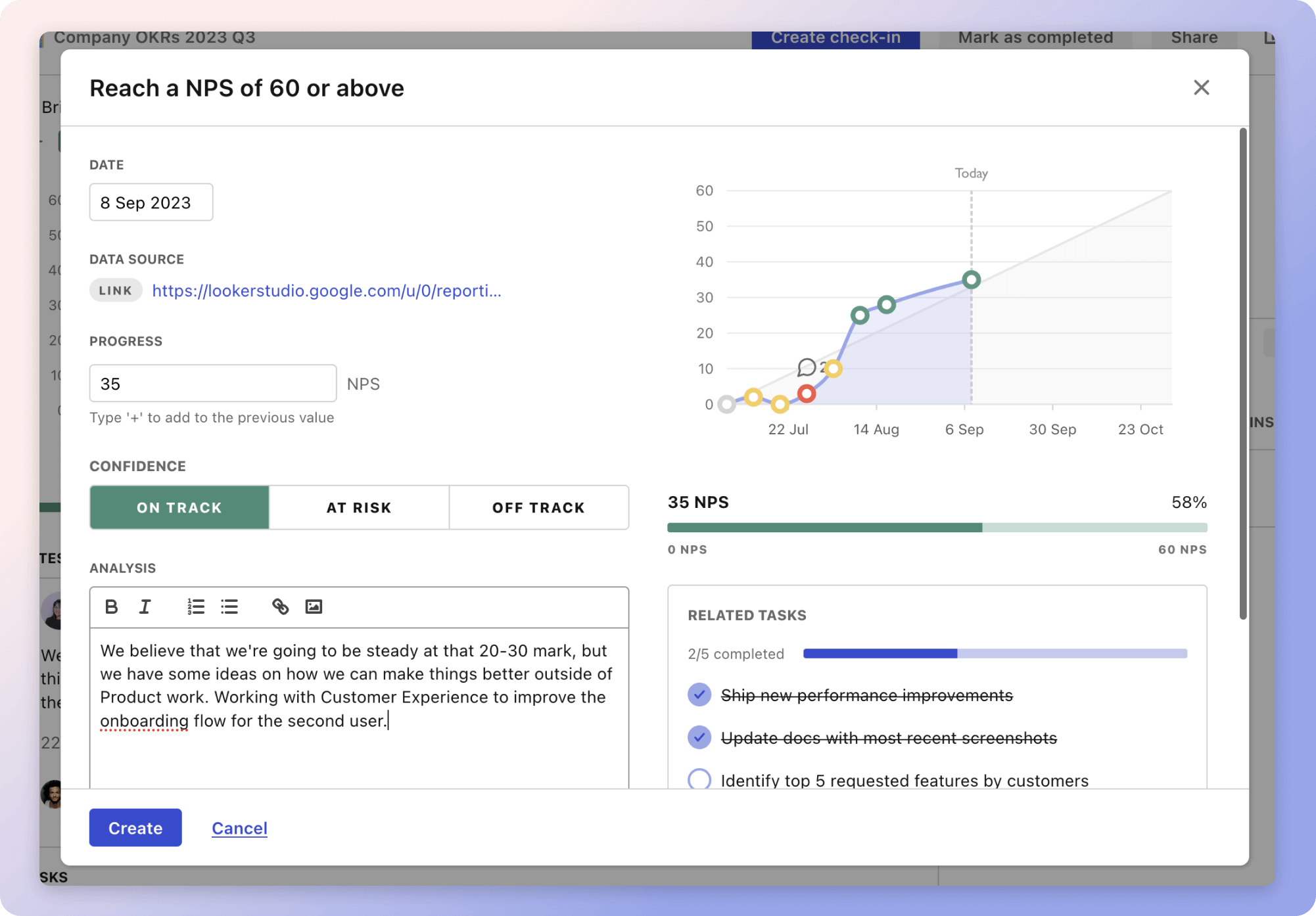
Give it a try and see how it can help you bring accountability to your strategy.