The strategy of creating an autonomous bot involves three key phases: design, development, and deployment. In the design phase, the focus is on outlining the bot's architecture, identifying its core functions, and selecting appropriate technology. An example of this is determining whether the bot will automate customer service tasks or data entry.
In the development phase, core features are first constructed with strong security measures. Continuous integration ensures that updates are efficiently tested and deployed. For example, implementing authentication and API integrations are crucial steps during this stage.
Finally, deployment and monitoring entail launching the bot on chosen platforms, ensuring it functions smoothly, and utilizing user feedback for improvements. An example here is to use monitoring tools to detect performance issues, ensuring the bot remains efficient and reliable.
The strategies
⛳️ Strategy 1: Design the Bot Architecture
- Identify the primary function and tasks the bot will automate
- Research and choose the suitable technology stack
- Sketch a basic architecture for the bot including components
- Define the data flow and processing logic
- Create detailed specifications and requirements document
- Decide on the hosting infrastructure and integration points
- Plan how the bot will handle exceptions and errors
- Ensure scalability by planning for increased usage
- Design user interaction and feedback mechanisms
- Establish clear success metrics for the bot's performance
⛳️ Strategy 2: Develop and Test the Bot
- Begin development with the core features first
- Implement authentication and security measures
- Set up a version control system to manage code
- Develop algorithms for task automation
- Integrate with necessary APIs and external services
- Conduct unit tests for individual components
- Set up continuous integration for build and testing
- Perform integration testing to ensure seamless operation
- Create detailed user documentation and guides
- Iterate development based on testing feedback
⛳️ Strategy 3: Deploy and Monitor the Bot
- Deploy the bot to the decided hosting infrastructure
- Ensure scalability with load testing and performance tuning
- Set up monitoring tools to track bot performance
- Establish alert systems for any bot downtime or issues
- Gather user feedback for ongoing improvements
- Perform regular updates and maintenance
- Track the bot's operation against predefined metrics
- Evaluate efficiency improvements post-deployment
- Conduct periodic security audits
- Plan for future upgrades based on technology trends
Bringing accountability to your strategy
It's one thing to have a plan, it's another to stick to it. We hope that the examples above will help you get started with your own strategy, but we also know that it's easy to get lost in the day-to-day effort.
That's why we built Tability: to help you track your progress, keep your team aligned, and make sure you're always moving in the right direction.
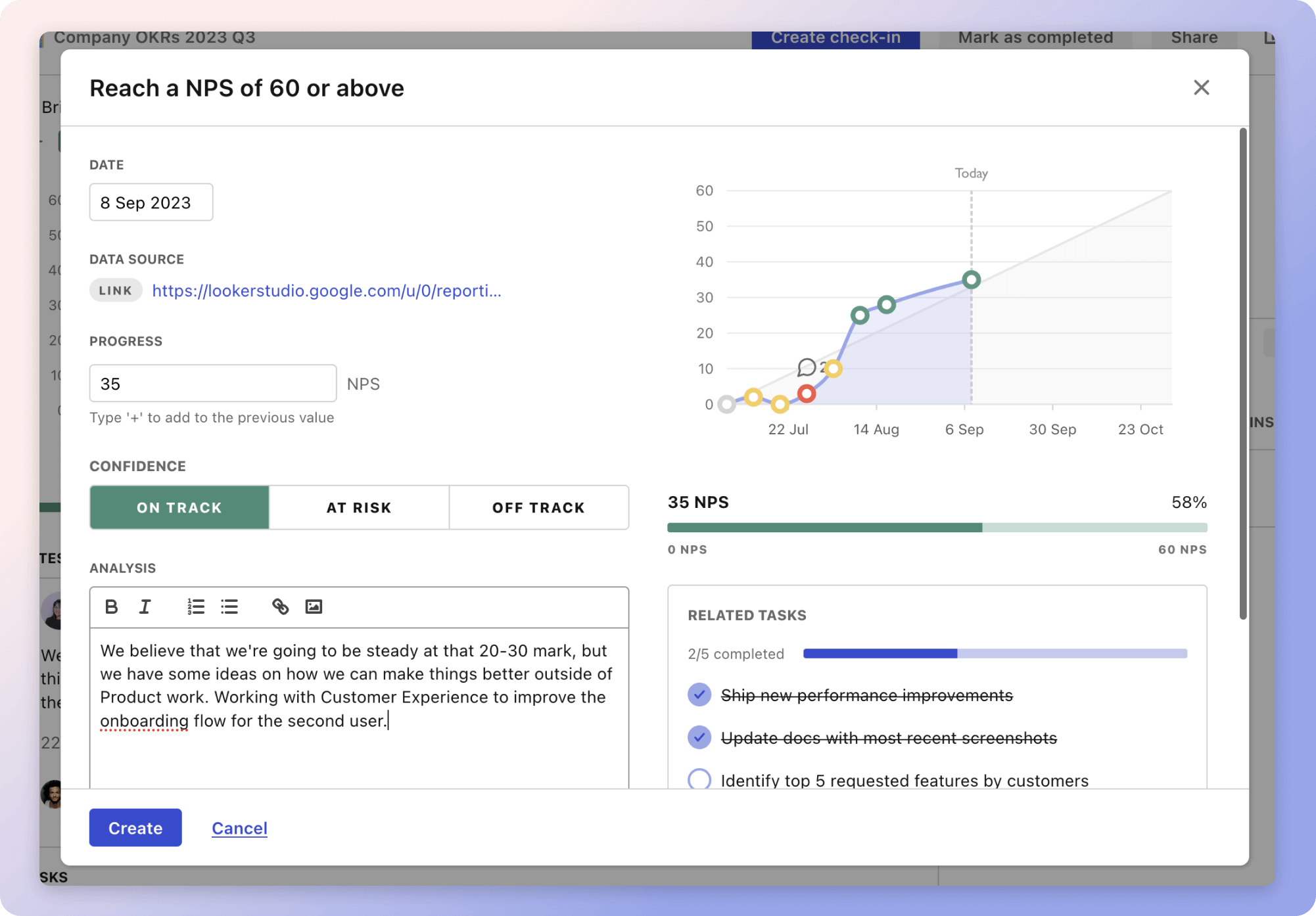
Give it a try and see how it can help you bring accountability to your strategy.