The strategy for purchasing Nifty50 options emphasizes three key areas: conducting thorough research, developing a clear trading plan, and engaging with professional resources. Initially, one must understand the basics of options trading and specific factors affecting Nifty50, such as market trends and economic indicators. For example, analyzing historical data helps predict future movements, while forums offer insights from experienced traders.
Developing a trading plan involves defining budget limits and risk tolerance, as well as deciding on entry and exit points, which informs disciplined trading decisions. For instance, implementing stop-loss orders as part of your strategy can protect your investments against unpredictable market shifts.
Engagement with professional resources provides further guidance. This includes seeking advice from financial advisors, attending webinars, and utilizing online platforms with educational resources. For example, practicing through trading simulators can refine your speculative abilities and improve your trading outcomes.
The strategies
⛳️ Strategy 1: Conduct Thorough Research
- Understand the basics of options trading and how it applies to Nifty50
- Analyse current Nifty50 market trends and historical data
- Evaluate different types of options, such as call and put options
- Identify reputable sources for Nifty50 options trading information
- Learn about the factors influencing options pricing, such as volatility and time decay
- Join online forums or communities dedicated to Nifty50 or options trading
- Take note of key economic indicators that might impact Nifty50
- Compare success stories of traders who have previously dealt with Nifty50 options
- Study the options chain for Nifty50 regularly to spot potential opportunities
- Prepare a list of questions or areas of uncertainty to discuss with a financial advisor
⛳️ Strategy 2: Develop a Clear Trading Plan
- Set a budget for how much capital you are willing to invest in Nifty50 options
- Define your risk tolerance level for options trading
- Establish specific entry and exit points for each trade
- Determine the type of options strategy you want to use (e.g., hedging, speculation)
- Outline a process for regularly reviewing and adjusting your trading plan
- Implement stop-loss orders to protect your investments
- Create a schedule for monitoring your Nifty50 options positions
- Identify key performance indicators to measure the success of your trades
- Decide on a maximum duration for holding options before reevaluating
- Ensure your trading plan accounts for tax implications and other costs
⛳️ Strategy 3: Engage With Professional Resources
- Seek advice from a certified financial advisor experienced in options trading
- Attend webinars or workshops on Nifty50 or options trading
- Subscribe to newsletters or publications focused on options trading
- Use an online trading platform that offers analytics and educational resources
- Follow industry experts or analysts who provide insights on Nifty50
- Join a reputable brokerage with strong support for options trading
- Utilise trading simulation tools to practice buying Nifty50 options
- Explore software tools that can aid in analysing and executing trades
- Engage with networking events or groups for options traders
- Stay informed about regulatory changes affecting options trading in your region
Bringing accountability to your strategy
It's one thing to have a plan, it's another to stick to it. We hope that the examples above will help you get started with your own strategy, but we also know that it's easy to get lost in the day-to-day effort.
That's why we built Tability: to help you track your progress, keep your team aligned, and make sure you're always moving in the right direction.
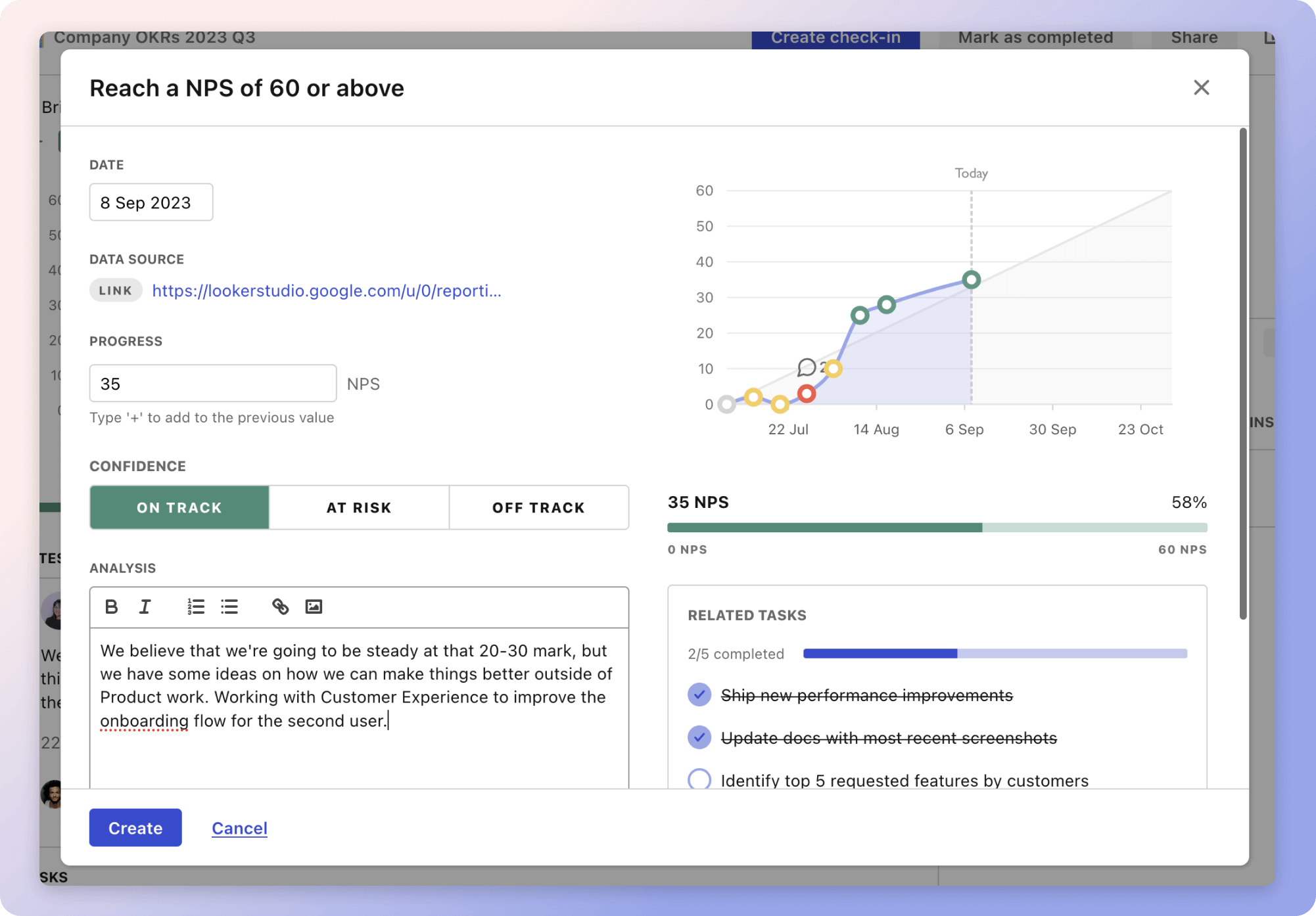
Give it a try and see how it can help you bring accountability to your strategy.