The strategy focuses on empowering Ethiopian polytechnic colleges through modernizing curricula, enhancing instructor capabilities, and establishing robust monitoring and evaluation systems. Firstly, modernizing the curriculum involves aligning educational programs with industry standards, developing competency-based modules, and integrating digital learning tools. For example, incorporating real-world problem-solving exercises ensures that students are prepared for workforce demands.
Enhancing instructor capacity involves initiatives such as training instructors in digital pedagogy and hosting peer-learning networks. This approach fosters a collaborative environment where instructors can share best practices and innovate teaching methods. For instance, mentorship programs support newly trained instructors in their professional growth.
Lastly, implementing robust monitoring and evaluation systems involves deploying dynamic dashboards and integrating SMART indicators for comprehensive departmental plans. These systems ensure accountability and encourage continuous improvement through regular audits and feedback loops, thereby maintaining educational quality and effectiveness.
The strategies
⛳️ Strategy 1: Modernise Curriculum
- Align 90% of programs with industry standards by 2026
- Develop 150 competency-based modules by 2026
- Achieve an average student satisfaction rating of 4.0/5.0 with digital learning resources by 2026
- Conduct workshops with industry experts for curriculum redesign
- Integrate digital learning resources into all programs
- Revise curricula based on feedback from industry stakeholders
- Pilot new digital learning tools in selected courses
- Assess alignment of curriculum with national development priorities annually
- Incorporate real-world problem-solving exercises in modules
- Establish an online repository for updated educational materials
⛳️ Strategy 2: Enhance Instructor Capacity
- Train 500 instructors in digital pedagogy by 2025
- Achieve 80% instructor participation in peer-learning networks by 2025
- Organise annual workshops for continuous professional development
- Conduct quarterly evaluations of instructor training effectiveness
- Initiate online forums for instructors to share best practices
- Provide resources for self-paced learning on modern teaching methods
- Establish mentorship programmes for newly trained instructors
- Set a target of 40 hours/year for instructor professional development
- Develop a recognition system for outstanding teaching innovations
- Partner with educational organisations for specialised instructor training
⛳️ Strategy 3: Implement Robust Monitoring & Evaluation Systems
- Deploy dynamic dashboards in all departments by 2024
- Integrate SMART indicators into 95% of departmental plans by 2024
- Ensure 90% on-time project reporting by 2025
- Develop real-time data collection tools for project tracking
- Regularly review and update indicators to reflect current goals
- Provide training for staff on using M&E systems efficiently
- Hold biannual audits to ensure M&E systems' integrity
- Encourage feedback loops between departments for continual improvement
- Publicise M&E successes and lessons learned for transparency
- Collaborate with external auditors for objective evaluations
Bringing accountability to your strategy
It's one thing to have a plan, it's another to stick to it. We hope that the examples above will help you get started with your own strategy, but we also know that it's easy to get lost in the day-to-day effort.
That's why we built Tability: to help you track your progress, keep your team aligned, and make sure you're always moving in the right direction.
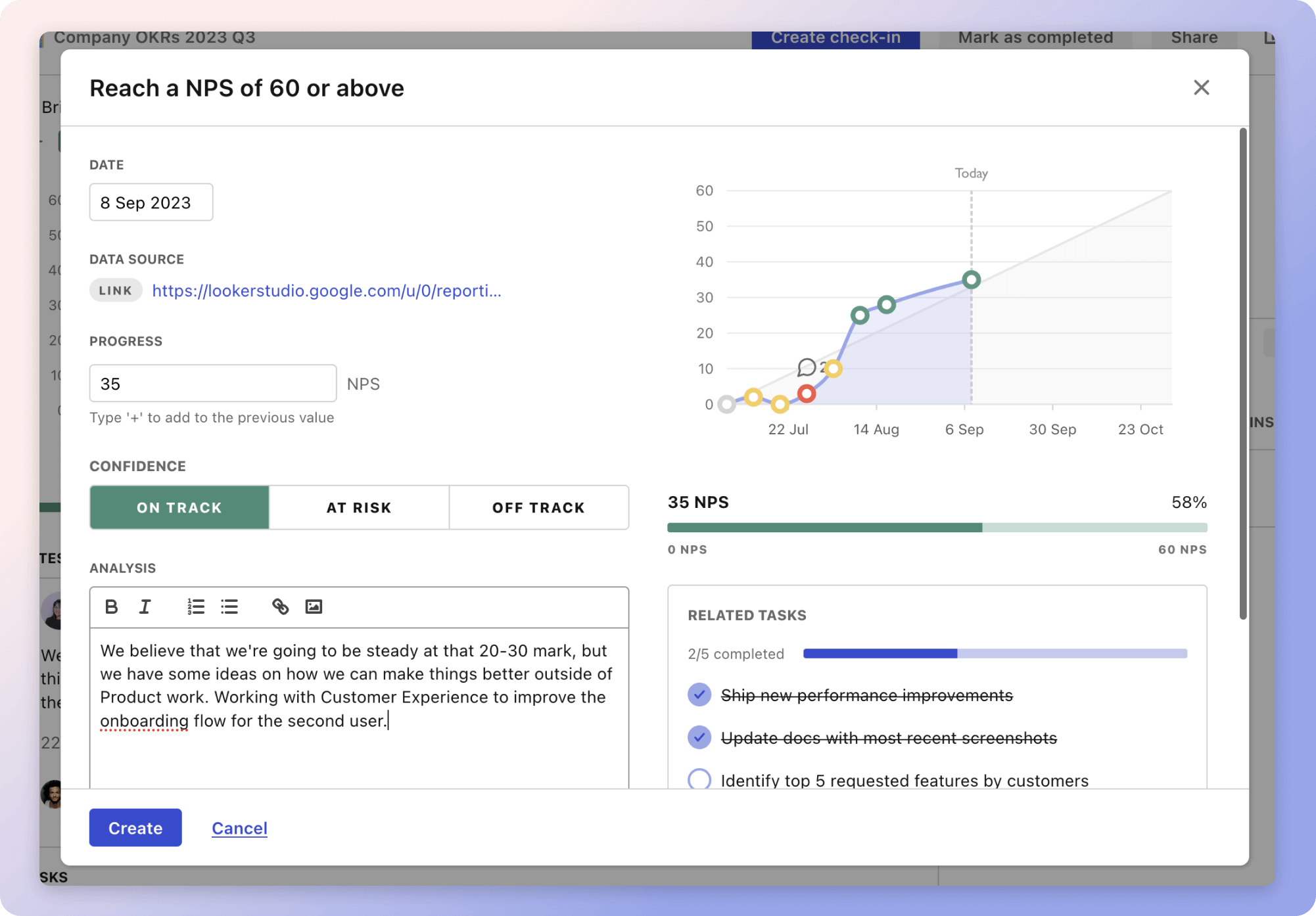
Give it a try and see how it can help you bring accountability to your strategy.