The strategy for designing an AI initiative portfolio involves structuring efforts around clear OKRs, mapping out dependencies, and implementing automated tracking for progress. First, defining clear OKRs involves setting objectives that are specific, measurable, attainable, relevant, time-bound, and aligned with the overall business strategy. For instance, an AI initiative might focus on reducing operational costs by 15% within a year, a target which should involve stakeholder consultation.
Next, the strategy emphasizes understanding dependencies and resources by creating a map of AI initiatives and identifying task connections. This mapping ensures resources are efficiently allocated and potential bottlenecks are recognized and mitigated, with contingency plans for critical dependencies.
Finally, implementing automated progress tracking uses project management tools for seamless data integration and regular reporting. Dashboards and automated alerts are essential to keep stakeholders updated, while feedback mechanisms ensure continual improvement. For example, tracking tools can provide real-time updates on project milestones, allowing teams to adjust strategies quickly in response to any issues.
The strategies
⛳️ Strategy 1: Define clear OKRs
- Identify key areas of impact for the AI initiatives
- Develop specific, measurable, attainable, relevant, and time-bound objectives
- Align OKRs with overall business strategy and goals
- Consult with stakeholders to ensure alignment and clarity
- Set priorities among the objectives based on impact and feasibility
- Create a timeline for achieving each OKR
- Assign responsible teams or individuals for each OKR
- Develop success criteria and metrics for each objective
- Review and revise OKRs based on stakeholder feedback
- Communicate OKRs clearly across involved teams
⛳️ Strategy 2: Map out dependencies and resources
- List all AI initiatives and their components
- Identify dependencies between different initiatives and tasks
- Determine resource requirements and availability for each initiative
- Create a dependency map to visualise connections and overlaps
- Consult with cross-functional teams to recognise potential bottlenecks
- Allocate resources based on priority and dependencies
- Schedule regular reviews to assess and update dependencies
- Develop contingency plans for critical dependencies
- Assess potential risks associated with dependencies
- Implement a system to track and manage dependencies
⛳️ Strategy 3: Implement automated progress tracking
- Select a project management tool that supports automated tracking
- Set up dashboards to monitor progress on OKRs and initiatives
- Integrate tracking tools with existing systems for seamless data flow
- Establish metrics and KPIs for progress assessment
- Automate reporting to provide regular updates to stakeholders
- Schedule regular data reviews to ensure tracking accuracy
- Train teams on using tracking and reporting tools effectively
- Implement notifications and alerts for critical updates or issues
- Encourage feedback on the tracking system for continual improvement
- Review and adjust tracking processes based on feedback and performance
Bringing accountability to your strategy
It's one thing to have a plan, it's another to stick to it. We hope that the examples above will help you get started with your own strategy, but we also know that it's easy to get lost in the day-to-day effort.
That's why we built Tability: to help you track your progress, keep your team aligned, and make sure you're always moving in the right direction.
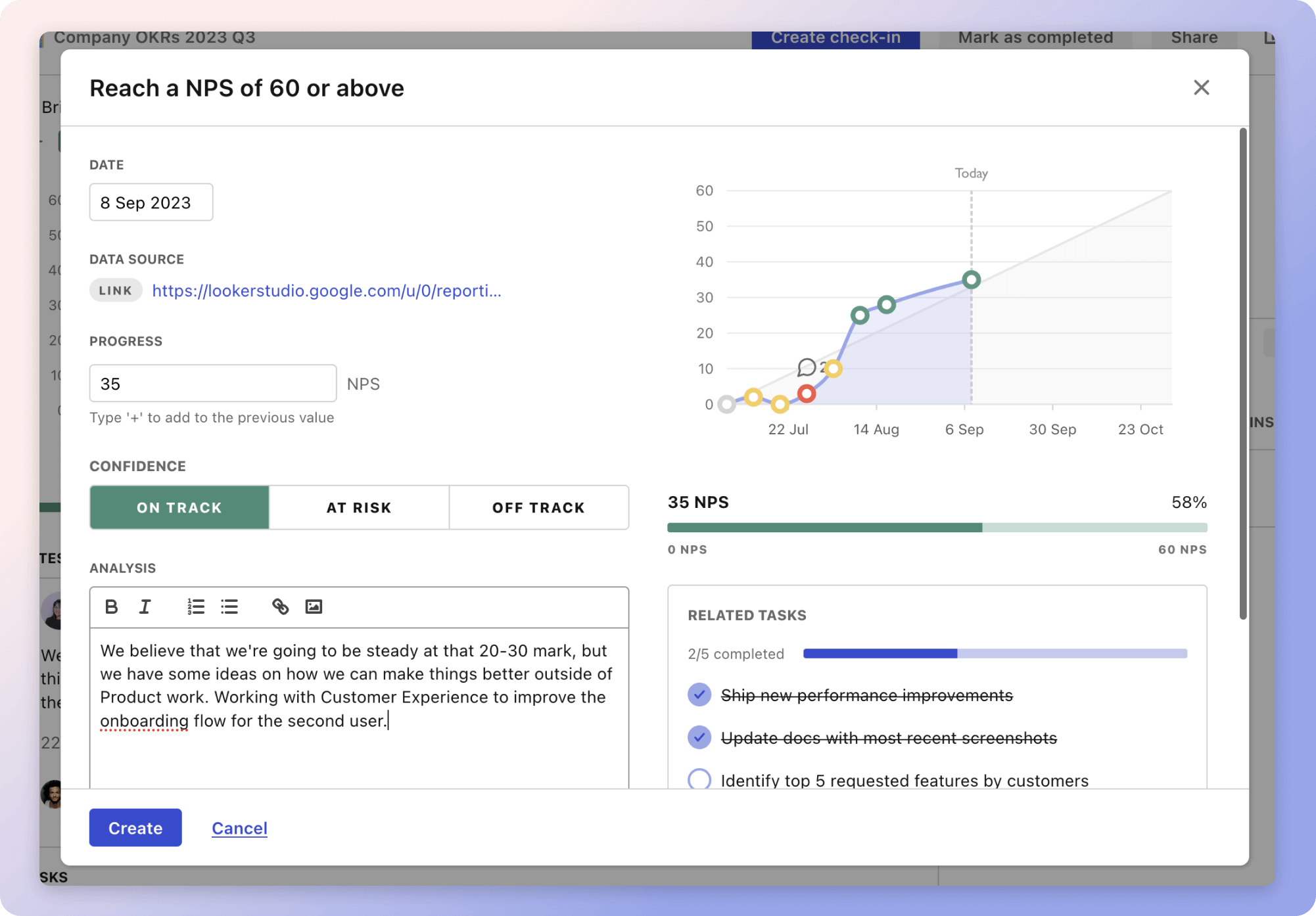
Give it a try and see how it can help you bring accountability to your strategy.