The EMA Crossover Strategy focuses on utilizing the Exponential Moving Average (EMA) to make informed trading decisions. It involves monitoring the 9-day and 30-day EMAs, where a crossover indicates potential buy or sell signals. For instance, a buy signal is identified when the 9-day EMA crosses above the 30-day EMA, while a sell signal is triggered when it crosses below. This strategy promotes setting up alerts to catch crossovers promptly and using historical data to recognize patterns. Reliability is enhanced by confirming crossovers with additional technical indicators like RSI and MACD, ensuring well-rounded analysis.
Incorporating other technical tools such as support and resistance levels, Fibonacci retracement, and candlestick patterns aids in refining entry and exit points. Monitoring volume trends and economic indicators further provide context to market movements. Traders are encouraged to maintain a detailed trading journal to document insights and refine strategies over time. Regularly revisiting analytical tools and updating strategies based on current market conditions are vital for adapting to shifts in market trends, fostering disciplined trading practices.
The strategies
⛳️ Strategy 1: Monitor EMA crossover signals
- Set up a trading platform with EMA indicators of 9-day and 30-day
- Identify the current trend in the market using these EMAs
- Wait for the 9-day EMA to cross above the 30-day EMA for a potential buy signal
- Wait for the 9-day EMA to cross below the 30-day EMA for a potential sell signal
- Implement alert systems to notify when a crossover happens
- Regularly update EMAs with new market data
- Analyse historical crossover points for pattern recognition
- Confirm crossover signals with additional technical indicators
- Note the crossover point in your trading journal
- Use backtesting to validate the effectiveness of the EMA crossover strategy
⛳️ Strategy 2: Enhance decision-making with technical tools
- Incorporate RSI (Relative Strength Index) to validate crossovers
- Use MACD (Moving Average Convergence Divergence) for deeper analysis
- Apply support and resistance levels for better entry/exit points
- Assess the volume trends to confirm breakouts post-crossover
- Include Fibonacci retracement levels for additional signal confirmation
- Utilise stochastic oscillators to determine market momentum
- Analyse candlestick patterns in conjunction with EMA crossovers
- Review news and economic indicators for contextual market insights
- Keep track of economic calendars for potential market volatility
- Regularly update analytical tools to reflect latest market conditions
⛳️ Strategy 3: Execute disciplined trading based on strategy
- Define a clear entry and exit strategy based on crossover signals
- Set stop-loss and take-profit levels to manage risk
- Keep a detailed trading journal to record successes and failures
- Maintain discipline and avoid emotional trading decisions
- Implement quality control checks on the trading strategy
- Adjust strategy based on changing market conditions and results
- Limit exposure by diversifying trades across multiple assets
- Review trading results regularly to evaluate performance
- Refine strategy using insights from trading journal entries
- Educate yourself on market trends and strategy enhancements
Bringing accountability to your strategy
It's one thing to have a plan, it's another to stick to it. We hope that the examples above will help you get started with your own strategy, but we also know that it's easy to get lost in the day-to-day effort.
That's why we built Tability: to help you track your progress, keep your team aligned, and make sure you're always moving in the right direction.
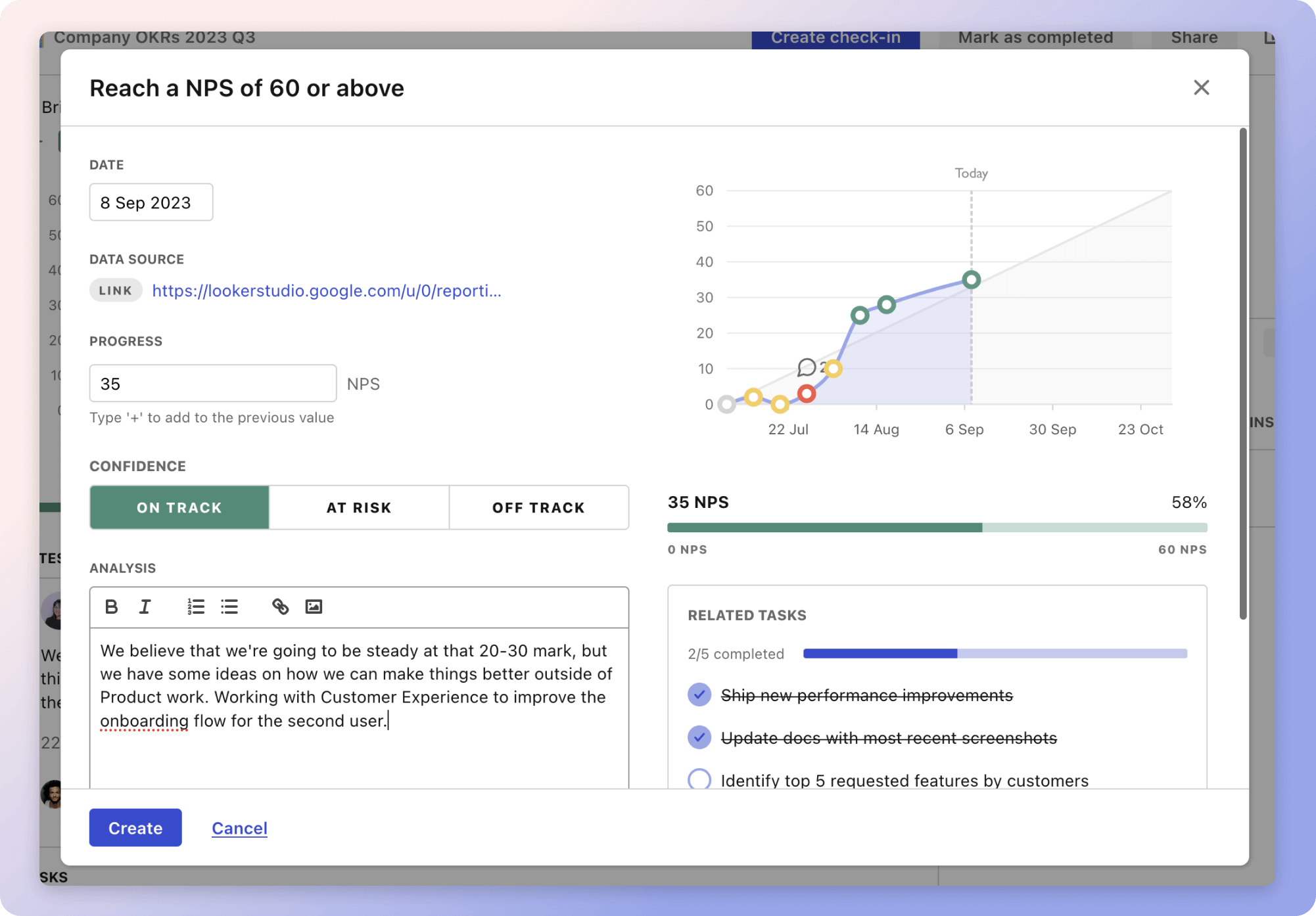
Give it a try and see how it can help you bring accountability to your strategy.