The strategy focuses on upskilling professionals through three key approaches. The first approach involves conducting comprehensive training workshops where selected software applications critical for the team's tasks are introduced. These workshops include both introductory and advanced sessions, along with practical exercises and feedback mechanisms to ensure deep understanding and continuous improvement.
The second strategy is to implement a mentorship program that pairs professionals with experienced mentors. This approach allows for personalized guidance and support, helping professionals apply new software skills in real projects. Through regular check-ins and joint projects, the mentorship fosters growth and encourages professionals to eventually become mentors themselves.
Lastly, the strategy leverages online learning platforms to provide flexible, self-paced skill development. By creating a structured learning path tailored to individual needs, professionals can engage with interactive content and assessments. The progress is monitored, with certifications offered upon course completion, leading to group discussions for knowledge sharing and further support.
The strategies
⛳️ Strategy 1: Conduct comprehensive training workshops
- Identify the software applications that are critical for the team's tasks
- Hire or assign experienced trainers for each of the selected software applications
- Develop a detailed training schedule and agenda for the workshops
- Organise both introductory and advanced sessions to cater to different skill levels
- Provide training materials and resources, such as manuals or online tutorials
- Incorporate hands-on practice sessions into the workshops
- Utilise web-based platforms for remote training sessions
- Assess participants' understanding through quizzes or practical tasks
- Gather feedback from attendees to improve future workshops
- Schedule follow-up sessions for ongoing support and skill enhancement
⛳️ Strategy 2: Implement a mentorship program
- Identify and recruit experienced mentors within the organisation or externally
- Pair each professional with a mentor who specialises in the relevant software applications
- Define clear objectives for the mentorship relationship
- Schedule regular check-ins between mentors and mentees
- Encourage joint projects that require the use of the new software applications
- Create a platform for mentees to share their progress and challenges
- Utilise feedback to make continuous improvements to the mentorship program
- Recognise and reward successful mentorship relationships
- Encourage mentees to eventually become mentors to others
⛳️ Strategy 3: Leverage online learning platforms
- Research and select suitable online learning platforms that offer courses on the software applications
- Purchase/subsidise access to these platforms for the professionals
- Create a structured learning path or curriculum customised to each professional's needs
- Include interactive modules, quizzes, and assessments to reinforce learning
- Set realistic timelines for completion of courses or modules
- Encourage group discussions and knowledge sharing after course completion
- Track the progress of each professional's learning journey on the platform
- Provide recognition or certifications upon successful course completion
- Facilitate virtual study groups for additional support
- Regularly review and update the learning resources to ensure they remain current and relevant
Bringing accountability to your strategy
It's one thing to have a plan, it's another to stick to it. We hope that the examples above will help you get started with your own strategy, but we also know that it's easy to get lost in the day-to-day effort.
That's why we built Tability: to help you track your progress, keep your team aligned, and make sure you're always moving in the right direction.
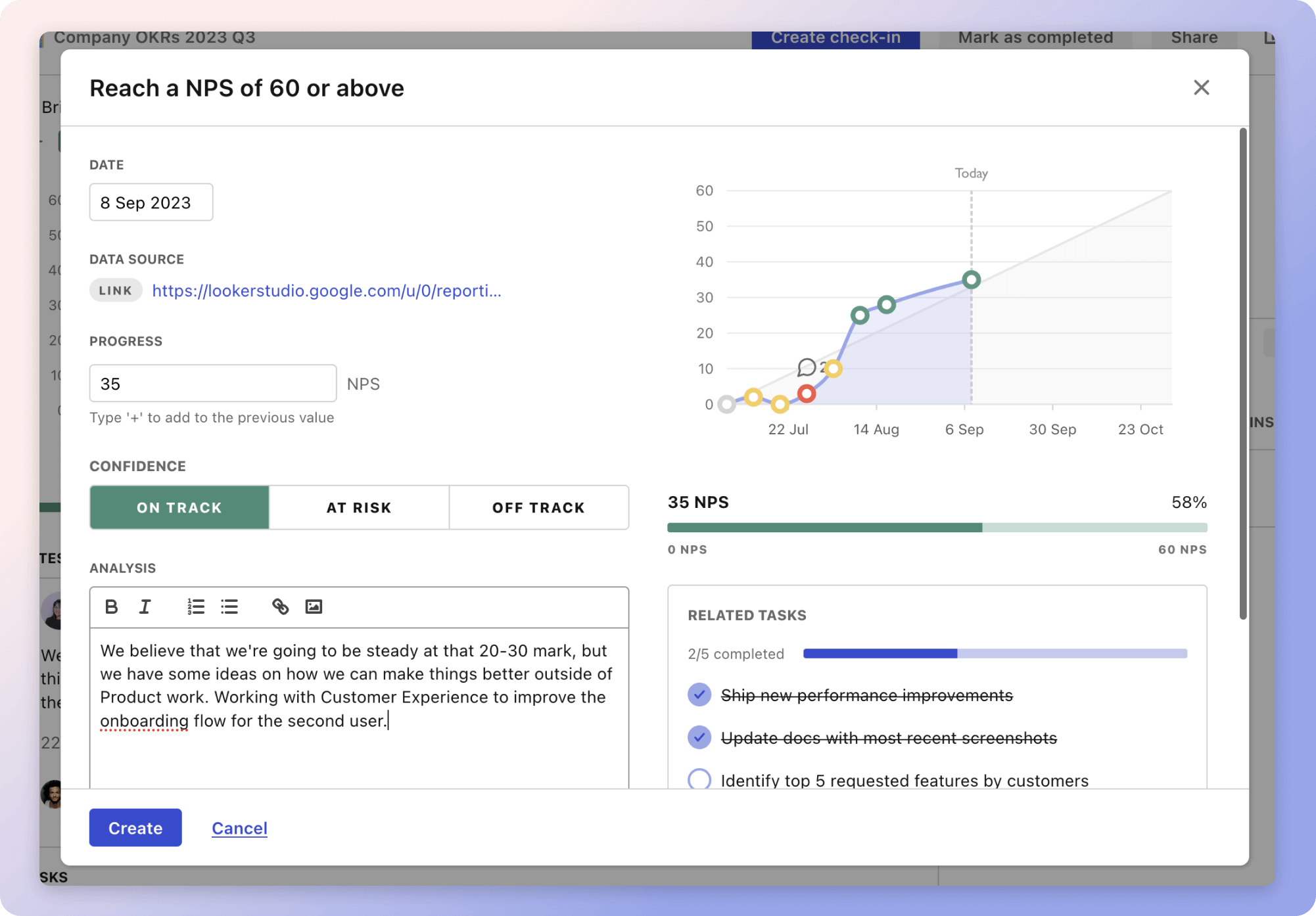
Give it a try and see how it can help you bring accountability to your strategy.